Permian Basin Rig Count Tracker: Weekly Data, Sub-Basin Trends, and 2026 Production Outlook
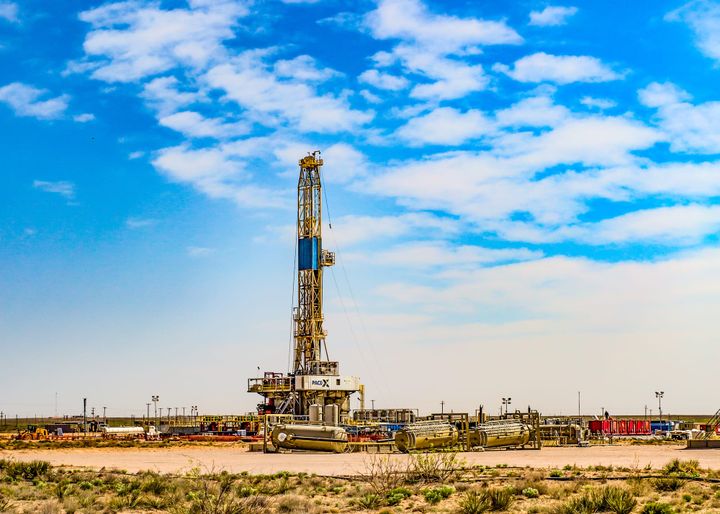
The Permian Basin had 241 active rigs as of March 27, 2026, according to Baker Hughes weekly data — representing 44 percent of all active US land drilling rigs. With the total US rig count at 543, the Permian's dominance remains structural, not cyclical. That concentration means the basin's weekly rig count is effectively a proxy for US upstream momentum. When Permian activity moves, domestic production forecasts follow. The 241-rig figure is the number every analyst, operator, and investor in upstream oil and gas is watching in 2026.
Current Rig Count by Sub-Basin
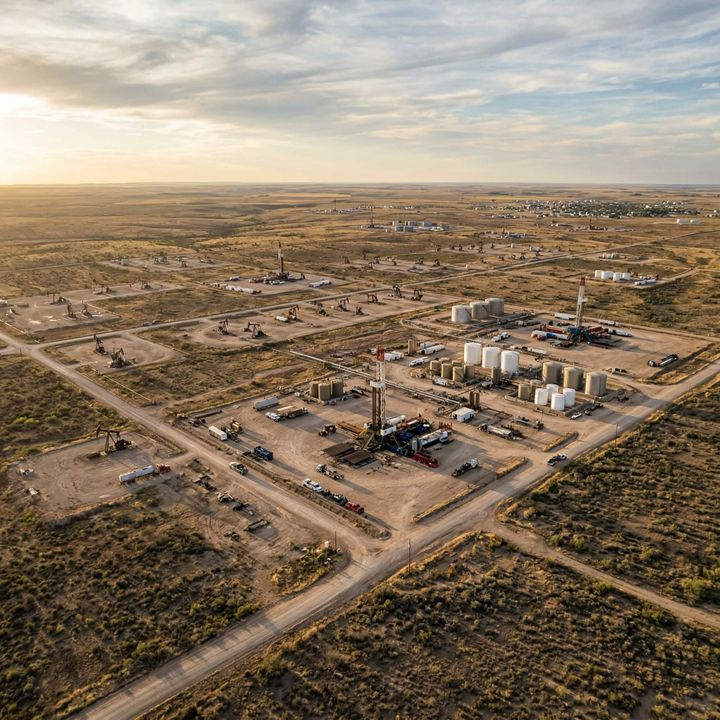
According to Baker Hughes weekly data, the 241 Permian rigs are split between two distinct geological systems: the Midland Basin on the eastern side and the Delaware Basin on the western side, straddling the Texas-New Mexico line. Midland Basin activity continues to reflect the post-Pioneer consolidation landscape, where ExxonMobil's 2024 acquisition reshaped operator concentration. The Delaware Basin, spanning southeastern New Mexico and far West Texas, is running higher activity as operators prioritize its stronger initial production rates.
The headline number warrants context. The Permian ran approximately 305 rigs in late 2024, according to Baker Hughes historical data. The decline to 241 — a drop of roughly 21 percent — is not a demand-driven collapse. It reflects two compounding forces: post-merger rig consolidation as major acquirers optimize combined portfolios, and genuine efficiency gains that allow operators to hold production with fewer rigs. This is the efficiency story the industry has been telling for three years, and the production numbers largely validate it. For the deep-dive on what drove 18 months of US rig count movement, see CIR's US rig count analysis.
Production Context
According to EIA data, Texas crude oil production reached 5,570 thousand barrels per day (Mbbl/d) in January 2026, down modestly from 5,806 Mbbl/d in December 2025 and 5,831 Mbbl/d in November 2025. The January figure reflects typical winter seasonal softness and does not indicate a structural decline. New Mexico crude output — the primary Delaware Basin proxy — came in at 2,119 Mbbl/d in January 2026, compared to 2,258 Mbbl/d in December 2025 and 2,324 Mbbl/d in November 2025.
Combined, Texas and New Mexico production totaled approximately 7,689 Mbbl/d in January 2026, serving as the closest available proxy for total Permian output. Against a US total of 13,246 Mbbl/d in January 2026, the Permian accounts for roughly 58 percent of national crude production — a figure that underscores why the basin's rig count carries macro-level significance.
The critical context is well productivity. According to EIA Drilling Productivity Report data, new-well productivity in the Permian has reached approximately 1,400 barrels per day per new well. At 241 active rigs — assuming an average of roughly one new well per rig per month — the basin is adding significant new production volumes even as the rig count sits well below 2024 peaks. This productivity improvement is the central reason 241 rigs can sustain near-record output levels that would have required 320-plus rigs five years ago.
Midland vs. Delaware: Different Economics in 2026
The Midland Basin and Delaware Basin are distinct plays with different drilling economics and operator profiles. The Midland Basin, the older and more established of the two, features classic stacked-pay development across the Spraberry, Wolfcamp, and Dean formations. Post-Pioneer acquisition, ExxonMobil now dominates Midland acreage with a manufacturing-style drilling program focused on capital efficiency and longer laterals. The consolidation effect is visible in the rig count: fewer operators, fewer rigs, but better-drilled wells.
The Delaware Basin offers higher initial production rates, particularly in the Bone Spring and Wolfcamp formations in New Mexico. However, Delaware wells carry more operational complexity — a richer gas and NGL mix requiring processing infrastructure, and produced water volumes that strain disposal capacity. For 2026, capital allocation data from operator guidance suggests the Delaware is attracting a greater share of incremental investment, driven by its superior IP rates. Operators with acreage in both basins are preferentially high-grading Delaware locations. For a full breakdown of how each basin is performing against capital benchmarks, see CIR's Basin Scorecard Q1 2026.
Key Operators Running Permian Rigs
Five operators account for a disproportionate share of the 241-rig Permian count. Diamondback Energy, now operating with its post-Endeavor asset base, is running approximately 50-plus rigs across Midland and Delaware positions — making it the largest independent driller in the basin by rig count. EOG Resources continues its premium-location strategy, running a disciplined program focused on returns rather than volume growth. Occidental Petroleum, with its integrated Permian position spanning both sub-basins, is maintaining its 2025 program pace with modest efficiency gains offsetting inflationary service costs.
Permian Resources — formed from the Centennial and Colgate merger — has become a major Delaware Basin force, running rigs primarily on its New Mexico acreage. Coterra Energy, following its strategic repositioning away from Permian growth, is running fewer rigs than its peers but maintaining a capital-efficient program on its Midland Basin position. Collectively, these five operators account for the majority of Permian drilling activity, and their individual guidance updates function as leading indicators for the basin's aggregate trajectory in 2026.
What the Rig Count Signals for Production
At 241 rigs with an average new-well productivity of approximately 1,400 Mbbl/d per well, the Permian is on track to sustain production at or above 6.0 MMbbl/d through mid-2026, according to EIA Drilling Productivity Report projections. The drilled-but-uncompleted well (DUC) inventory provides a secondary buffer — operators can accelerate completions during high-price windows without adding rigs, moderating the relationship between rig count and near-term production. DUC counts have declined from 2022 peaks but remain at levels that give operators 60-90 days of production flexibility above the active rig signal.
CIR Analysis
CIR Analysis: The Permian rig count at 241 tells a story of structural efficiency gains masking what would historically be a significant drilling slowdown. A basin running 21 percent fewer rigs than 18 months ago but delivering flat-to-higher production is not exhibiting the classic rig-count-to-production elasticity that upstream models were built on. The EIA data confirms it: Texas crude at 5,570 Mbbl/d in January 2026, New Mexico at 2,119 Mbbl/d — near-record combined output on a rig count that looks contractionary by historical standards. The implication for forecasters is that rig count is a less reliable leading indicator than it used to be. What matters now is well count, lateral length, and completion intensity per rig — metrics that require operator-level data to model accurately.
For weekly Permian Basin rig count updates, operator-level drilling program tracking, and sub-basin production analysis, CIR members receive annotated Baker Hughes data, EIA DPR commentary, and operator guidance summaries every week. Subscribe at crudeir.com.
Crude Intelligence Report is an independent upstream oil and gas intelligence publication. Content is for informational purposes only and does not constitute investment advice. The author and publisher hold no positions in any companies mentioned. © 2026 Crude Intelligence Report. All rights reserved.