Private Operator Spotlight: The Permian's Hidden Giants
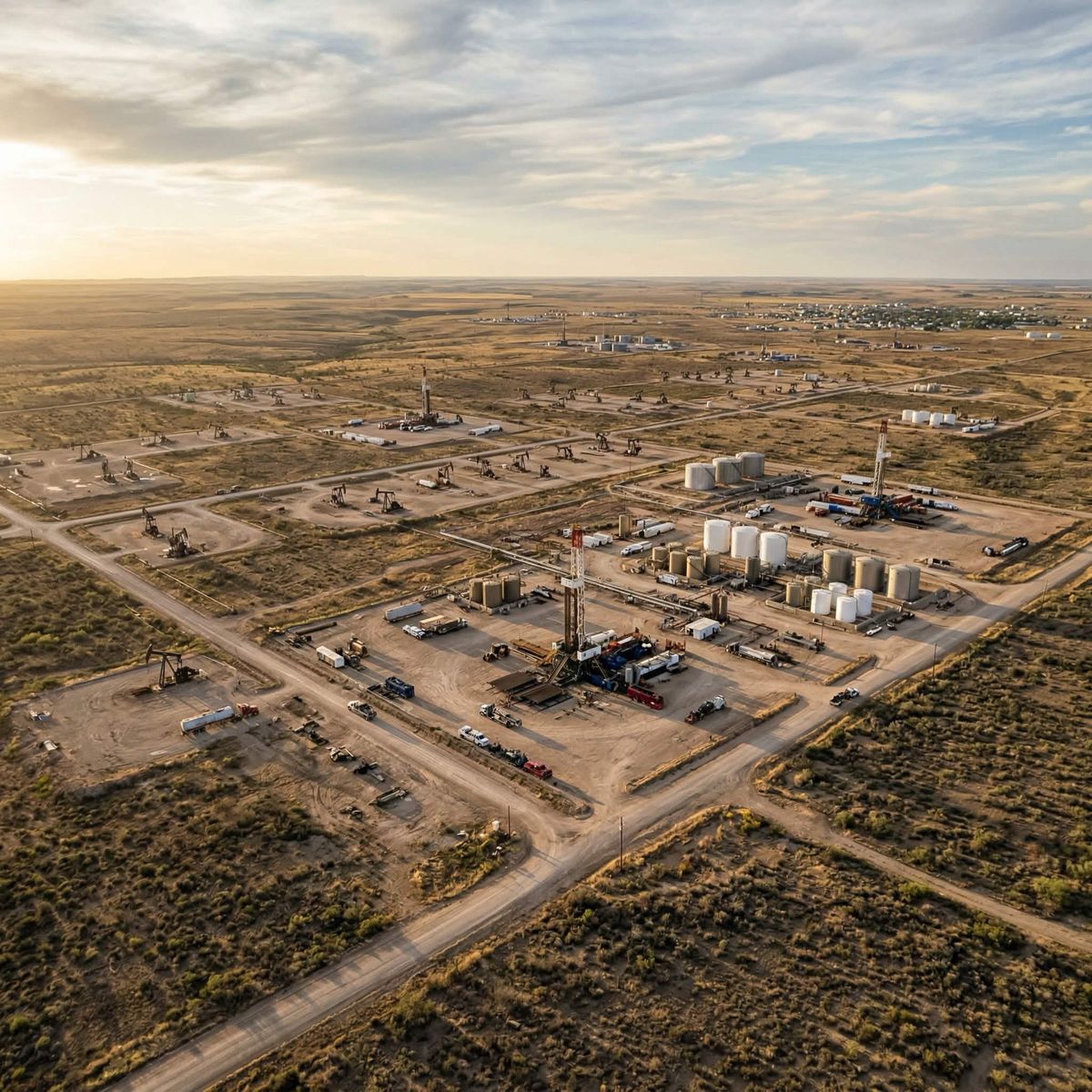
The narrative of Permian Basin consolidation focuses naturally on the names visible in quarterly earnings filings: ExxonMobil, Occidental, Diamondback, ConocoPhillips. These are the public companies whose acreage maps, production figures, and capital budgets are subject to SEC disclosure, analyst scrutiny, and quarterly calls with institutional investors. But beneath this public layer sits a second Permian — a large, productive, and strategically significant collection of private operators whose collective output rivals some of the largest public companies and whose trajectory shapes the basin's future in ways the market consistently underestimates.
Understanding these operators — their strategies, their backers, and their eventual exit options — is essential for anyone who wants a complete picture of the Permian Basin.
The Scale of Private Production
Texas Railroad Commission (RRC) and New Mexico Oil Conservation Division (NMCD) and Enverus both track private operator production in the Permian using state regulator data (the Texas Railroad Commission and New Mexico Oil Conservation Division). Their estimates suggest that private operators collectively produce approximately 1.8–2.2 million barrels of oil per day from the Permian — roughly 30–35% of total basin output.
This is not a long tail of small operators. Several private Permian producers individually surpass 50,000–100,000 boe/d of production, making them larger than many publicly traded E&P companies. Their absence from public markets doesn't reflect their scale; it reflects a deliberate choice — by private equity sponsors or founding families — to retain capital and operational flexibility that public market accountability would compromise.
The Major Private Players
Before its acquisition by Diamondback Energy, Endeavor Energy Resources was the archetype of the private Permian giant. Founded by Autry Stephens in Midland, Texas, Endeavor controlled approximately 350,000 net acres in the Midland Basin and was producing over 350,000 boe/d at the time of its $26 billion sale — a transaction that valued Endeavor's production at roughly $74,000 per daily barrel of oil equivalent.
The Endeavor sale illustrated the scale of value creation possible within the private Permian model. Stephens built the company over decades by acquiring acreage when prices were low, developing it methodically without quarterly earnings pressure, and ultimately capturing the premium that public acquirers were willing to pay for contiguous, high-quality Permian acreage at scale.
ProPetro Holding, now largely a services company, was spun out of private Permian operations. More relevant today is Fasken Oil and Ranch, a Midland Basin operator that controls approximately 165,000 net acres largely in Martin and Andrews counties — core Wolfcamp territory that was appraised at $10,000+ per acre in recent transactions. Fasken is family-controlled and has explicitly stated no interest in a near-term sale, making it one of the few remaining large, privately held Permian positions that isn't PE-backed and therefore isn't subject to fund lifecycle pressure.
Double Eagle Energy is another significant private operator, though it has executed a strategy of build-and-sell rather than permanent capital ownership. The company, backed by private equity, assembled a Delaware Basin position and sold it to DoublePoint Energy, which was subsequently acquired by Pioneer Natural Resources for $6.4 billion. The Double Eagle management team then reassembled, built another Permian position, and sold it again — essentially industrializing the private E&P build-to-sell model.
The PE-Backed Model
A large portion of private Permian production is owned by E&P companies backed by private equity firms: Warburg Pincus, Quantum Energy Partners, KKR, Carlyle Group, NGP Energy Capital, and others. These operators carry the imperative to generate returns for fund investors within a defined time horizon — typically 5–7 years — which means PE-backed Permian operators are inherently on the clock for either an IPO or a sale.
The PE exit problem has been a persistent theme in upstream oil and gas for several years. Public market valuations for small-to-mid-cap E&P companies have historically been insufficient to generate the multiples that PE sponsors need to return capital to limited partners. Strategic sales to larger operators have been the preferred exit route — hence the consolidation wave that produced the Diamondback-Endeavor, Oxy-CrownRock, and other major transactions.
With the Permian's best publicly identifiable private positions now largely absorbed by large-cap operators, the remaining PE-backed Permian producers tend to be either smaller bolt-on-sized assets (under $3 billion) or operators in secondary basin areas that don't fit neatly into the core development programs of the major operators.
What Remains
The private Permian inventory that remains available for eventual M&A is concentrated in a few categories. First, operators in the Northwest Shelf of the Permian Basin — areas like Lea County, New Mexico and Eddy County's western portions — that carry more geologic variability and require more technical expertise than the core Midland and Delaware areas. Second, operators in the Central Basin Platform, the structural high between the Midland and Delaware basins, which produces from conventional carbonate reservoirs at shallower depths. Third, the deepwater-analog Wolfcamp and Bone Spring intervals in parts of the basin that haven't yet seen the intensive horizontal drilling that has reshaped the core areas.
For investors, the private operator landscape is most relevant as a leading indicator of future M&A. When PE sponsors begin signaling exit preparation — through hiring investment bankers, running preliminary data room processes, or making public comments about strategic alternatives — it often presages 12–24 months of transaction activity. Tracking these signals, even imperfectly, provides earlier visibility into the M&A pipeline than waiting for formal deal announcements.
The Permian's private operators are hidden giants — not because they're secret, but because the public financial system wasn't designed to surface them easily. Understanding their scale and strategic position is part of understanding the basin that drives the American oil market.
Crude Intelligence Report is an independent upstream oil and gas intelligence publication. Content is for informational purposes only and does not constitute investment advice, financial advice, or a recommendation to buy or sell any security. Always conduct your own due diligence before making investment decisions. The author and publisher hold no positions in any companies mentioned in this article. © 2026 Crude Intelligence Report. All rights reserved.