Permian Production: When Does Growth Slow?
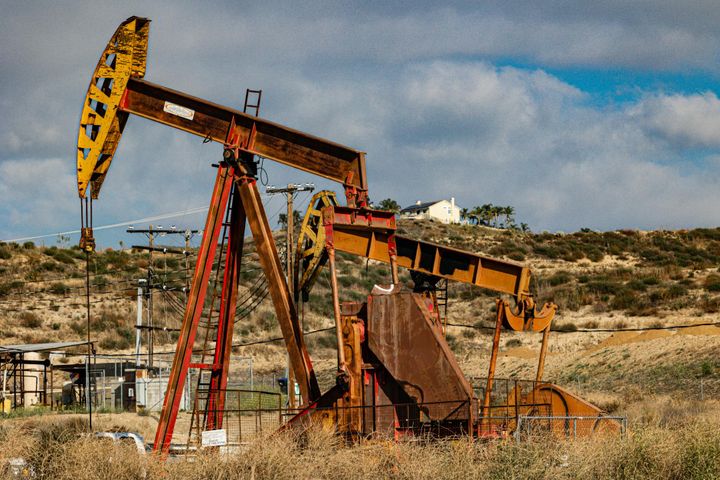
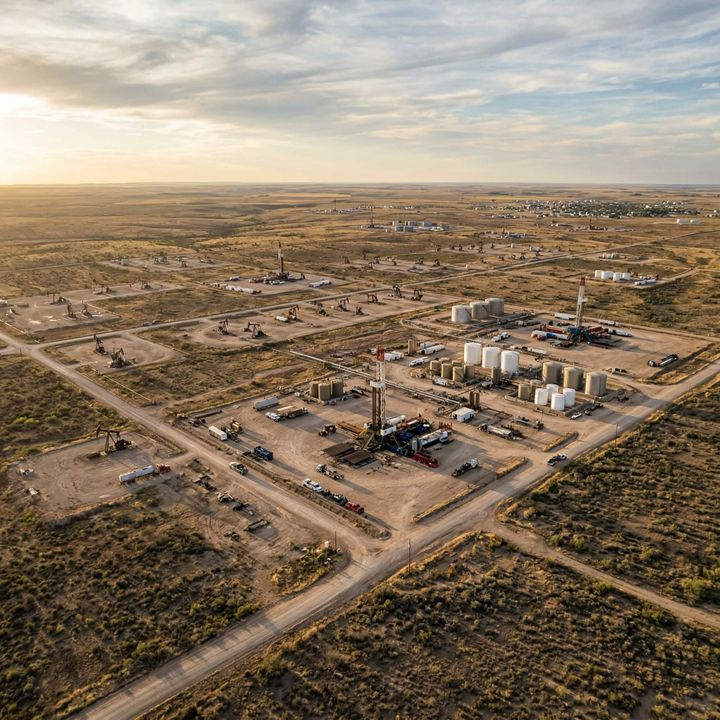
The Permian Basin has been producing oil faster than almost anyone predicted for the past decade. Total production from the basin — which spans the Midland and Delaware sub-basins across West Texas and southeastern New Mexico — surpassed 6 million barrels per day in 2024 and has continued pushing higher into 2025. The basin now accounts for roughly 45% of total U.S. crude output, a concentration that makes its trajectory a proxy for the entire domestic upstream sector.
But every growth story eventually confronts physics and economics. As operators have drilled the best locations first, as lateral lengths have reached practical limits, and as water disposal costs have climbed, the question that was once dismissed as premature is now being asked seriously: when does Permian growth slow?
The Inventory Math
The most rigorous attempt to answer this question comes from inventory accounting — specifically, how many high-quality, economically viable locations remain undrilled. Enverus, the energy data firm, has modeled Permian inventory extensively and estimates that at current activity levels, the basin has roughly 12–15 years of Tier 1 drilling inventory remaining at WTI prices in the $60–70 range. Above $75, lower-tier locations become economic and the runway extends significantly.
The problem is that "Tier 1 inventory" is not static. As completion technology improves — longer laterals, denser frac stages, better proppant placement — locations that were previously marginal can be economically upgraded. Pioneer Natural Resources, before its acquisition by ExxonMobil, was drilling 3.5-mile laterals in parts of the Midland Basin, accessing rock that would have been uneconomic at 1.5-mile lateral lengths just five years earlier. ExxonMobil has indicated it intends to extend this playbook aggressively across Pioneer's acreage.
The Consolidation Effect
The wave of M&A that reshaped the Permian in 2023–2025 has concentrated production in the hands of operators with long-term development frameworks rather than near-term growth mandates. ExxonMobil's acquisition of Pioneer ($60 billion), Occidental's absorption of CrownRock ($12 billion), and Diamondback Energy's merger with Endeavor Energy Resources ($26 billion) collectively shifted roughly 2.5 MMbbl/d of Permian production into major or large-cap independent hands.
These acquirers are not incentivized to maximize near-term growth rates. ExxonMobil's stated plan for Pioneer's assets is methodical development optimized for returns, not production records. Occidental has explicitly tied its activity level to debt reduction milestones. Diamondback — the purest Permian play remaining — has built a capital return framework that distributes excess cash rather than reinvesting it into accelerated drilling.
The aggregate effect is a Permian that grows more slowly than its resource potential might allow. Not because the rock is running out, but because the operators controlling the rock have different objectives than the independent wildcatters of the shale boom era.
Infrastructure and Water: The Physical Constraints
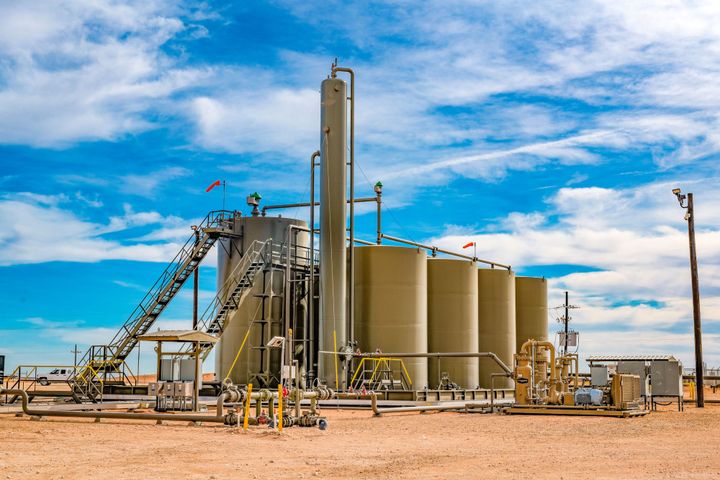
Even if capital were unlimited and operators wanted to grow faster, physical infrastructure would limit them. The Permian's produced water problem has become one of the basin's defining challenges. Every barrel of oil produced in the Delaware Basin comes with roughly 8–10 barrels of co-produced water that must be disposed of or recycled. As disposal wells have filled and regulatory scrutiny of water injection has increased — particularly following seismicity concerns in parts of the basin — water handling costs have risen from roughly $0.30/bbl five years ago to $0.80–1.20/bbl today in some areas.
Pipeline takeaway, which caused production bottlenecks as recently as 2018–2019 when WTI sold at steep discounts to Brent, has been largely resolved. The Waha hub still occasionally experiences negative pricing during maintenance windows or Permian growth spurts, but the chronic takeaway constraint of the mid-cycle boom era has been addressed by pipeline build-out. Water, not oil pipelines, is now the binding infrastructure constraint.
The Rig Count Signal
Baker Hughes data provides the most timely read on operator intentions. The Permian rig count, which peaked above 360 in late 2022, has settled in the 290–310 range through 2025. This is not a collapse — it's moderation. And importantly, the production-per-rig metric has continued improving as operators become more efficient. In 2019, a Permian rig was associated with roughly 1,100 bbl/d of production potential. By 2025, that figure has risen to approximately 1,400–1,500 bbl/d, reflecting longer laterals, better completion design, and pad drilling efficiencies.
The implication: the Permian can sustain 6.2–6.5 MMbbl/d of production at 300 active rigs. Maintaining that plateau doesn't require acceleration; it requires consistency. And the basin's consolidated, institutionalized operator base is well-suited to provide exactly that.
The Realistic Trajectory
Barring a sustained price move above $85 WTI that triggers meaningful activity acceleration, the Permian's most likely trajectory is growth that decelerates from the 300,000–400,000 bbl/d annual increases of the shale boom to something closer to 150,000–200,000 bbl/d per year. That's still significant in absolute terms — equivalent to adding a midsize country's production annually — but it represents maturation rather than boom dynamics.
The basin isn't running out of oil. It's running out of easy oil, cheap oil, and operators willing to grow at any cost. That's a fundamentally different situation, and it matters enormously for anyone modeling long-term U.S. supply growth.
Crude Intelligence Report is an independent upstream oil and gas intelligence publication. Content is for informational purposes only and does not constitute investment advice, financial advice, or a recommendation to buy or sell any security. Always conduct your own due diligence before making investment decisions. The author and publisher hold no positions in any companies mentioned in this article. © 2026 Crude Intelligence Report. All rights reserved.