Permian in 2026: The Road to 7 MMbbl/d
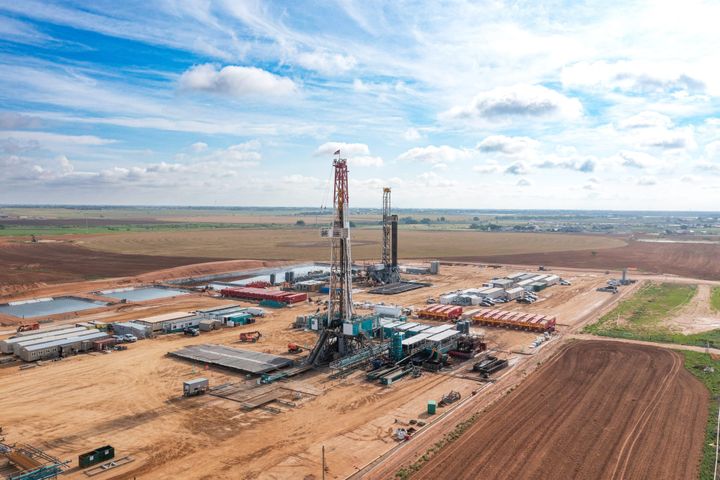
The Permian Basin is the most consequential oil-producing region in the world outside of Saudi Arabia's core fields. It exited 2025 producing approximately 6.3–6.5 million barrels of oil per day — a number that would have seemed fantastical to any petroleum engineer working the basin in 2005. The question entering 2026 is whether the basin can reach 7 MMbbl/d, and what it actually takes to get there.
Where We Are
EIA's Drilling Productivity Report puts Permian oil production at approximately 6.38 MMbbl/d for December 2025, up from ~5.85 MMbbl/d in December 2023. That's ~530,000 Bbl/d of growth in two years — roughly equivalent to adding another Eagle Ford from scratch. The Permian has been growing at 250,000–300,000 Bbl/d annually in recent years, and the 7 MMbbl/d threshold is achievable by late 2027 to early 2028 at that pace. Getting there in 2026 alone would require an acceleration to ~500,000–600,000 Bbl/d of annual growth — unlikely given current rig counts and capital discipline.
Midland Basin vs. Delaware Basin
The Permian is two basins sharing a common name. The Midland Basin (eastern Permian, primarily in Midland, Martin, Howard, and Glasscock counties) is ExxonMobil and Diamondback country. The Delaware Basin (western Permian, spanning Reeves, Ward, Loving, and Eddy/Lea counties in New Mexico) is where ConocoPhillips, Devon, and Coterra operate most heavily.
Midland Basin production is approximately 3.6–3.8 MMbbl/d, with the Spraberry and Wolfcamp as primary targets. The Midland is more infrastructure-mature — more takeaway, more water disposal, more power — and tends to attract the highest rig density. Delaware Basin is running approximately 2.6–2.8 MMbbl/d, with deeper, higher-pressure zones (Bone Spring, Wolfcamp, Delaware) offering strong well productivity but higher drilling costs and more complex completion requirements.
Rig Count Requirements
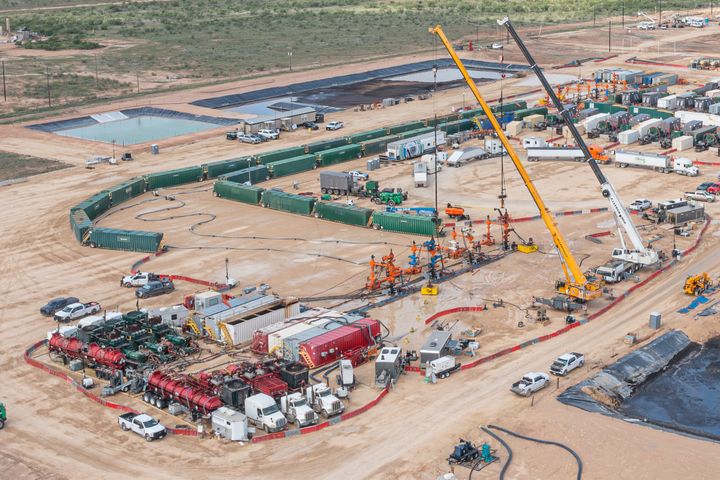
Sustaining 6.3–6.5 MMbbl/d requires approximately 290–310 Permian rigs at current well productivity levels. Growing to 7 MMbbl/d requires either more rigs (325–340) or improved productivity per rig. The industry has been delivering the latter: average Permian lateral lengths have grown from ~9,000 ft in 2020 to ~12,000–13,000 ft today, boosting per-well EUR and reducing per-foot costs. Extended-reach laterals of 15,000–20,000+ ft are now common in the Delaware Basin.
Current Permian rig count (~310–320) is modestly above the maintenance level, implying gradual production growth. To accelerate meaningfully, operators would need to sanction additional rigs — which requires WTI consistently above $72–75. At $68–70, the math supports steady growth, not aggressive expansion.
Key Operators: Who Drives the Count
ExxonMobil/Pioneer: The single largest Permian operator at 35–40 rigs, targeting 600,000+ Bbl/d net from the basin. XOM brings major-company capital allocation, high-intensity development, and Premier technical resources to what was Pioneer's best-in-class Midland Basin position.
Diamondback Energy: ~12 rigs, ~475,000+ Boe/d company-wide with ~85% from the Permian. The most efficient cost structure in the public Permian peer group, running D&C costs below $750/lateral foot.
ConocoPhillips: ~10–12 Permian rigs post-Marathon integration, primarily in the Delaware Basin. Marathon's New Mexico assets (Eddy/Lea counties) were a key rationale for the acquisition — tier-1 Delaware rock at competitive costs.
Devon Energy: ~10–12 Delaware Basin rigs, ~200,000 Bbl/d oil from Delaware. Devon's Stateline area has been a production outperformer in 2025.
Coterra Energy: ~6–7 Permian rigs, more measured growth approach given its gas-heavy overall portfolio.
Infrastructure Constraints: The Real Gating Factors
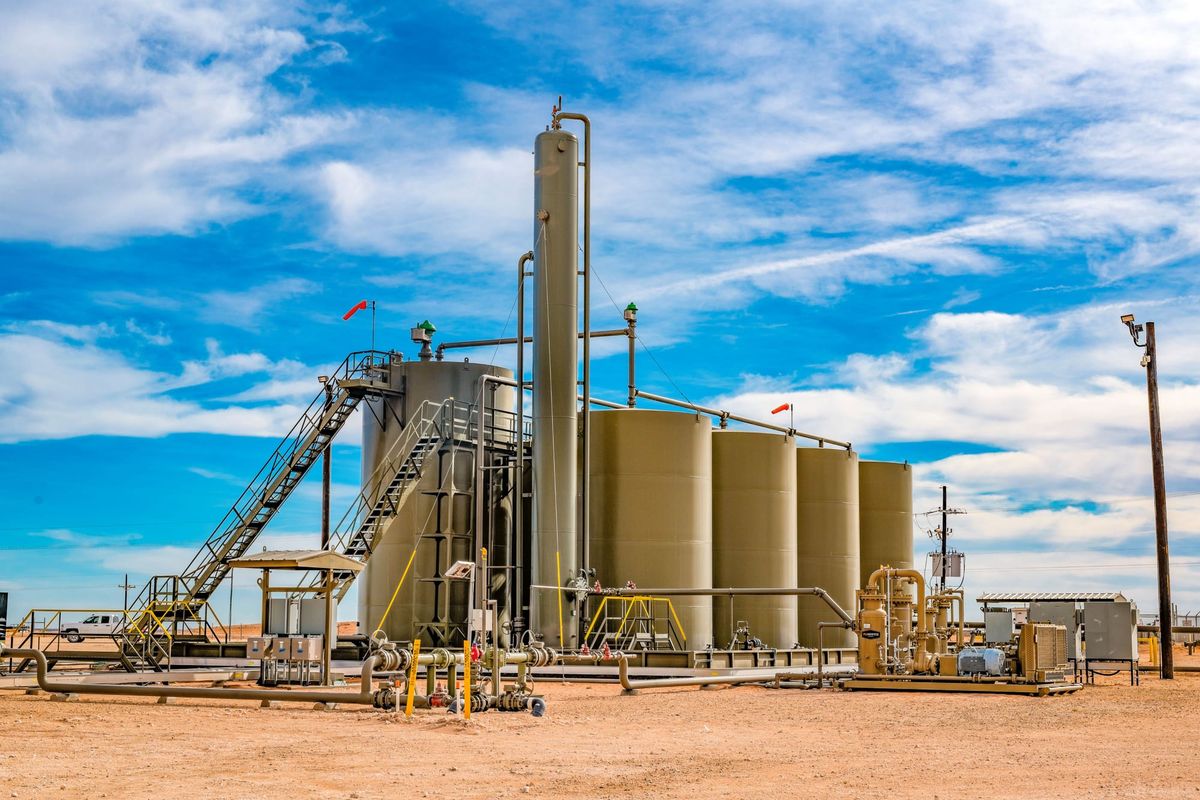
Rig count and capital aren't the only variables. Three infrastructure constraints could throttle Permian growth even if operators want to run harder:
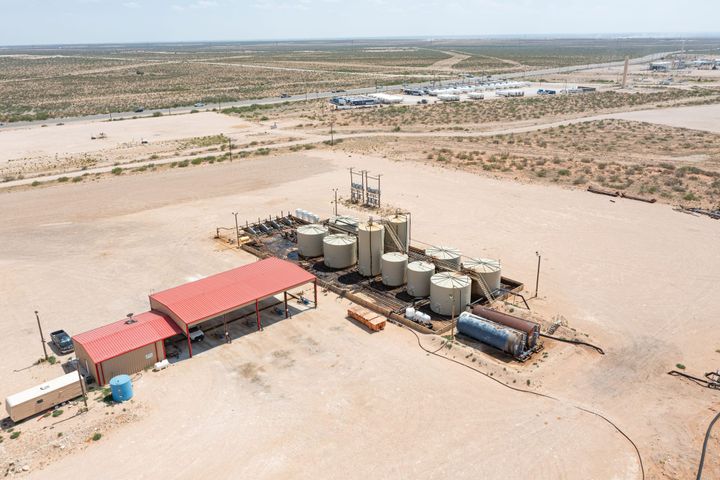
Water disposal: The Permian produces roughly 20–25 million barrels of water per day — 3–4x the oil volume. Saltwater disposal wells in the Delaware Basin have faced seismicity-related injection limits in Reeves and Culberson counties. Recycled frac water programs are expanding but don't fully solve the disposal problem.
Gas takeaway: Waha Hub (the Permian Basin gas pricing point) has traded at negative prices multiple times in the past two years — as low as -$3.00/MMBtu in April 2024 — reflecting insufficient gas export capacity relative to associated gas volumes. Matterhorn Express Pipeline (~2.5 Bcf/d, Permian to Katy) came online in Q4 2024, providing relief. But additional takeaway (Blackcomb Pipeline, etc.) is needed through 2026–2027.
Electric power: Permian drilling and production operations are major power consumers. ERCOT (Texas grid) has faced summer capacity constraints, and WAPA (western New Mexico grid) has limited industrial capacity. Operators are increasingly installing behind-the-meter natural gas generators — a use of associated gas that simultaneously solves the disposal problem and the power problem.
The 7 MMbbl/d Timeline
Most industry analysts place 7 MMbbl/d between Q3 2027 and Q1 2028 under a base case of $68–72 WTI and 310–330 operated rigs. Upside case ($75+ WTI, 340+ rigs) could put 7 MMbbl/d in late 2026 to mid-2027. The Permian will get there. The question is the pace, and the constraints above are the real answer to that question — not operator willingness to spend.
Crude Intelligence Report is an independent upstream oil and gas intelligence publication. Content is for informational purposes only and does not constitute investment advice, financial advice, or a recommendation to buy or sell any security. Always conduct your own due diligence before making investment decisions. The author and publisher hold no positions in any companies mentioned in this article. © 2026 Crude Intelligence Report. All rights reserved.