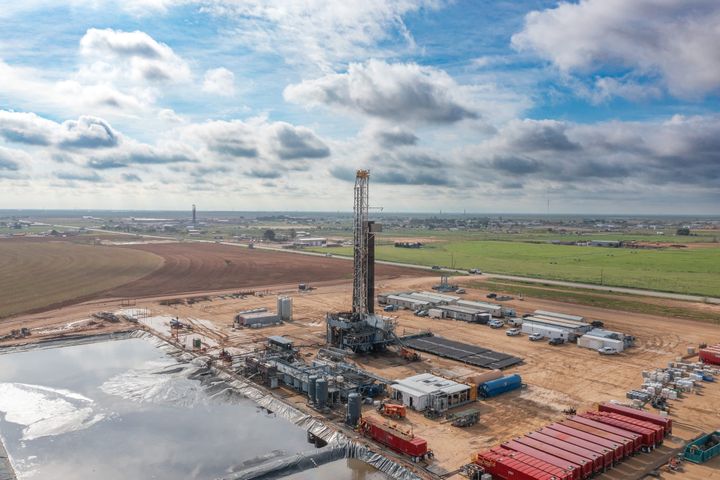
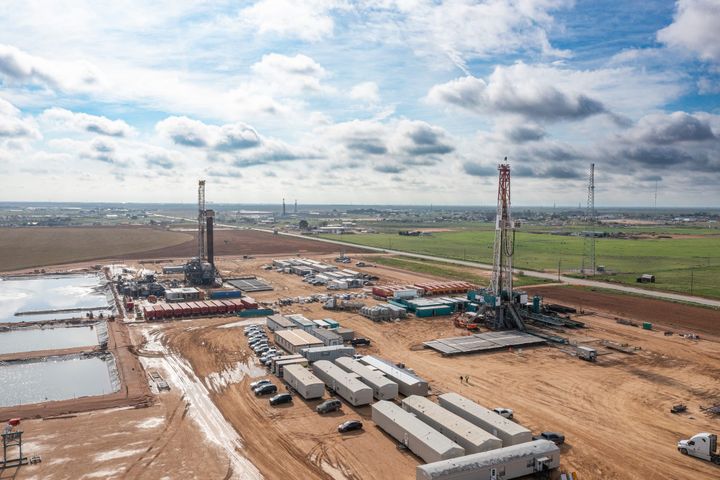
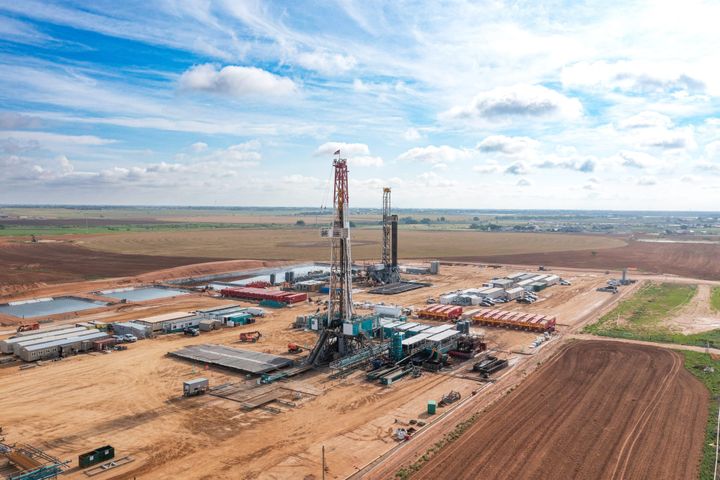
The Frac Discount Re-Rating: Why PUMP, PTEN, and LBRT Are Finally Catching a Bid at $107 WTI
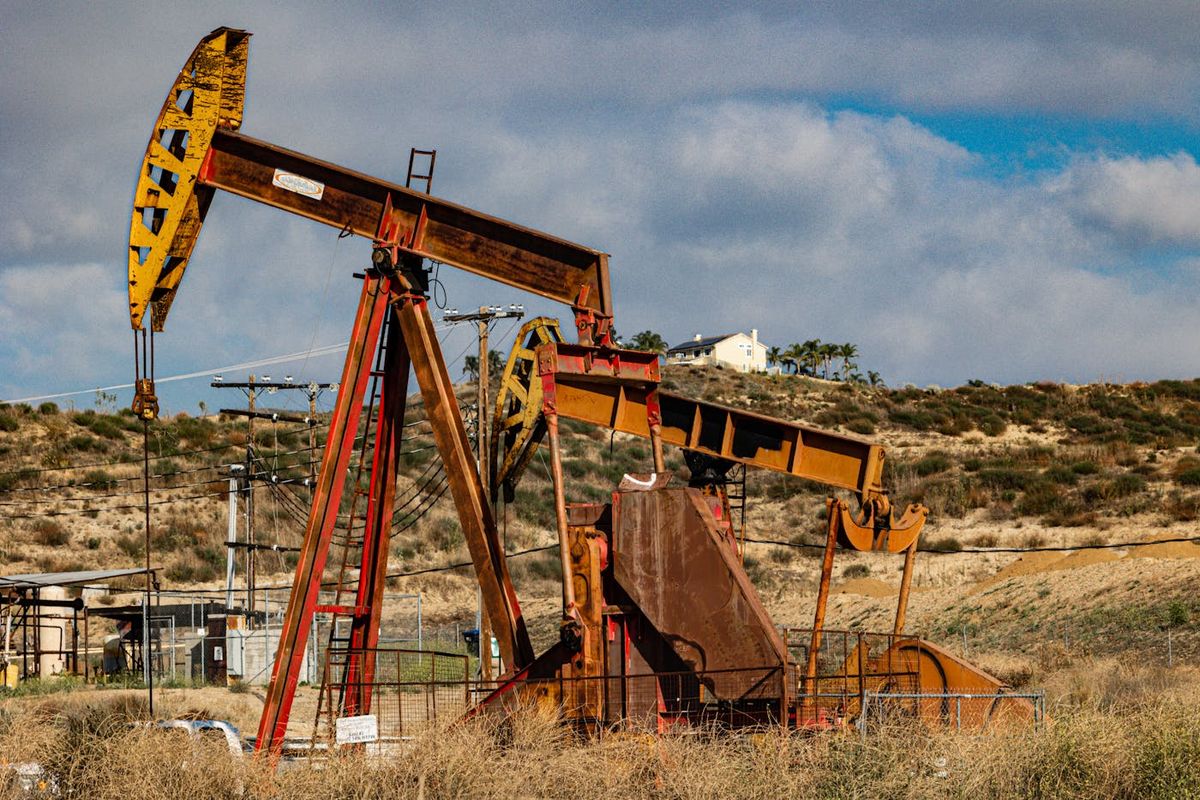
Frac sector | Sources: PUMP 10-Q (filed April 30, 2026), LBRT 10-Q (filed April 23, 2026), PTEN 10-Q (filed April 28, 2026); SEC EDGAR; Alpha Vantage price data as of May 1, 2026; EIA production data
The frac sector can't catch a break — even at $107 WTI.
Three weeks after Q1 earnings confirmed the discount was real, PUMP, PTEN, and LBRT remain priced for a cycle that looks nothing like the one operators are running. WTI hit $107.42 this morning, Brent is at $114, and completion activity is accelerating across the Permian. Yet ProPetro trades at $16.62 — a hair off its 52-week low — while Patterson-UTI sits at $11.99 with its completion services segment still digesting a 6% decline in pumping hours year-over-year. Liberty Energy is the outlier: $32.68 on the day with actual revenue growth in Q1. The three companies tell three different stories about what it takes to survive when frac pricing hasn't caught up to crude.
The Q1 Scorecard
ProPetro had the worst quarter of the three in absolute terms. Per its 10-Q filed April 30, total revenue came in at $270.7 million for Q1 2026 — down 24.7% from $359.4 million a year earlier. Adjusted EBITDA collapsed to $36.4 million from $72.7 million, a nearly 50% drop, and the company posted a net loss of $3.6 million. Hydraulic fracturing revenue led the slide, falling 29.5% year-over-year, partially offset by wireline growth of 11.8%. PUMP ended the quarter with 1,254,500 total hydraulic horsepower — a mix of Tier IV DGB dual-fuel, FORCE electric, and conventional Tier II equipment — but fleet utilization, not capacity, is the problem.
Patterson-UTI told a more complicated story. Its completion services segment, which runs frac, cementing, wireline, and power solutions, logged $679.6 million in Q1 2026 revenue against $766.1 million a year ago — an 11.3% decline. Total frac pumping hours fell 6% year-over-year. But the headline net income number improved dramatically: PTEN earned $24.5 million on a GAAP basis in Q1 2026 versus just $1.3 million in Q1 2025. The improvement came largely from cost cuts, lower depreciation as capex has pulled back, and a favorable shift in its drilling segment economics, not from pricing recovery in frac.
Liberty Energy is where the frac re-rating story actually starts to make sense. Per its 10-Q filed April 23, LBRT posted $1.02 billion in Q1 2026 revenue versus $977.5 million a year earlier — 4.7% growth year-over-year. Net income was $22.6 million versus $20.1 million in Q1 2025, also higher. Liberty is the only one of the three that grew revenue in a quarter when WTI was still averaging in the low $90s before the current run.
Why the Disconnect Persists
At $107 WTI, the logical question is: why are frac companies still trading like it's $65 crude?
CIR Analysis: The disconnect has three roots, and they don't resolve on the same schedule.
First, completion pricing lags commodity prices by one to two quarters. Operators lock in frac contracts before production budgets are revised upward, and renegotiation takes time. The spring activity surge that $107 WTI should trigger won't fully flow through to frac revenue until Q3 at the earliest. Q1 numbers reflect a world where WTI was still absorbing the geopolitical shock rather than benefiting from it.
Second, the simulfrac adoption curve has compressed pricing even as it raised throughput. Liberty's DAR (digiFleet Advanced Remote) technology and the industry-wide shift to simultaneous completions means fewer fleets doing more work per pad. CIR Analysis: That's volume-efficient but not necessarily price-efficient for the service companies — especially when E&P customers are negotiating harder, not softer, at higher commodity prices.
Third, the market still hasn't fully priced out the 2022-2024 frac fleet buildup. There's residual oversupply at the Tier II conventional level, even as Tier IV DGB and electric fleet utilization is tighter. PUMP's 495,000 HHP of conventional Tier II equipment is the liability on its balance sheet — not because it won't work, but because it won't price at a premium.
What Changes at $107 WTI
The math is starting to shift. Operators running at $107 WTI with $107 hedges still locked in (much of the Permian's active hedge book expires Q2) will see Q2 free cash flow expand sharply. That cash has to go somewhere: buybacks, dividends, or activity acceleration. Permian completion intensity — stages per well, proppant per foot — is already near record levels. More wells at existing intensity means more frac demand, not just frac volume per well.
CIR Analysis: The re-rating for PUMP, PTEN, and LBRT depends on Q2 guidance language, not Q1 results. If management teams communicate that frac pricing floors are firming or contract renewals are trending higher, the discount collapses fast. LBRT already trades at a premium to the others because it has consistently communicated a clearer demand picture. PUMP and PTEN are priced for continued deterioration that, at $107 WTI, looks increasingly unlikely.
PUMP's Caterpillar deal is worth watching separately. ProPetro committed to a $1.1 billion power generation equipment purchase from Caterpillar over the term through 2031 — 1.5 gigawatts of reserved capacity for its PROPWR power solutions business. That's a bet on the data center energy demand thesis intersecting with oilfield power. If that business scales, it changes PUMP's revenue mix and reduces its pure frac pricing exposure.
What To Watch
- Q2 frac pricing conversations — look for contract renewal language on PTEN and PUMP Q2 earnings calls in late July
- Baker Hughes rig count Friday: any uptick in active frac spreads directly validates the re-rating thesis
- LBRT dividend — $0.09/share declared in Q1; any increase signals management confidence in Q2 free cash flow
- PUMP's power generation revenue line in Q2/Q3: if PROPWR scales, it's the most underappreciated part of the story
- WTI sustaining above $100 through May: hedged operators with Q2 budgets fixed won't accelerate until Q3, but unhedged operators will move faster
Crude Intelligence Report is an independent upstream oil and gas intelligence publication. The content in this article is for informational purposes only and does not constitute investment advice, financial advice, or a recommendation to buy or sell any security. Always conduct your own due diligence before making investment decisions. CIR and its contributors may hold positions in companies mentioned; any such positions will be disclosed when known. © 2026 Crude Intelligence Report. All rights reserved.
This article contains forward-looking statements and analytical opinions. Actual results may differ materially.