Forum Energy Technologies: The International Offset Keeping FET Whole at $67 WTI (FET)
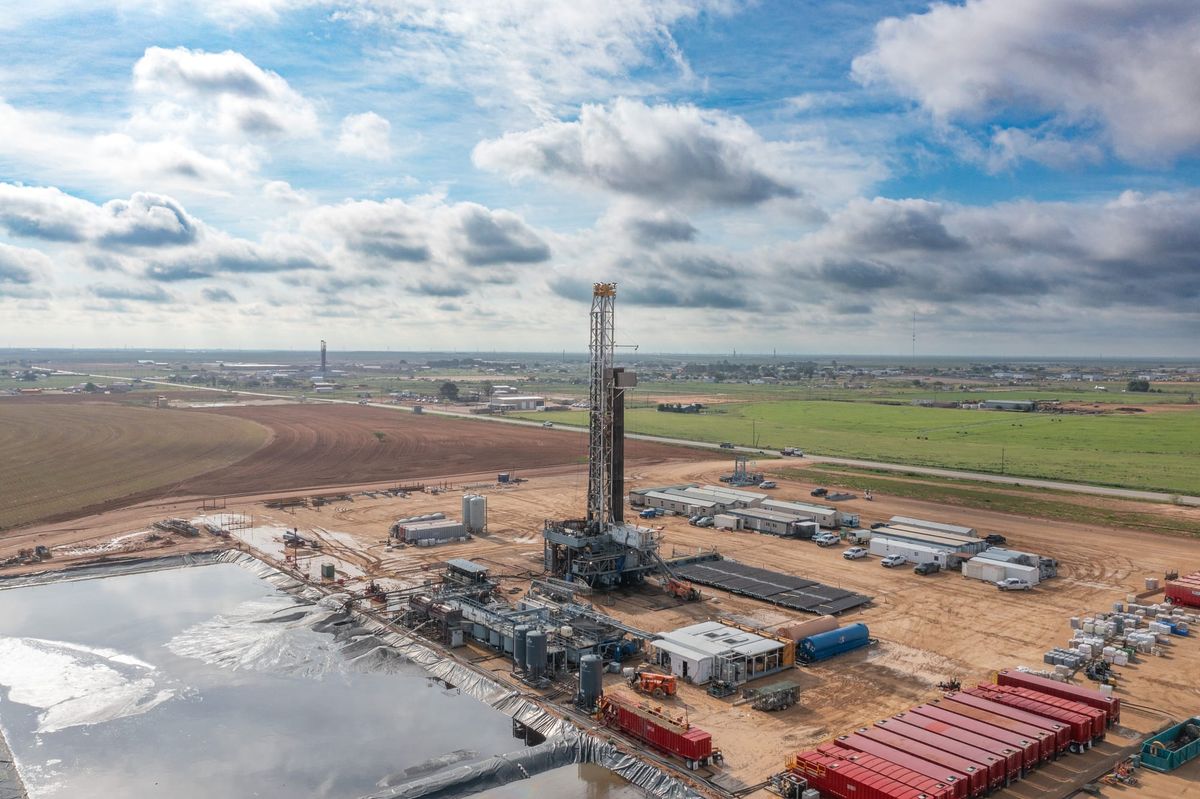
FET | NYSE | Source data: Q1 2026 10-Q filed May 1, 2026 (SEC accession 0001401257-26-000034); Yahoo Finance commodity data July 2, 2026
Forum Energy Technologies posted its best Q1 revenue in recent memory, $208.7 million against $193.3 million a year ago. But the headline hides a fault line: every dollar of that growth came from outside the United States. US domestic revenue fell $10.8 million year-over-year, from $103.9 million to $93.1 million, while international markets added $26.2 million to fill the gap and then some. With WTI sitting at $67.68 today, that geographic composition matters more than the topline number suggests.
The Domestic Miss
FET's US business contracted 10.4% year-over-year in Q1 2026, per its 10-Q filed May 1. That is not noise. That is a company feeling the weight of a rig count that peaked around 590 in late 2025 and has been softening since, combined with operators cutting completions budgets early in Q1 as WTI dropped from the mid-$70s toward the low $60s on OPEC+ supply news and demand uncertainty.
The product line that bore the brunt: Stimulation and Intervention, which fell to $33.0 million from $37.4 million, a drop of $4.4 million or roughly 12%. Stimulation and Intervention is FET's most direct exposure to frac: pressure pumping hoses, flow iron, high-pressure connections. When E&P operators cut completion stages, this is one of the first product categories to feel it. A 12% drop in one quarter at $70-plus WTI (Q1 2026 average) should concern any operator trying to read what their service company partners are planning for H2.
CIR Analysis: The Stimulation and Intervention decline is a leading indicator, not a lagging one. FET ships hardware before the frac crew shows up. A 12% revenue drop in this line in Q1, when WTI was still above $70 for most of the quarter, signals that completions operators were already pulling back order volumes in January and February. At $67.68 today, that dynamic has gotten worse.
International: The Structural Story
What saved FET's Q1 was a geographic diversification play that is running well ahead of plan. International markets delivered across the board, per the 10-Q geographic breakout:
Canada: $42.9M vs. $31.4M a year prior (+37%) | Europe & Africa: $29.0M vs. $19.8M (+47%) | Asia-Pacific: $13.0M vs. $10.4M (+25%) | Latin America: $11.6M vs. $8.1M (+44%) | Middle East: $19.0M vs. $19.6M (flat)
Source: FET Q1 2026 10-Q, geographic revenue breakout, May 2026
Canada's outperformance is the biggest story. An $11.5 million surge in a single quarter is meaningful for a company of FET's size. This is almost certainly Subsea and coiled tubing exposure in western Canadian heavy oil and Montney plays, product lines that hold up better in Canada's long-cycle development model than in the US shale market's quarterly stop-and-start. The Subsea product line grew from $22.1 million to $35.5 million, a $13.4 million or 60% increase, and Canada is the primary driver.
CIR Analysis: FET's international expansion is intentional, not accidental. The company has been investing in European and Latin American distribution for three years. The Q1 numbers show those investments are now generating volume. This geographic diversification is actually a credit to FET's resilience at sub-$70 WTI: they have built a business that no longer fully tracks the Permian rig count.
Segment Operating Income: Where the Profit Actually Is
FET runs two reportable segments. Drilling and Completions reported $8.9 million in segment operating income on $126.6 million revenue, a 7.0% margin. Artificial Lift and Downhole generated $11.6 million on $82.1 million revenue, a 14.1% margin. Total segment operating income was $20.5 million in Q1 2026 versus $16.7 million a year prior, per the company's most recent 10-Q.
The Artificial Lift and Downhole segment's 14.1% margin is the number that deserves more attention. This segment covers production-phase products: artificial lift equipment, casing and cementing hardware, sand control, valve solutions. These products are less correlated to completions activity and more tied to producing well counts, which continue to grow even when drilling slows. That is the kind of revenue mix a mid-cap OFS company wants when WTI is in the $65-$70 range.
Drilling and Completions, by contrast, generated only a 7.0% segment margin, squeezed by the US revenue decline and the fixed-cost structure of manufacturing operations. If US domestic activity does not recover in the second half of 2026, this segment's margin will compress further.
Balance Sheet and the 2029 Bonds Question
FET carries $158.8 million in total long-term debt: $100 million in 10.5% senior secured bonds due November 2029, plus $55.1 million drawn on its revolving credit facility. Total liquidity as of March 31 included $37.5 million in cash and $53.6 million in remaining credit facility availability. The credit facility was extended in February 2026 through 2031, at a slightly improved margin.
At Q1 EBITDA run rate, approximately $11.0 million in operating income plus $7.8 million in D&A, annualized EBITDA comes to roughly $76 million. Net debt of approximately $121 million against that base puts leverage around 1.6x, well inside the 4.0x bond covenant maximum. The balance sheet is not a near-term concern. The question is whether second-half revenue holds up enough to generate meaningful cash flow, given that $100 million in 10.5% bonds represents $10.5 million in annual interest payments.
What To Watch
US completions orders: Stimulation and Intervention revenue in Q2 2026 will confirm whether the Q1 pullback was a one-quarter reset or the start of a sustained correction. At $67 WTI, US-focused frac operators are under margin pressure. FET ships hardware before the frac crew shows up. If Q2 Stimulation and Intervention revenue drops further, H2 completions activity in the Permian is being repriced at the equipment layer right now.
Canadian Subsea durability: The $35.5 million Subsea quarter is the most impressive number in the filing. If Canada continues to order at this rate through Q2 and Q3, FET's international mix could reach 55% of total revenue by year-end, providing substantial insulation from US rig count movements.
Credit facility draw trajectory: The revolving facility went from $37.3 million drawn at year-end 2025 to $55.1 million at March 31. That $17.8 million increase in a single quarter reflects working capital needs as accounts receivable grew $13.1 million to $155.5 million. Watch whether the draw reverses in Q2 as receivables convert to cash. If it continues expanding, the liquidity picture tightens faster than the covenant math alone suggests.
Crude Intelligence Report is an independent upstream oil and gas intelligence publication. The content in this article is for informational purposes only and does not constitute investment advice, financial advice, or a recommendation to buy or sell any security. Always conduct your own due diligence before making investment decisions. CIR and its contributors may hold positions in companies mentioned; any such positions will be disclosed when known. © 2026 Crude Intelligence Report. All rights reserved.
This article contains forward-looking statements and analytical opinions. Actual results may differ materially.