January Rig Count: First Real Signal of 2026
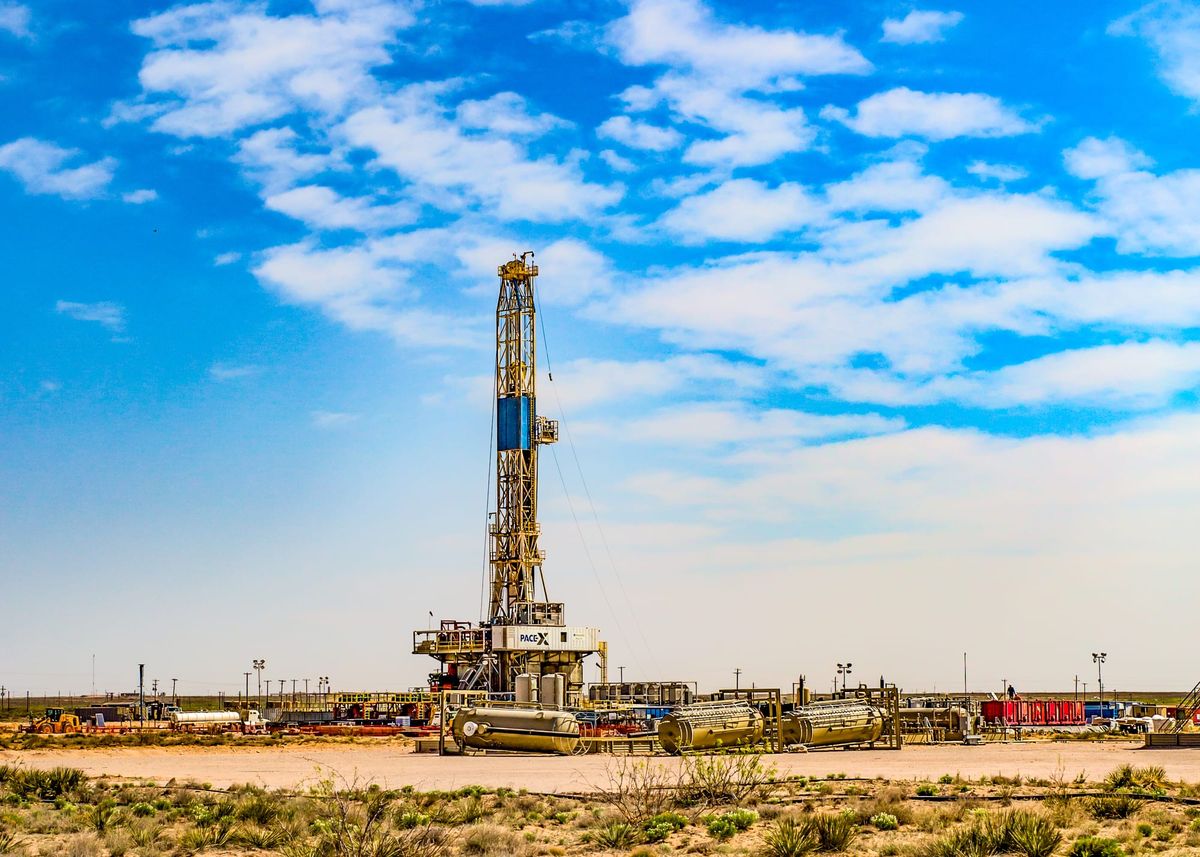
The Baker Hughes rig count is an imperfect but irreplaceable leading indicator. Published weekly every Friday, it captures the operational pulse of the U.S. oil and gas industry before production data catches up. The first full BH count of 2026 — released the second week of January — gives us the clearest early read on how serious operators are about their stated capital budgets.
Where We Are: Early January 2026
Total U.S. land rig count entering January 2026 is tracking at approximately 610–620 rigs — roughly 15–20 rigs above the early January 2025 level of ~596. That's a modest but meaningful uptick, consistent with the slight capex increases guided by major operators. The oil-directed count is around 480–490 rigs; gas-directed runs at 115–125, with the balance miscellaneous.
Permian Basin: The Engine
The Permian accounts for roughly 310–320 of those rigs — over half the U.S. total. That's up from approximately 300 in January 2025. The Delaware Basin (southeast New Mexico and West Texas) is running approximately 170–180 rigs; Midland Basin around 135–145. ExxonMobil's expanded footprint post-Pioneer is the single largest driver of the count increase, having added rigs through Q4 2025 and carrying momentum into the new year. Diamondback and ConocoPhillips also added rigs after their respective acquisitions were fully integrated.
Bakken: Stable
The Williston Basin (Bakken/Three Forks) is running 38–42 rigs, roughly flat year-over-year. The Bakken peaked at ~57 rigs in early 2023 before operators pulled back on lower gas prices and logistics cost pressure. At current levels, Bakken production holds steady in the 1.2–1.3 MMbbl/d range. Chord Energy, Hess (now Chevron), and Continental Resources drive the count. Don't expect material additions — the Bakken is in a capital efficiency mode, not a growth mode.
Eagle Ford: Modest Recovery
South Texas is running 57–63 rigs, up from roughly 50–54 in January 2025. ConocoPhillips (via Marathon) added rigs in the Eagle Ford in H2 2025, and EOG continues its steady presence. The Eagle Ford's oil window remains economic at $65–70 WTI. The Karnes Trough, DeWitt County, and Atascosa County sweet spots continue to dominate the activity map.
Haynesville: Rising
Haynesville is the biggest story on the gas side: 55–62 rigs, up from 45–48 in January 2025. LNG-driven feed gas demand is pulling this number higher. Expand Energy (formerly Chesapeake), Comstock Resources, and Aethon Energy are the key operators. The Haynesville can absorb incremental rigs efficiently because of its proximity to Gulf Coast LNG terminals — Sabine Pass, Corpus Christi, and the new Plaquemines LNG trains.
Appalachian (Marcellus/Utica): Steady
The Appalachian basin runs 34–38 rigs — flat to modestly up from a year ago. EQT, Coterra, and Range Resources are maintaining activity without increasing meaningfully. Northeast pipeline takeaway constraints have eased somewhat with Mountain Valley Pipeline fully operational since mid-2024, but local basis differentials still weigh on aggressive expansion. Expect Appalachia to benefit on the margins from higher Henry Hub prices, but it won't move the national rig count needle.
Historical Context: 2022–2025
U.S. rig count peaked at ~780 in November 2022 — the post-pandemic surge driven by $90–100 WTI and operators returning cash to the field after years of underinvestment. From there, the count declined steadily through 2023 and 2024 as oil prices softened, consolidation reduced duplicative rigs, and efficiency gains meant the same number of wells could be drilled with fewer rigs. By mid-2024, the count bottomed near 580 before stabilizing and beginning a slow recovery. The current ~615 level is not a boom — it's a considered, returns-focused equilibrium.
What January Tells Us
A January rig count that holds above 600 is broadly constructive for H1 2026 activity. Operators typically finalize their programs in November and December, mobilize rigs in January, and begin meaningful production contributions in Q2. If the count holds above 600 through February, expect U.S. crude production to push toward 13.8–14.0 MMbbl/d by mid-year. If it slips — say, on a WTI move below $65 — budget revisions follow quickly. Watch this number every Friday.
Crude Intelligence Report is an independent upstream oil and gas intelligence publication. Content is for informational purposes only and does not constitute investment advice, financial advice, or a recommendation to buy or sell any security. Always conduct your own due diligence before making investment decisions. The author and publisher hold no positions in any companies mentioned in this article. © 2026 Crude Intelligence Report. All rights reserved.