Oil Down $6, Gas Holds $3: Wednesday's Price Split and What It Signals
WTI fell $5.73 while Henry Hub held $3.07. Williams Companies filed a new $1B credit facility. Diamondback completed its leadership transition without drama. What Wednesday's split in crude and gas signals for Thursday.
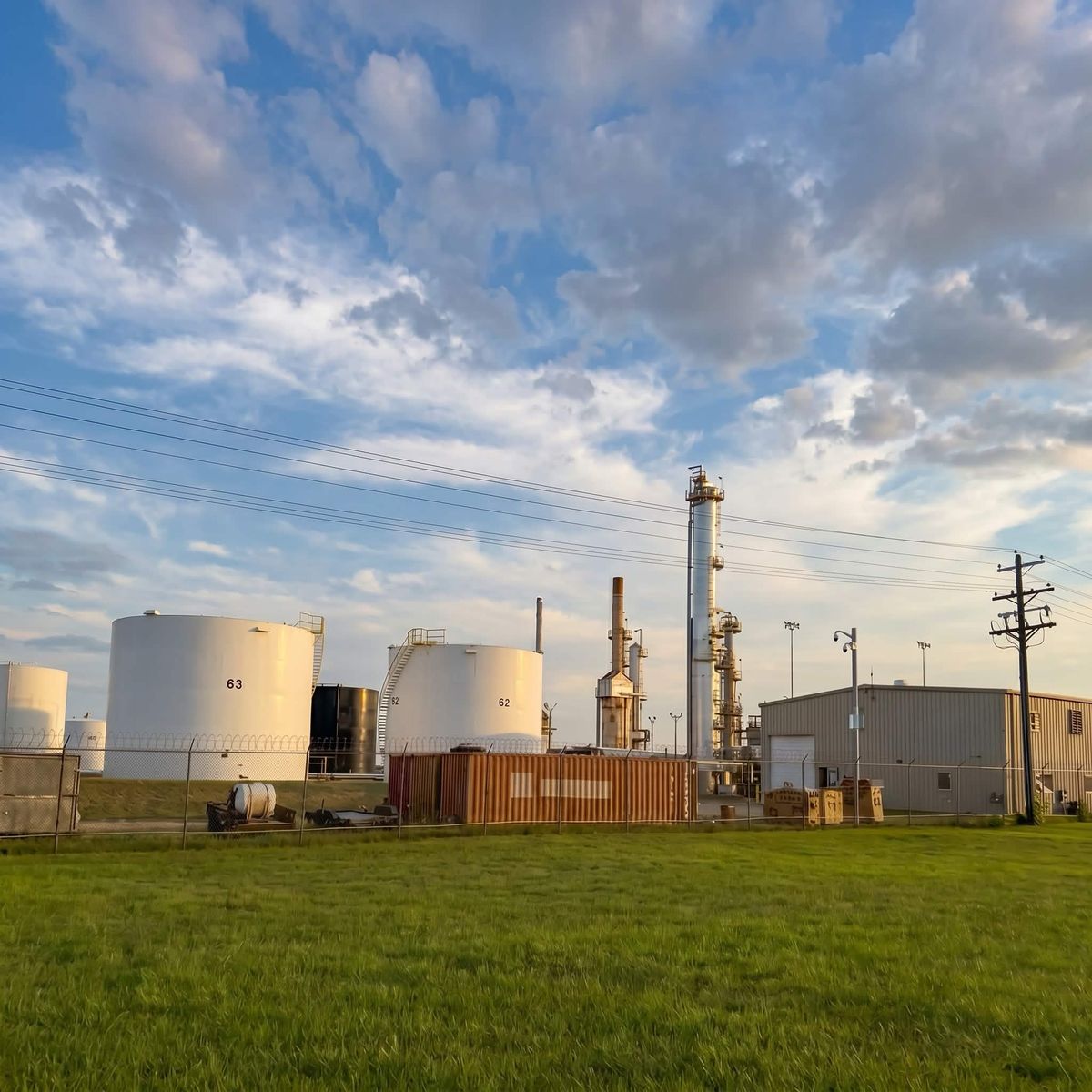
Commodity prices as of May 20, 2026 | Sources: FRED, EIA, SEC EDGAR, company filings
WTI dropped $5.73 Wednesday and natural gas held near $3.07. Both signals point in the same direction: the geopolitical premium is cracking, but the structural gas story isn't moving with it.
That split matters for how operators and service companies should be reading this week's close.
The Crude Selloff and What It Does (and Doesn't) Mean
Trump's Tuesday statement that he wants to "end the war quickly" — context unclear whether Iran-related or Ukraine — triggered Wednesday's $98.44 WTI print. That's the largest single-session decline since crude first broke the $100 floor in late April.
WTI: $98.44 | Brent: est. $105 | Henry Hub: $3.07/MMBtu (FRED May 18 close)
The selloff is a sentiment event, not a supply event. No tanker lanes opened. No Iranian barrels returned to market. The EIA crude draw reported Wednesday — 7.9 MMbbl, with inventories at 445 MMbbl, 2% below the five-year average — showed the physical market remains tight. The geopolitical risk premium correcting doesn't mean the underlying inventory deficit corrects with it.
CIR Analysis: The $98 level is a threshold, not a floor. If Friday's Baker Hughes rig count confirms operators held activity through this week's price dip, the $97-$99 band becomes a consolidation zone rather than the beginning of a structural retreat. If rigs drop, that changes the H2 supply picture meaningfully.
Natural Gas and the Divergence Signal
While WTI fell, Henry Hub held. The $3.07 close is the highest the daily series has printed since before the geopolitical disruption began. Three things are pushing gas higher independently of crude: sustained data center load growth pulling incremental power-sector demand, LNG cargo commitments that don't unwind on a presidential tweet, and Permian associated gas curtailment risk that gets worse — not better — if oil production softens at current prices.
Williams Companies filed an 8-K this afternoon (Items 1.01 and 2.03) announcing a new $1.0 billion 364-day revolving credit facility, extendable to $1.15 billion, with Citibank as administrative agent. The facility covers Williams, Transco, and Northwest Pipeline. Debt-to-EBITDA covenant sits at 5.0x, with a 5.5x acquisition carve-out.
CIR Analysis: Williams doesn't draw revolvers for fun. A $1B credit facility on top of existing liquidity, arranged in May 2026, suggests WMB's management is positioning for transaction or capital activity in the back half of the year. The Transco corridor — the primary natural gas pipeline connecting Gulf production to Appalachian and Northeast markets — is running at high utilization. A facility of this size signals confidence in the gas demand environment, not caution about it.
Diamondback's Quiet Transition
Diamondback Energy filed its annual meeting results today. Travis Stice, who built FANG from a Permian startup to a top-five US independent, formally stepped down as Executive Chairman and becomes non-executive Chairman. The transition was announced in February 2025 — this is the execution date.
Kaes Van't Hof, who has been running day-to-day operations as President and CEO since the succession plan launched, now holds the company without the oversight layer. All four shareholder proposals passed at the annual meeting.
CIR Analysis: Stice's transition matters beyond the org chart. FANG's cost discipline — cash operating costs around $12.50/boe and full-year production guidance north of 520 MBO/d — is the benchmark the Permian basin grades itself against. A leadership transition with no drama, in a week WTI dropped nearly $6, says something about institutional confidence. Companies that are worried don't run clean succession processes.
What Thursday's Open Depends On
The crude price action tomorrow turns on whether the Trump "quick war" comment produces any diplomatic follow-through — an Iran framework meeting, a Ukraine ceasefire announcement, or radio silence. Radio silence means WTI bounces. An actual event means the geopolitical premium deflates further.
Gas holds regardless. The demand drivers — LNG cargo schedules, data center power contracts, summer injection storage targets — don't correlate to the same news flow that's moving crude. Henry Hub decoupling from oil in the same week isn't coincidental. Watch the Haynesville basis and Permian associated gas pressure for confirmation.
Crude Intelligence Report is an independent upstream oil and gas intelligence publication. The content in this article is for informational purposes only and does not constitute investment advice, financial advice, or a recommendation to buy or sell any security. Always conduct your own due diligence before making investment decisions. CIR and its contributors may hold positions in companies mentioned; any such positions will be disclosed when known. © 2026 Crude Intelligence Report. All rights reserved.
This article contains forward-looking statements and analytical opinions. Actual results may differ materially.