The Bond Market Speaks: Venture Global's $2.25B Refinancing and What Tuesday's WTI Recovery Means
WTI closed at $93.37. The real signal came from the bond market: Venture Global priced a $2.25 billion notes offering, locking in long-term LNG infrastructure debt at current spreads.
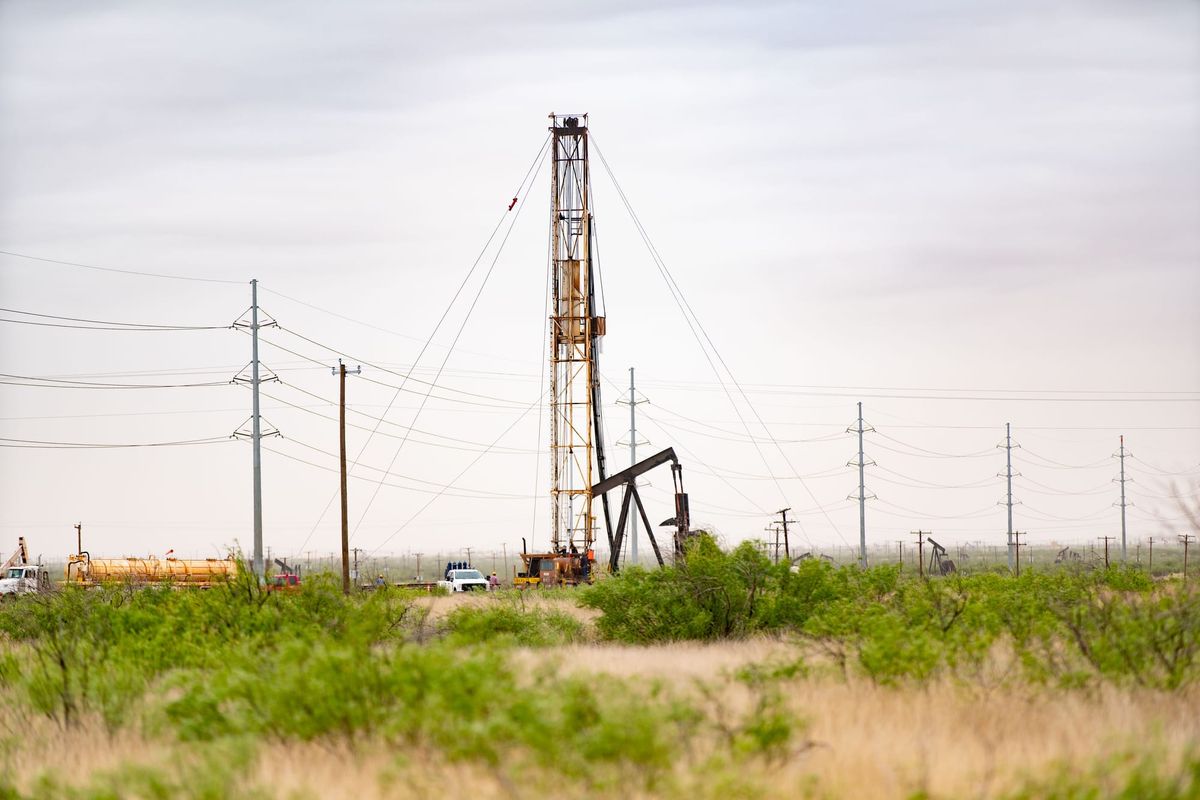
WTI closed Tuesday at $93.37 a barrel, up $1.21 from Monday's settle. It's not a big move on its face. But the context matters: oil climbed through a session that started weak, absorbed a round of mixed macro data, and still closed higher. The market found buyers.
Three things drove the day's price action, and two of them point in the same direction.
The Dollar Softened, Oil Followed
The DXY pulled back roughly 0.3% intraday as fresh economic data out of the eurozone surprised to the upside, giving crude a mechanical tailwind. Dollar weakness is oil's easiest trade, and traders took it. But the move would have reversed by close if the underlying energy fundamentals weren't supportive — and they were.
US crude inventories remain well below the five-year seasonal average. The draw momentum that's characterized the past six weeks hasn't reversed. EIA data from last Wednesday showed commercial crude stocks at 443 MMbbl, and the directional trend hasn't shifted. That number will update again Wednesday — and if it prints another draw, the $95 ceiling gets tested harder by week's end.
Venture Global Confirms the LNG Trade Is Still On
The afternoon's clearest signal came from the bond market, not the crude pits. Venture Global LNG (VG) priced a $2.25 billion senior secured notes offering Tuesday — $1.125B due 2034 and $1.125B due 2036 — with proceeds earmarked to retire its 8.125% notes due 2028. The company filed its 8-K (Item 2.04, 8.01) disclosing the refinancing, with a Redemption Date of June 11.
CIR Analysis: This isn't a distressed refinancing — it's an opportunistic one. Venture Global is locking in lower-rate, longer-term debt at a moment when LNG infrastructure creditors are willing to lend. That willingness tells you something about how fixed-income investors view the LNG demand outlook for 2034 and beyond. You don't issue 10-year and 12-year senior secured paper at current spreads if you think demand is a question mark. The bond market is saying the gas trade is a multi-decade story.
For Haynesville and Appalachian producers, the read-through is straightforward: more LNG terminal debt getting placed means more committed export capacity, which means more natural gas demand for the producers sitting upstream of those projects. EQT and Expand Energy have been making this case in their investor materials for two years. Tuesday's Venture Global filing backs it up with real capital formation.
China Back in the Market — Quietly
Tanker data tracked through industry sources signals that Chinese teapot refiners, who pulled back on crude runs sharply in May, have begun re-entering the spot market. The coverage is consistent with broader indicators that Beijing's latest stimulus measures are nudging industrial activity higher. It's not a decisive trend reversal yet — but even marginal demand recovery from China moves the needle given the scale of their import appetite.
India's LNG buying also surged in May, per trade data. Despite the high-price environment, South Asian buyers are prioritizing supply security over cost, particularly given the ongoing Qatar force majeure that's kept Ras Laffan volumes constrained through August. The premium they're paying for US LNG spot cargoes is effectively a floor-support bid for Henry Hub.
Natural Gas Held Steady
Henry Hub settled around $3.16/MMBtu, essentially flat on the session. That's the fourth straight day it's closed above $3.15 — a level that seemed aspirational three weeks ago. Power burn is carrying the load: EIA data through late May shows US gas-fired generation running 8-9% above year-ago levels, driven by both weather-related cooling demand and the steady ramp of new data center load.
Waha basis remains the variable to watch in the Permian. If WTI continues recovering and Permian operators start bringing activity back, associated gas production ticks up — and Waha's chronic congestion risk resurfaces. The Matterhorn Express pipeline absorbed a lot of that risk when it came online last fall, but it's not a blank check. Any material uptick in Permian completions activity presses that spread again.
What Tomorrow's Open Depends On
Wednesday brings EIA's Weekly Petroleum Status Report at 10:30am ET — the most important data print of the week. A draw of 2 MMbbl or more likely pushes WTI toward $95. A build, or a smaller-than-expected draw, gives bears an opening to fade the day's recovery.
Geopolitical premium is still embedded in the price but operating on a shorter fuse. The Iran ceasefire timeline has moved from "possible in weeks" to "uncertain" following the June 1 communications breakdown. If Tehran extends the communications freeze into Thursday's session, the premium reinforces. If there's a diplomatic signal — even informal — expect a $2-3 pullback fast.
The LNG capital markets print from Venture Global is the durable signal of the day. Crude prices move with headlines. Bond issuances reflect conviction.
Disclosure: The author/publisher holds positions in EQT and EXE (Expand Energy) as of the publication date. This does not constitute investment advice.
Crude Intelligence Report is an independent upstream oil and gas intelligence publication. The content in this article is for informational purposes only and does not constitute investment advice, financial advice, or a recommendation to buy or sell any security. Always conduct your own due diligence before making investment decisions. CIR and its contributors may hold positions in companies mentioned; any such positions will be disclosed when known. © 2026 Crude Intelligence Report. All rights reserved.
This article contains forward-looking statements and analytical opinions. Actual results may differ materially.