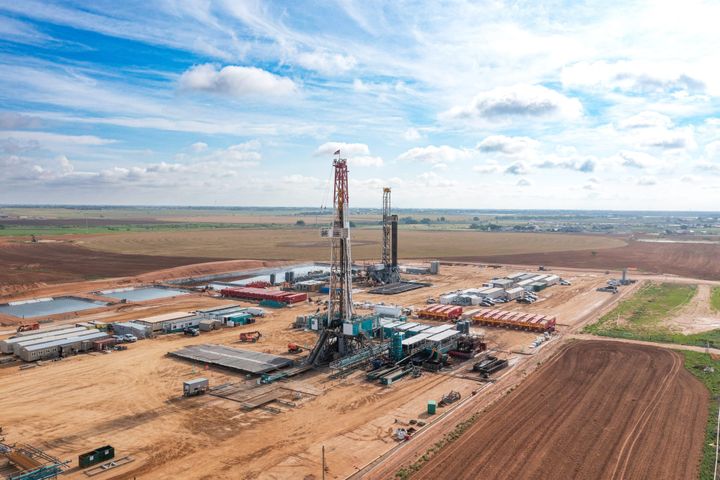
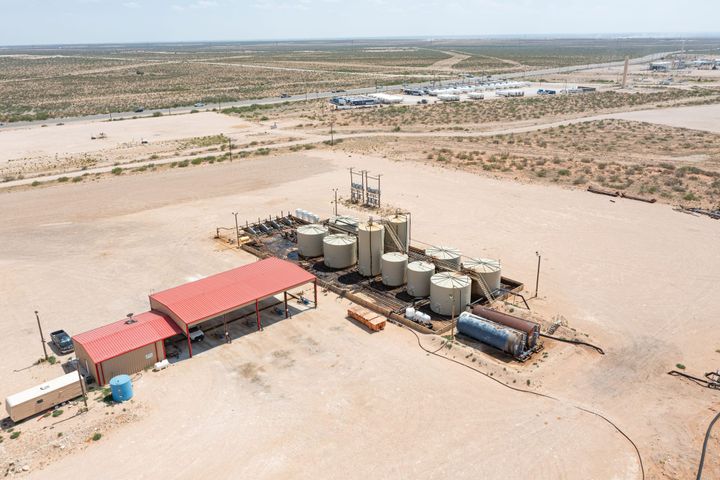
Permian Basin Rig Count 2026: Weekly Tracker, Midland vs. Delaware, and Production Implications
The Permian Basin rig count in 2026 sits around 185-195 active rigs, but that number understates basin activity. Here's the full picture: Midland vs. Delaware, operator behavior, and what the count actually signals for production.
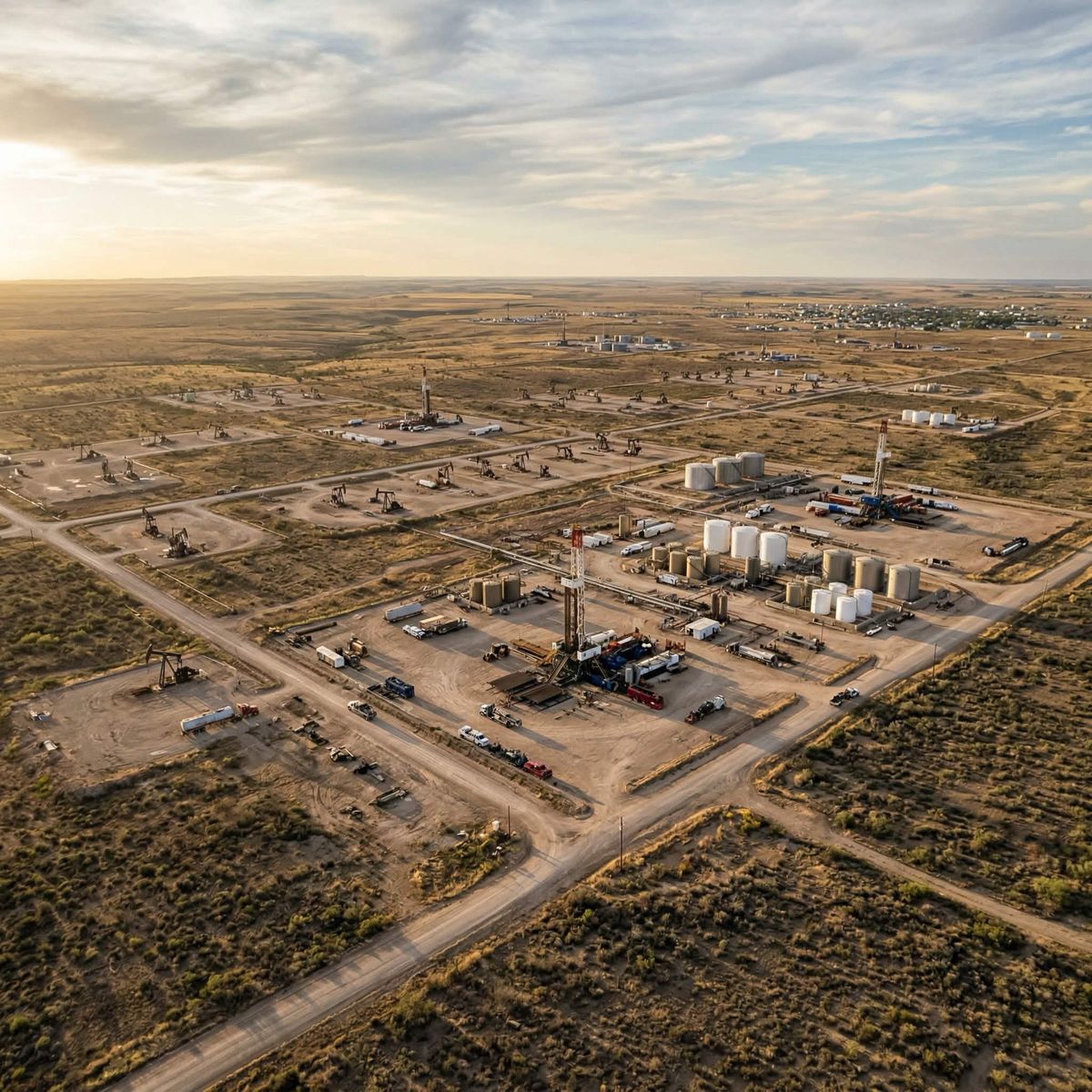
The Permian Basin rig count in 2026 tells a story that raw numbers alone don't capture. U.S. oil-directed rigs have slipped from a post-COVID high of roughly 625 in mid-2022 to around 409 as of February 2026, according to EIA data — yet Permian oil production is tracking near all-time highs, with Texas and New Mexico combined averaging approximately 7,689 thousand barrels per day as of January 2026. Understanding why those two trends coexist is the central question for anyone using the Permian rig count as a proxy for future supply.
How the Permian Basin Rig Count Is Measured
The industry benchmark is the Baker Hughes weekly North America rig count, released every Friday afternoon. It counts active rotary rigs — drilling rigs engaged in oil or gas operations as of the Wednesday before publication. For the Permian specifically, Baker Hughes reports by basin, distinguishing between the Midland Basin (eastern Permian, primarily Texas) and the Delaware Basin (western Permian, spanning west Texas and southeast New Mexico).
The EIA's monthly Drilling Productivity Report (DPR) provides a complementary view, estimating rig counts and production on a lagged basis. For real-time tracking, the Baker Hughes Friday release is the data point operators and investors watch.
At the Permian's 2022 peak, the basin was running approximately 360-380 rigs. By early 2026, CIR estimates the Permian accounts for roughly 185-195 active rigs based on its historical share of U.S. oil-directed activity — approximately 45-47% of the national oil rig count. With U.S. oil-directed rigs at 409 in February 2026 per EIA data, that puts the Permian in the 185-195 range. CIR Analysis: the directional decline from peak reflects operator capital discipline under $90-100 WTI, not a loss of confidence in Permian fundamentals.
Midland Basin vs. Delaware Basin: The Split That Matters
Permian "rig count" is not monolithic. The Midland and Delaware Basins have different economics, different operators, and different production trajectories — which is why sophisticated readers disaggregate the weekly number.
The Midland Basin historically runs more rigs in aggregate but has seen major consolidation. ExxonMobil's acquisition of Pioneer Natural Resources, closed in May 2024, handed XOM operational control of over 45 rigs worth of Midland Basin acreage at the deal close. Since then, XOM has brought systematic efficiency gains — running fewer rigs while maintaining or increasing production by optimizing lateral lengths, spacing, and completion intensity. In Q1 2026, ExxonMobil and Chevron are expected to report combined Permian production approaching 2.1 million barrels per day, the bulk of which is Midland.
The Delaware Basin, centered on Lea and Eddy counties in New Mexico and Loving, Ward, and Reeves counties in Texas, runs a higher share of independent operators — Diamondback Energy, Coterra Energy, Devon Energy, and Permian Resources among them. Delaware wells tend to be longer laterals with higher initial production rates, making per-rig productivity higher but absolute rig counts sometimes lower. New Mexico crude production ran 2,119 Mbbl/d in January 2026 per EIA data — steady, but below its late-2025 peak of 2,348 Mbbl/d in October 2025.
What the Permian Rig Count Actually Signals About Production
The straightforward read — fewer rigs means less production — has repeatedly failed as a predictive model in the Permian. The EIA's DPR tracks new-well oil production per rig as its efficiency metric. For the Permian, that figure reached approximately 1,400 barrels per day per new well as of June 2024, up from roughly 700-800 bbl/d a decade ago. Longer laterals (3-mile wells now common), better completion designs (high-intensity fracs with more proppant per lateral foot), and improved targeting account for the productivity gains.
The practical implication: a Permian rig running in 2026 does roughly twice the work of the same rig in 2016. The decline in headline rig count since 2022 does not translate into a proportional decline in output.
CIR Analysis: Texas crude production fell from its late-2025 peak of 5,831 Mbbl/d (November 2025) to 5,570 Mbbl/d in January 2026 per EIA data. That modest pullback — roughly 4.5% over two months — is more consistent with seasonal curtailments and production timing than a structural rig-driven decline. The underlying activity level, as measured by DUC well drawdowns and completion spending from operators like Diamondback and Coterra, remains robust.
Operator-Level Read: Who's Running What and Why
The Permian rig picture looks different depending on which side of the operator spectrum you examine.
The supermajors — ExxonMobil and Chevron — are running fewer rigs than their pre-acquisition predecessor companies while targeting higher output through efficiency. XOM has been explicit about its "high-grading" strategy: drilling only the best rock with the longest laterals, rather than maintaining legacy rig counts. Chevron's PDC Energy integration in the DJ Basin created operational capacity that has partially redirected capital away from Permian rigs into higher-return plays.
Mid-sized independents are the swing factor. Diamondback Energy (FANG), Permian Resources, and Coterra Energy have each signaled in recent quarterly guidance that they're holding activity broadly flat in 2026 at current price decks. At $85-100 WTI, the Permian still generates strong free cash flow; below $75, you'd expect meaningful rig reductions. CIR Analysis: with WTI trading in the $85-100 range through April 2026, Permian operators are in a "hold the line" posture — not growing aggressively, not cutting.
For deeper context on what the supermajors' Permian positions mean for production and cash returns, see CIR's earlier analysis: Mega-Major Preview: XOM and CVX Report Thursday — What $96 WTI Means for Permian Scale and Cash Returns.
Completion Activity: The Leading Indicator the Rig Count Misses
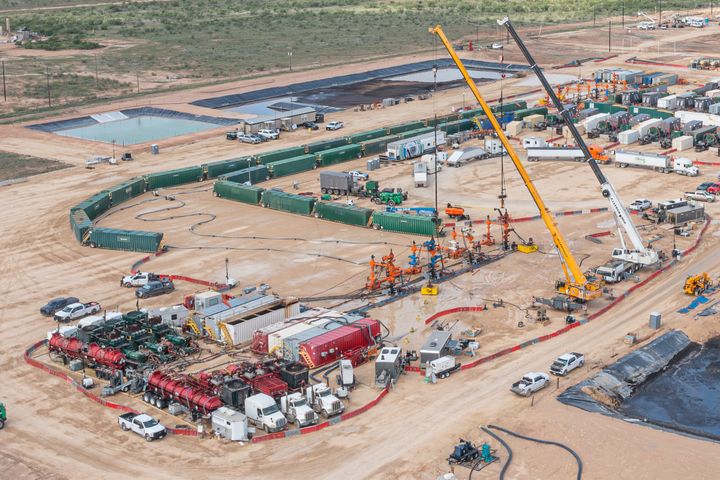
Operators in the Permian have built a substantial inventory of drilled but uncompleted wells (DUCs) in prior years. Completion crews — frac spreads — convert DUCs into producing wells. This means the rig count can stay flat while production grows, as long as operators are drawing down DUCs.
DUC inventory in the Permian was running approximately 893 wells in April 2024 per EIA data. As operators have run lean on new drilling but continued completing, that buffer has provided supply without requiring additional rigs. The frac spread count — tracked separately from rig count — is therefore as important as the drill bit count when forecasting near-term Permian supply.
The relationship between frac spreads and near-term production was the subject of CIR's recent analysis on Permian completion trends: The Frac Discount: PUMP, PTEN, and LBRT at Cycle Lows While Crude Trades Near $100.
Production Context: Permian's Share of U.S. Output in 2026
The scale of Permian dominance in U.S. crude supply is difficult to overstate. Combined Texas and New Mexico production averaged approximately 7,689 Mbbl/d in January 2026, against a U.S. total of 13,246 Mbbl/d — a Permian share of roughly 58%. That proportion has been growing steadily for years and is not expected to reverse at current rig and activity levels.
**Texas crude production (Mbbl/d) | New Mexico crude production (Mbbl/d) | Combined (Mbbl/d)**
Jan 2026: 5,570 | 2,119 | 7,689
Dec 2025: 5,806 | 2,258 | 8,064
Nov 2025: 5,831 | 2,324 | 8,155
Oct 2025: 5,767 | 2,348 | 8,115
Sep 2025: 5,812 | 2,319 | 8,131
Source: EIA monthly state crude oil production data, thousand barrels per day. TX and NM used as Permian Basin proxy; both states' production is predominantly Permian-sourced.
The decline from the Oct-Nov 2025 peaks reflects a combination of operator capital discipline, seasonal slowdowns, and pricing-driven decisions. It does not represent structural impairment. CIR Analysis: at current activity levels, Permian production is likely to return to the 7,900-8,100 Mbbl/d range as Q2 2026 completions feed through — assuming WTI holds above $80 and operators execute against their guidance.
What To Watch in the Permian Rig Count Through 2026
The rig count alone is an incomplete signal. Track these in parallel:
- Weekly Baker Hughes Permian number: Any sustained move below 180 rigs would signal meaningful operator pullback, especially if driven by independents reducing activity. A move above 220 would suggest operators are re-accelerating into higher prices.
- Frac spread count: The Primary Vision or ProPetro-sourced weekly frac spread data provides the completion activity signal the rig count doesn't.
- DUC inventory trend: EIA updates DUC counts monthly. A rapidly declining Permian DUC count means operators are running down their buffer — bullish for short-term production but bearish if not replaced by new drilling.
- Operator guidance revisions: Diamondback, Coterra, Devon, and Permian Resources Q1 2026 earnings calls in late April/early May will set the tone. Any guidance cut implies rig reductions; any guidance raise signals the market is misreading the activity level.
- WTI price deck: Operators have been explicit that sub-$75 WTI triggers cuts. Watch the strip, not the spot price.
For the broader context of how oilfield services pricing feeds back into Permian operator margins, see: Production Services Q1 Verdict: North America Holds, But the Thesis Needs Revising.
Crude Intelligence Report is an independent upstream oil and gas intelligence publication. The content in this article is for informational purposes only and does not constitute investment advice, financial advice, or a recommendation to buy or sell any security. Always conduct your own due diligence before making investment decisions. CIR and its contributors may hold positions in companies mentioned; any such positions will be disclosed when known. © 2026 Crude Intelligence Report. All rights reserved.
This article contains forward-looking statements and analytical opinions. Actual results may differ materially.