OPEC+ Adds 188K Bpd in July — WTI Closes at $88 and the Unwind Math Gets Harder

WTI spent most of Tuesday absorbing a supply shock it saw coming — and closing at $88.34/bbl anyway. The OPEC+ decision announced Saturday to add 188,000 barrels per day in July wasn't a surprise in mechanism; it followed the same phased-unwind playbook the group has run since November 2023. What the market didn't fully price in was the acceleration signal: Saudi Arabia and its six co-producers are now unrolling voluntary cuts faster than analysts expected, and the cumulative volume returning to the market through H2 2026 is large enough to complicate any operator planning with a WTI assumption above $90.
What OPEC+ Actually Decided
On June 7, 2026, Saudi Arabia, Russia, Iraq, Kuwait, Kazakhstan, Algeria, and Oman announced a collective production adjustment of 188,000 bpd effective July 1. This tranche comes from the "additional voluntary adjustments" first announced in April 2023 — a separate layer of cuts stacked on top of the formal OPEC+ quota structure. The group has been unwinding these in 138,000–411,000 bpd monthly tranches since late 2025.
The July move follows a June tranche of similar size. Back-to-back monthly increases of roughly 180,000–190,000 bpd represent a pace of roughly 2.2 MMbbl/d of cumulative return over a 12-month period — if the group holds to schedule. The JMMC (Joint Ministerial Monitoring Committee) has been careful to note that tranches can be paused or reversed. The next meeting is July 5.
CIR Analysis: The "gradual and reversible" language in OPEC+ communiqués is real policy, not boilerplate. The group has paused and reversed before — most recently after the April 2026 ceasefire rally collapsed and WTI briefly touched $97. Today's $88 handle suggests the market is treating July as a floor, not a ceiling, for the current unwind. Whether August follows the same tempo will depend on whether WTI holds above $85 into month-end.
What This Means for Operator Economics
The July OPEC+ increment lands at a moment when US E&P operators have already started modulating activity. The Baker Hughes rig count has declined in three of the last four weeks. Permian operators anchored 2026 capex budgets on WTI assumptions ranging from $70 to $85 depending on hedging posture — that range still holds, but the upper end is eroding. At $88, the Permian runs comfortably. At $80 — which is not an unreasonable forward projection if OPEC+ holds schedule and demand growth stays muted — the math tightens on higher-cost wells in the Delaware Basin periphery and the Midland Basin fringe.
Flowback and completions services feel the effect first. As today's CIR deep dive on TETRA and Select Water made clear, service company pricing power correlates tightly to operator willingness to accelerate activity. A WTI in the mid-$80s doesn't kill completions budgets, but it does remove the urgency that drives incremental work orders.
The Permian's Structural Position
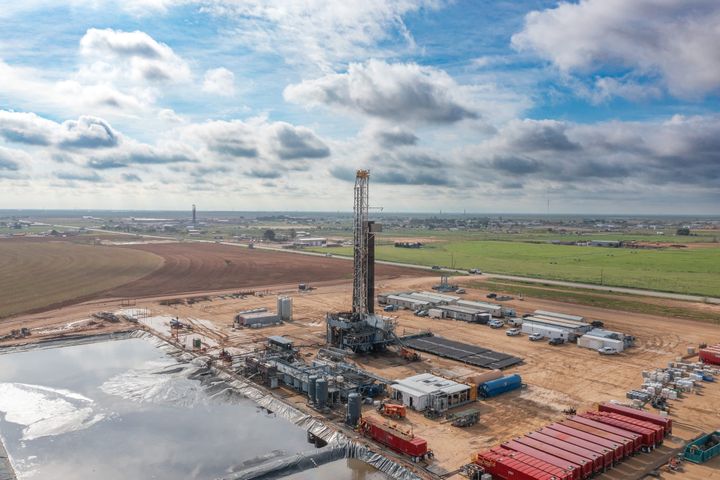
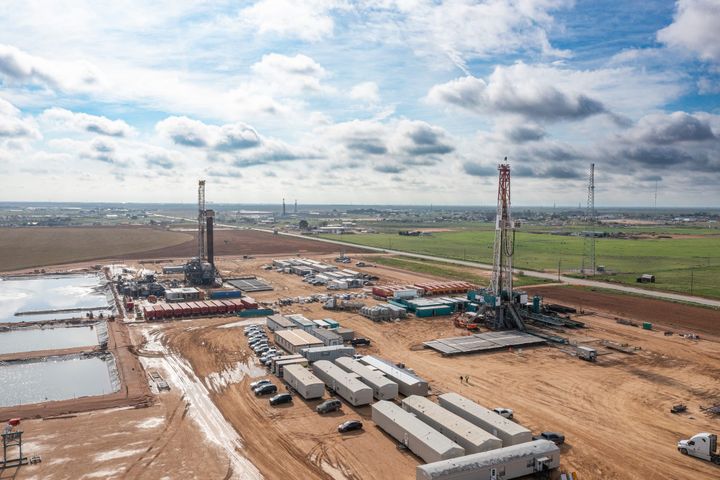
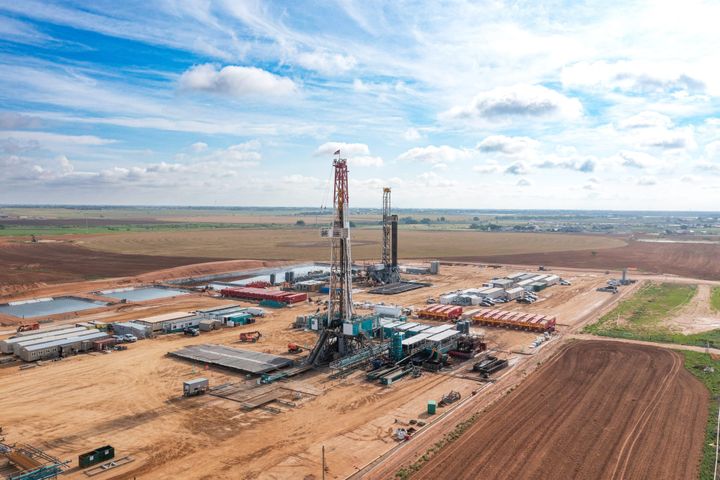
Against this backdrop, new data from the Permian Strategic Partnership reinforces just how central the basin remains to US supply. According to the PSP's 2025 Annual Report, the Permian currently accounts for more than 44% of active US drilling rigs and contributed an estimated $114 billion to the US trade balance in 2025. By 2027, the basin is projected to account for nearly half of US oil production.
That structural weight is part of why sub-$90 WTI doesn't panic the Permian the way it would have in 2019. The major operators have stripped breakevens down to the $45–55/bbl range on core Midland Basin inventory. But it does stratify the basin: operators with deep, low-cost Tier 1 inventory (Diamondback, Permian Resources, Vital Energy at scale) maintain trajectory; operators working thinner rock at higher cost get quieter. The PSP data is worth tracking as a baseline — $366 billion in projected gross product impact by 2050 is a number that doesn't survive a sustained sub-$70 environment.
What To Watch
The July 5 JMMC meeting is the next definitive signal. If the group confirms an August tranche at the same ~188,000 bpd pace, WTI will struggle to hold $88 into summer. If the meeting results in a pause — driven by demand softness or member compliance complaints — expect a $3–5 recovery. Wednesday's EIA crude inventory report (released 10:30am CT) will provide demand-side context: a draw above 2 MMbbl would indicate healthy US refinery throughput and could soften the OPEC+ impact near-term.
For operators: the practical hedge book question is whether existing 2026 hedge coverage (most majors are 30–50% hedged at $80–90 floors) is sufficient to insulate H2 2026 capital programs if WTI settles into an $82–87 trading range. Expect earnings calls in July to re-examine this question at length.
Crude Intelligence Report is an independent upstream oil and gas intelligence publication. The content in this article is for informational purposes only and does not constitute investment advice, financial advice, or a recommendation to buy or sell any security. Always conduct your own due diligence before making investment decisions. CIR and its contributors may hold positions in companies mentioned; any such positions will be disclosed when known. © 2026 Crude Intelligence Report. All rights reserved.
This article contains forward-looking statements and analytical opinions. Actual results may differ materially.