Iran Deal Optimism Sends WTI to $90: Wednesday's Three-Front Pressure Test
Iran deal optimism is driving crude’s third major stress test in as many weeks. WTI is down more than $4 this morning on renewed speculation that US-Iran nuclear talks are moving toward a framework agreement — the same thesis that broke crude below $100 over Memorial Day weekend before Rubio’s denial pushed it back to $92. This time, neither side has formally denied it. That distinction matters to a market that has learned to wait for the denial before buying back.
WTI: $90.03/bbl | Brent: $93.56/bbl | Henry Hub: $3.000/MMBtu | Waha: data unavailable this cycle
Source: Yahoo Finance, 5:30am CT May 27, 2026. Waha daily spot unavailable at publication time.
Iran Deal Optimism: The $90 Test
WTI at $90.03 is down $3.86 on the session — nearly identical to the Memorial Day collapse that bottomed at $90.88 before recovering to $92. Brent has now traded below $100 for three consecutive sessions and opened this morning at $93.56. The catalyst is the same: US-Iran negotiating optimism. What’s different is the silence. No Rubio statement, no Khamenei rejection. Traders are pricing in possibility, not certainty.
CIR Analysis: The $90 floor is being tested for the third time in two weeks. Each prior test held because the geopolitical backstop reasserted itself within 24-48 hours — Iranian military posture, ADNOC dark-mode shipping patterns, physical Hormuz disruption. The question is whether this iteration has more staying power. Brent holding below $95 for a full trading week would begin to shift operator H2 completion decisions in ways the prior flash tests didn’t. Watch the 3pm CT close today.
UK Ofgem Raises Energy Price Cap 13% From July 1
UK energy regulator Ofgem announced this morning it will raise the household energy price cap by 13% effective July 1, citing elevated wholesale gas prices driven by the Middle East crisis. This is the first formal regulatory mechanism translating Hormuz disruption into European consumer billings. A 13% hike in midsummer — well before the European winter heating season — signals that the wholesale gas shock is durable enough that the regulator isn’t waiting for October’s reset cycle.
CIR Analysis: European demand destruction from sustained price shocks is the bearish counterweight to the supply disruption thesis. If UK and EU households shift energy behavior in response to higher caps, IEA’s 2026 deficit assumptions weaken on the demand side. It doesn’t eliminate the supply deficit — Hormuz is still disrupting 10+ MMbpd of throughput — but it’s a headwind for US LNG exporters and Haynesville/Appalachian producers betting on European gas demand growth in H2.
ADNOC Sends Second LNG Carrier Through Hormuz in Dark Mode
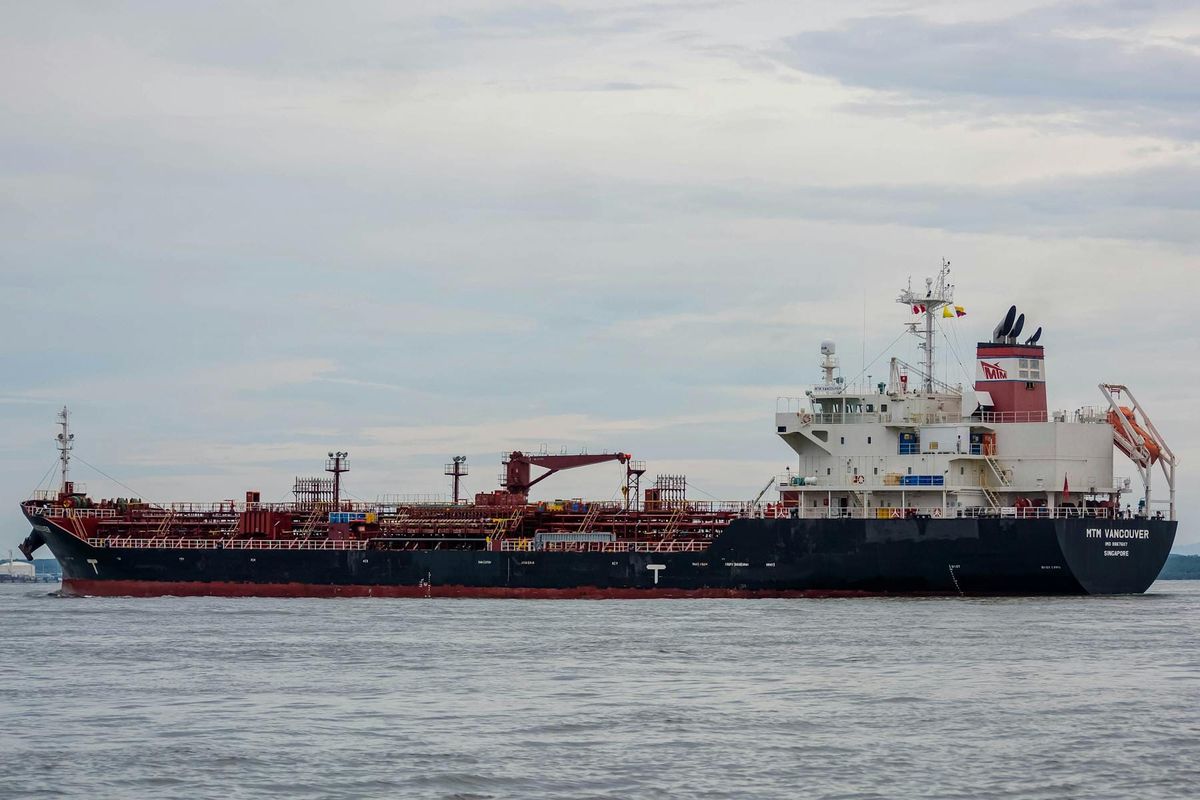
Abu Dhabi National Oil Company has routed a second LNG carrier through the Strait of Hormuz with AIS transponders off, per Bloomberg’s shipping data. The vessel is bound for India. ADNOC is bypassing Hormuz monitoring rather than rerouting through the Bab-el-Mandeb or Cape of Good Hope — a signal that the strait remains passable for state-linked operators with political cover, but commercial traffic without that cover is still exposed. Iran is managing Hormuz as leverage, not a full blockade. That’s consistent with the case-by-case selective passage pattern since early May.
Wednesday Capital and Regulatory: RBL Season at $90
Spring reserve-based lending redeterminations are now running directly into WTI’s third sub-$95 test. Most spring RBL cycles are 60-90% complete by Memorial Day — meaning any operator still in active negotiations with lenders is now looking at spot WTI $8 below where it was two weeks ago. The key variable is whether banks use a 12-month trailing price deck or current forward strip. In the May strip, $90 WTI is a more significant negative signal than the brief $90.88 Memorial Day close. A sustained hold below $92 into June would pressure borrowing base outcomes for smaller operators with thinner coverage ratios.
CIR Analysis published: Ofgem's 13% Cap Hike Is a US LNG Demand Signal: What EQT and EXE Producers Should Know — full article available to paid subscribers.
CIR Analysis published: The Day-Rate Thesis at $90: What H&P, PTEN, and Nabors Need From Here — full article available to paid subscribers.
Disclosure: The author/publisher holds positions in EQT Corporation and Expand Energy (EXE) as of the publication date. This does not constitute investment advice.
Crude Intelligence Report is an independent upstream oil and gas intelligence publication. The content in this article is for informational purposes only and does not constitute investment advice, financial advice, or a recommendation to buy or sell any security. Always conduct your own due diligence before making investment decisions. CIR and its contributors may hold positions in companies mentioned; any such positions will be disclosed when known. © 2026 Crude Intelligence Report. All rights reserved.
This article contains forward-looking statements and analytical opinions. Actual results may differ materially.