WTI at $96, Brent Above $105: Iran War Reshapes Global Crude Flows

WTI is trading at $96.49 intraday, up $6.88 (+7.68%), and Brent has broken above $105 — the Iran war premium is doing what war premiums do: compressing risk tolerance across every Atlantic Basin supply chain. The real story isn’t the price alone; it’s what’s happening underneath it. Russia is routing fuel oil to Saudi Arabia, Mexico is sending crude to Japan, and Europe is staring down a gas storage shortfall that could last the winter.
Price Snapshot — April 23, 2026
WTI: $96.49/bbl | Brent: $105.98/bbl | Henry Hub: $2.736/MMBtu | Waha: $2.81/MMBtu
Prices as of Thursday morning, April 23, 2026 (Yahoo Finance / CME futures)
Iran War Premium Pushes Brent Through $105
The Brent-WTI spread has ballooned to $9.49/bbl — nearly double the historical $3–5 norm — as Hormuz disruption concentrates in the international benchmark. WTI’s $96.49 intraday print marks a $5.43 jump from Friday’s FRED close of $91.06. Brent is now trading at $105.98, up 11.0% intraday per Yahoo Finance live data. The war premium isn’t showing signs of compression: the Hormuz strait remains constrained, and every buyer without alternative supply lines is repricing risk. US crude stocks are drawing — down 2.2 MMbbl to 870.8 MMbbl as of April 17, per EIA, tightening domestic supply cushion even as production holds flat.
Global Trade Reorder: Russia to Saudi, Mexico to Japan
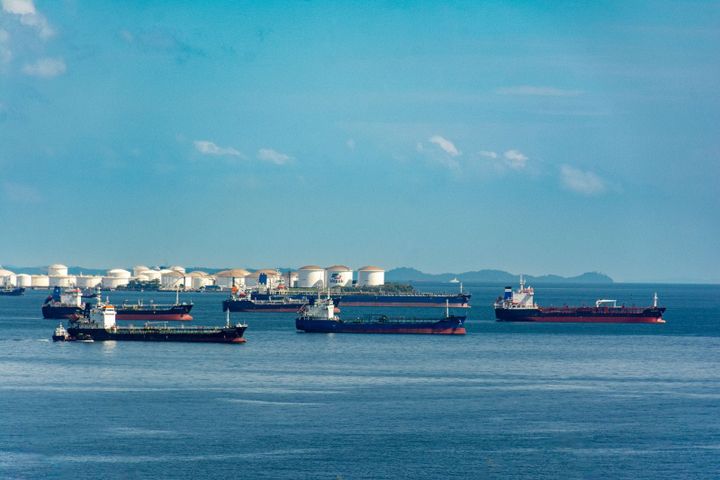
Reuters reported Thursday that Russia’s seaborne fuel oil and vacuum gasoil exports to Saudi Arabia jumped 18% month-over-month in March to 1 million metric tons, as global supply chains restructure around Hormuz disruption. Separately, Mexican President Claudia Sheinbaum announced Mexico will export 1 million barrels of crude to Japan — a direct signal that Pacific Basin buyers are turning to Americas suppliers. Pemex uses roughly 1.4 MMbbl/d domestically; the remainder is now increasingly directed toward Asia as Hormuz-exposed refiners seek non-Gulf alternatives. The Guyana Stabroek ramp to 800K bbl/d and Canada’s TMX loading near 890K bbl/d are part of the same structural reorder.
EU Gas Storage Shortfall — Bullish for US LNG
European energy regulators’ agency ACER warned Thursday that EU member states will not meet the 90% gas storage fill requirement ahead of winter, blaming Iran war disruption to global fuel markets, per Reuters. This is structurally bullish for US LNG export volumes from Sabine Pass, Corpus Christi, and Plaquemines LNG. Waha Hub pricing has compressed to near-parity with Henry Hub ($2.81 vs. $2.736/MMBtu as of April 20, per EIA) — unusual for a hub that typically trades at a $0.30–$1.50/Mcf discount. CIR Analysis: the Iran war premium appears to be lifting all natgas curves, not just crude. Haynesville and Appalachian producers are the structural beneficiaries of the European storage deficit heading into summer injection season.
US Production Holds Flat — Capital Discipline at $96 WTI
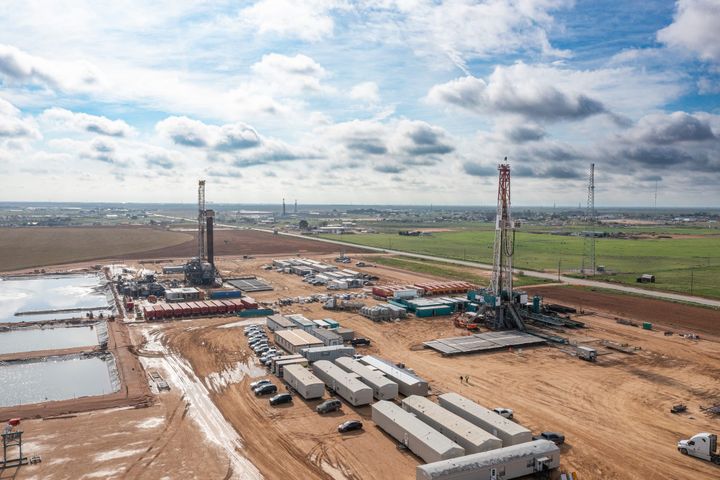
Per EIA weekly data as of April 17, US field production stands at 13.585 MMbbl/d — essentially flat from 13.596 MMbbl/d the prior week. CIR Analysis: at $96 WTI, US operators are maintaining the capital return-over-growth framework that has dominated since 2022. There is no production surge in the data. If Iran premium persists and output stays disciplined, inventory tightening in Q2–Q3 sets up meaningful supply support for prices. The completions sector — wireline, coiled tubing, cementing — is the near-term beneficiary watch: completions acceleration typically lags a sustained price signal by 3–6 months, putting Q3 2026 in the frame.
CIR Analysis published: EU Gas Storage at 31%: ACER’s Warning and the US LNG Opportunity — full article available to paid subscribers.
CIR Analysis published: Americas Crude Steps Into the Hormuz Void: Mexico, Guyana, and Canada Reshape Atlantic Basin Trade — full article available to paid subscribers.
Crude Intelligence Report is an independent upstream oil and gas intelligence publication. The content in this article is for informational purposes only and does not constitute investment advice, financial advice, or a recommendation to buy or sell any security. Always conduct your own due diligence before making investment decisions. CIR and its contributors may hold positions in companies mentioned; any such positions will be disclosed when known. © 2026 Crude Intelligence Report. All rights reserved.