EU Gas Storage at 31%: ACER’s Warning and the US LNG Opportunity
EU working gas storage sits at 30.93% as ACER warns the 90% winter fill target won’t be met. The math points to one solution: more US LNG. Here’s what it means for Haynesville, Appalachian producers, and the completions companies servicing them.
Source data: GIE AGSI EU gas storage inventory (April 23, 2026); EIA U.S. LNG export data; FRED Henry Hub daily; Reuters
Europe’s gas storage crisis is becoming the demand floor that every US LNG producer has been waiting for. The Agency for the Cooperation of Energy Regulators warned Thursday that EU member states will fall short of the legally mandated 90% storage fill target ahead of winter 2026-27 — a direct consequence of the Iran war’s disruption to global fuel markets. As of April 23, EU working gas storage stands at just 30.93% of capacity, according to GIE AGSI data. Getting to 90% by November 1 requires injecting roughly 669 TWh of gas in approximately 190 days. At current injection rates, that math doesn’t work. The only backstop is more LNG — and the US is best positioned to provide it.
The Storage Deficit in Numbers
EU gas storage capacity is approximately 1,132.8 TWh. As of Thursday, storage sits at 350.4 TWh — 30.93% full. The EU’s Gas Storage Regulation requires member states to reach 90% fill by November 1 each year, a target that became law after Russia’s 2022 invasion of Ukraine forced emergency refilling at any cost.
At 30.93%, Europe is slightly above year-ago levels. In 2025, the injection season benefited from relatively stable LNG supply and moderate prices. This spring is different. The Iran war, ongoing since February 2026, has disrupted fuel flows through the Strait of Hormuz and compressed global LNG availability from Qatar and other Middle Eastern exporters. The result: Europe enters injection season 2026 with roughly comparable starting inventory but a materially harder supply environment.
To reach 90% from 30.93% in roughly 190 days requires net daily injection averaging approximately 3.5 TWh per day. As of April 23, net injection had barely turned positive as the winter withdrawal season wound down — per GIE AGSI, net injection was running at approximately 1.77 TWh/day. Even allowing for seasonal ramp-up as temperatures rise, Europe needs to nearly double its injection rate and sustain it through October. That requires incremental supply — and incremental supply means LNG.
The US Export Opportunity
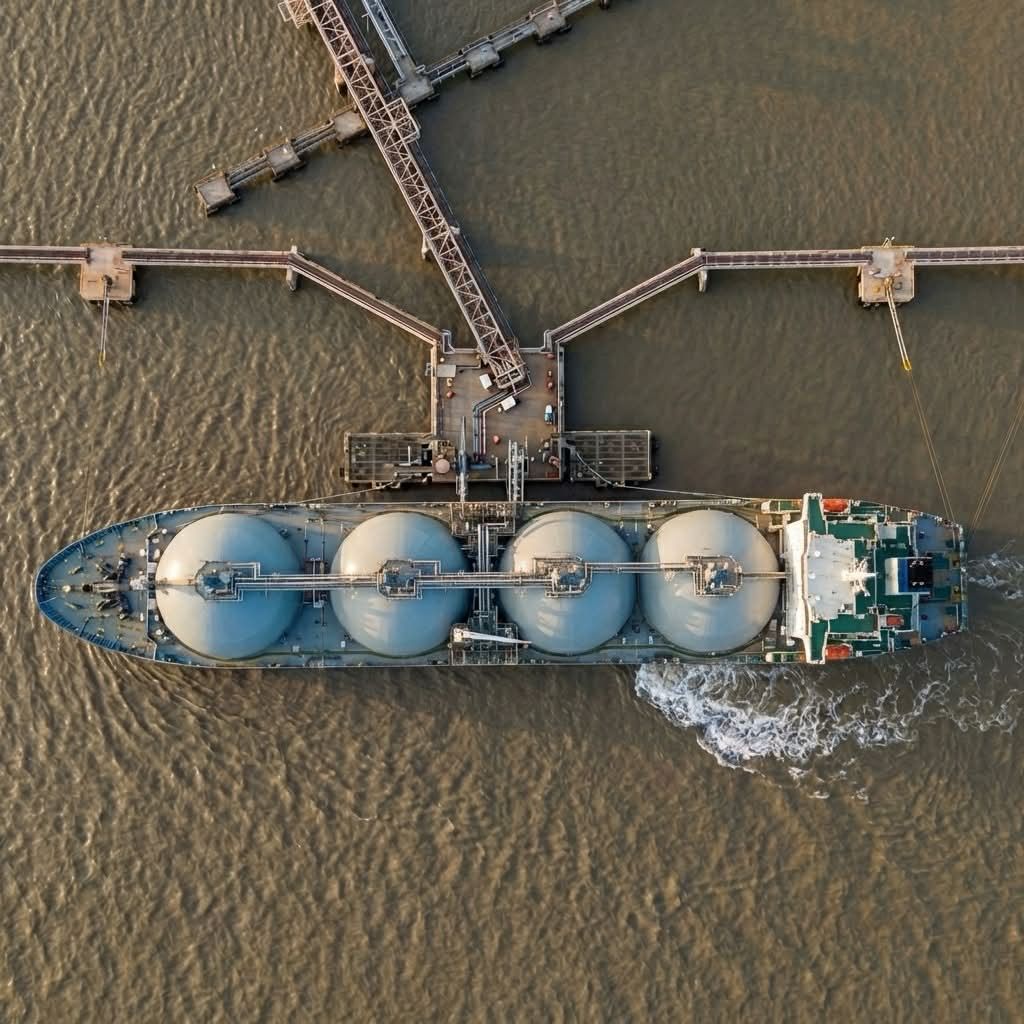
US LNG exports have already been running at elevated levels. According to EIA data, US LNG exports reached 17.4 Bcf/d in January 2026, up from 13.4 Bcf/d in January 2025 — a 30% year-over-year increase driven by the commissioning of Plaquemines LNG Phase 1 and additional trains at Sabine Pass and Corpus Christi. The pace moderated in summer 2025 as destination markets shifted, but the Iran war premium has reverted European buyers to spot and short-term LNG contracts at significant premiums.
Jan 2026: 17.4 Bcf/d | Dec 2025: 18.4 | Nov 2025: 17.5 | Jan 2025: 13.4 (+30% YoY) | Jan 2024: 13.3
Source: EIA U.S. LNG export data
Henry Hub closed at $2.81/MMBtu as of April 20, per FRED data, and traded intraday at approximately $2.74 on April 23. That price point is historically cheap given the demand setup: US domestic storage at 2,063 Bcf as of April 17 is above year-ago levels of 1,934 Bcf, suppressing domestic prices even as global LNG destination prices are elevated. The result is a structural arbitrage: US LNG producers are selling product into a market pricing far above Henry Hub, and Europe’s storage math is about to tighten that trade further.
Haynesville and Appalachian Producers: The Structural Beneficiaries
The LNG supply chain runs upstream. The major US LNG export terminals — Sabine Pass, Corpus Christi, Freeport, Plaquemines, and Calcasieu Pass — take feed gas primarily from Haynesville (via Texas/Louisiana intrastate systems) and to a growing degree from Appalachian producers via Gulf Coast connectivity projects.
Haynesville producers — Comstock Resources, Expand Energy (formerly Chesapeake), and Aethon Energy among others — are directly proximate to Gulf Coast LNG export infrastructure. Feed gas demand from LNG terminals has been the primary support floor under Haynesville economics even as Henry Hub has remained soft. A sustained EU refilling campaign requiring incremental LNG is unambiguously constructive for Haynesville wellhead pricing.
Appalachian producers including EQT, Range Resources, and Coterra’s Marcellus position are more pipeline-constrained to Gulf Coast LNG, but Mountain Valley Pipeline and further east-to-south connectivity improve that path over the medium term. Additional LNG demand pulling on Haynesville keeps Haynesville prices supported, which in turn limits displacement of Appalachian volumes in the Southeast — a structural uplift that propagates through the gas basin complex.
The Completions Demand Signal
The EU storage deficit, if it persists into the summer injection season as ACER expects, creates a durable demand signal that Haynesville and Appalachian operators should be accelerating completion programs in response to. Gas completions cycle faster than oil: a Haynesville completion from spud to first production runs roughly 60-90 days including flowback. An operator completing DUCs today could have incremental gas on pipeline before Europe’s critical October injection deadlines. At current LNG netback prices, the economics are compelling.
CIR Analysis: The companies most directly levered to this demand signal are wireline service providers working gas basins — KLX Energy Services, RPC Inc.’s wireline division, and Halliburton’s completions segment. Forum Energy Technologies, which manufactures completion tools, coiled tubing BHAs, and wellhead equipment, is a second-order beneficiary. None of these companies have reported Q1 2026 earnings yet; their Q1 results and Q2 guidance will be the first real data point on whether Haynesville and Appalachian completion activity is responding to the LNG demand signal. CIR will be watching KLX and RPC prints specifically.
One additional demand vector: Reuters reported Thursday that NextEra Energy CEO John Ketchum expects to finalize agreements within approximately three months for large natural gas-fired power projects backed by Japan, destined for US data centers. This is not an LNG export story directly, but it is another structural demand pillar under US natural gas — one more reason Henry Hub at $2.74 looks cheap relative to where the demand setup is pointing.
What To Watch
- GIE AGSI weekly EU storage data — April 30 and May 7 readings will show whether Europe begins injecting at a pace consistent with reaching 90%. If injection rates don’t accelerate materially, the storage miss scenario becomes structural rather than near-term.
- US LNG feedgas demand — EIA tracks daily feedgas nominations to export terminals. Watch for sustained nominations above 15 Bcf/d into May as EU refilling urgency intensifies.
- Haynesville rig count — Baker Hughes weekly data (released Fridays). Additions in Haynesville would signal operator response to the LNG netback opportunity.
- KLX and RPC Q1 earnings — Both due in May. Wireline and coiled tubing utilization in gas basins will be the first evidence of completion acceleration.
- Henry Hub pricing — A sustained move above $3.00/MMBtu would accelerate the upstream response. At $2.74, the domestic-to-global LNG spread is the opportunity for producers willing to move inventory forward.
Crude Intelligence Report is an independent upstream oil and gas intelligence publication. The content in this article is for informational purposes only and does not constitute investment advice, financial advice, or a recommendation to buy or sell any security. Always conduct your own due diligence before making investment decisions. CIR and its contributors may hold positions in companies mentioned; any such positions will be disclosed when known. © 2026 Crude Intelligence Report. All rights reserved.
This article contains forward-looking statements and analytical opinions. Actual results may differ materially.