The Rig Count That Defied $70: BHI's Week-Close Signal for US Upstream
WTI closed at $69.91. Baker Hughes reported 573 rigs — up 10 week-over-week. The rig count is rising as price breaks $70. Here's what that signal means.
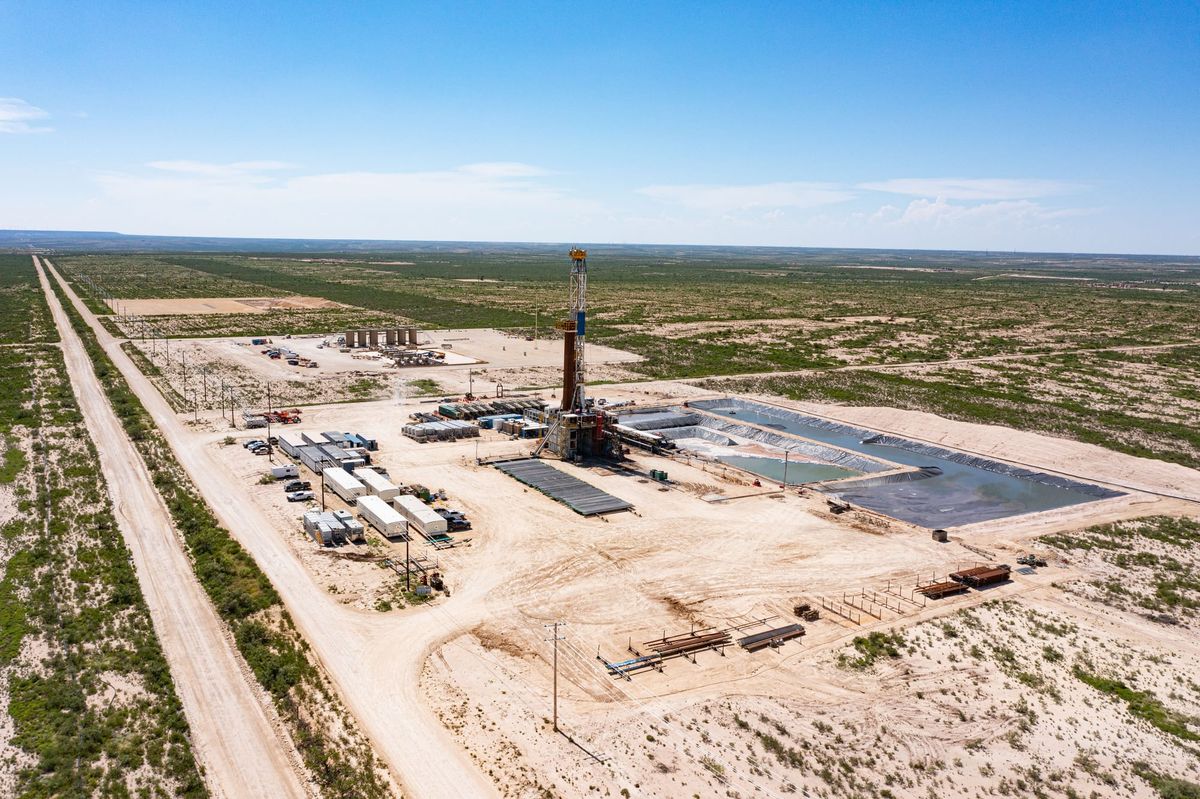
BHI Rig Count | Week ending June 26, 2026 | Source data: Baker Hughes North America Rotary Rig Count (June 26, 2026 report), FRED commodity price series, Business Insider Markets
WTI closed Friday at $69.91, down 2.79% on the day and off 11.4% from last Friday's $78.94 close. Brent settled at $72.82, a matching decline. Henry Hub dropped 3.35% to $3.23/MMBtu — both oil and gas selling off together, the oil-gas divergence thesis that drove much of this week's analysis reversing cleanly into the close.
And yet: the rig count went up.
Baker Hughes reported 573 total US rotary rigs active as of June 26 — up 10 from last week's 563, and up 26 year-over-year from 547. Oil rigs added 7 to reach 440. Gas rigs added 3 to 125. The Permian basin added 2 to 258.
The Paradox That Defines This Week
This should not be happening. The textbook relationship between WTI and the rig count has operators idling equipment when prices break $70 — that's been the historical floor where marginal wells stop penciling out, where capital discipline dominates over lease-hold commitments, where banks start asking hard questions at redetermination season.
The count is not just holding. It's rising. And rising to the highest level since early May, just as WTI posted its worst weekly close in months.
CIR Analysis: There are two explanations for this, and both are probably true at once. First, the rig count lags commodity prices by 6-8 weeks. The rigs drilling right now were contracted and mobilized when WTI was at $75-$78. The wells being spud today were permitted and planned at a time when strip prices justified them. That lag means the rig count won't reflect $70 WTI until mid-August at the earliest. Second — and this matters more for the medium term — Permian tier-one economics don't break at $70. The major operators have stripped their cost structures down to where full-cycle breakevens in the core Midland and Delaware are in the mid-to-upper $40s per barrel. At $70 WTI, those wells still generate cash. They still support drilling.
What the Permian Number Actually Says
Permian at 258 rigs is up from 256 last week and up 2 from a month ago. That's effectively flat — but flat is not a collapse. The basin has shed exactly two rigs in six weeks of sub-$75 WTI. The operators running iron in the Midland and Delaware are running it on contract economics that predate this week's price action.
The non-Permian number is doing something different. The "Other" category — everything outside the named basins — added 8 rigs week-over-week to reach 102. That's the wildcard. Other includes DJ-Niobrara, some Mid-Continent, and a catch-all of smaller plays. It's where the marginal economics live, and it's where the first shedding will appear if WTI stays below $70 into July.
The Eagle Ford and Williston were both flat at 44 and 28 respectively. Haynesville held at 55. These numbers tell a consistent story: operators are not reacting yet. They are waiting to see whether sub-$70 is a floor test or a new range.
The Week That Was
This week's price action was almost entirely macro-driven. WTI opened Monday at $69.32 after FRED's last close print was $78.94 the prior Friday — meaning the gap-down happened over the weekend, attributed to Iran supply resumption fears, OPEC+ compliance concerns, and dollar strength. Then the week continued lower, with today's close at $69.91 representing the second consecutive Friday below $70 and the lowest weekly close since before the Hormuz premium built in spring 2026.
The commodity prices underneath energy equity performance this week: WTI -11.4% week-over-week, Brent -4.7% (using prior FRED Friday close of $76.49), Henry Hub $3.23 (down 3.35% today alone).
CIR Analysis: The Devon note exchange covered in this morning's brief was the only EDGAR event of significance this week that wasn't already accounted for in prior articles. That says something about where we are. This wasn't an event-driven week. It was a price-driven week — a slow grind lower on macro sentiment with no single headline catalyst. Those are the hardest weeks for operators to navigate. When crude falls on a deal collapse or an inventory shock, the sell-off has a thesis and a recovery potential timeline. When it slides on diffuse macro pressure — dollar strength, global demand concern, incremental OPEC+ supply — there's no single catalyst to watch for resolution.
What To Watch
- July 4 holiday week, thin trading: The next two weeks of WTI price action will be low-conviction. Expect volatility on thin volumes. The real test comes in the second and third weeks of July when Q2 earnings guidance begins flowing.
- Rig count July 3: The next BHI print lands July 3 (pre-holiday, noon CT release). If the count holds above 560 despite $70 WTI, the lag thesis is confirmed and the structural floor is intact. If it drops 10+, the signal changes.
- Q2 operator calls: Diamondback, EOG, and Pioneer equivalents will be the first to signal whether $70 WTI changes capex guidance for H2. FANG's annual guidance held at 6 rigs in Q1. That's the number to watch.
- EIA Wednesday inventory: The July 1 storage report will be the first data point released into a holiday-thinned market. Any significant draw (>3 MMbbl) would challenge the macro-driven selloff narrative.