$70 WTI and What the Market Just Told Us: Day-Close Verdict for US Upstream
WTI crude settled near $70 on Thursday, and the market's verdict is clearer than the headlines suggest: OPEC's cohesion is cracking, US upstream operators are repricing their second-half assumptions, and the companies that moved earliest to consolidate their balance sheets are now sitting in the best defensive position. The day's close is not just a number — it is a stress test that separates the prepared from the exposed.
The morning's geopolitical news — Iraq threatening to exit OPEC over quota disputes — would have historically triggered a sharp rally. Instead, WTI held near $70 and Brent drifted lower through the session. That non-reaction is the story. When a credible supply disruption threat from the world's third-largest OPEC producer moves the market by less than a dollar, it means traders have already priced in the erosion of OPEC+ discipline. The cartel's ability to defend a price floor is now genuinely in question, not as a theoretical risk but as a market consensus. The Iraqi threat is not the cause of today's weakness — it is a symptom of the same structural problem that's been building for eighteen months.
The FRED data tells the price trajectory plainly: WTI sat at $80.35 on June 18 and $78.94 on June 22. By June 24, AP was reporting oil falling below $75 for the first time since the start of the Iran conflict. By Thursday's close, the $70 level — a threshold that served as psychological support for years — has been tested and is now contested. CIR Analysis: a $9/bbl swing in five trading sessions is not noise. It reflects a genuine reassessment of the supply recovery timeline, particularly as Saudi Arabia's Ras Tanura terminal is reported to be resuming full operations, Middle East fuel oil exports are tracking to a four-month high, and ADNOC cut its July Murban OSP to $101.48 from $104.44. The Gulf is re-supplying faster than many bulls expected.
Against that backdrop, Devon Energy's decision to complete the Coterra note exchange today — retiring hundreds of millions in Coterra-branded debt and replacing it with Devon paper — reads as a deliberate signal. DVN filed its 8-K at 4:34 PM ET, settling the exchange of approximately $585 million in Coterra 3.90% senior notes due 2027, plus additional tranches across the 2029 and longer-dated maturities. The mechanical purpose is debt consolidation post-merger. The strategic message is that management is moving quickly to complete the Coterra integration while the credit window is still open. CIR Analysis: executing a large note exchange on the same day WTI breaks $70 is not coincidental timing — it is exactly the kind of liability management you complete before market conditions potentially narrow your options. Devon is signaling confidence in its balance sheet at a moment when that confidence is expensive to demonstrate.
Western Midstream Partners also filed a material definitive agreement today, a reminder that midstream operators are not immune to the repricing pressure — and that their contracts, while fee-based, ultimately depend on throughput volumes that correlate with operator activity levels. If US E&Ps begin trimming DUC completions in response to sustained $70 oil, midstream will feel it in the back half of 2026.
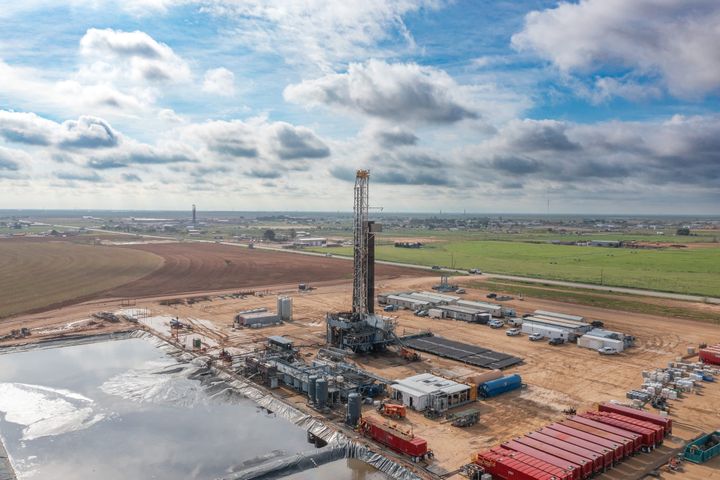
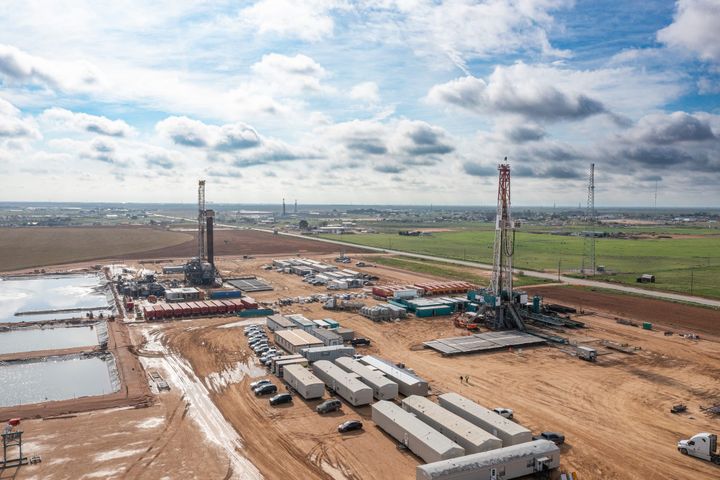
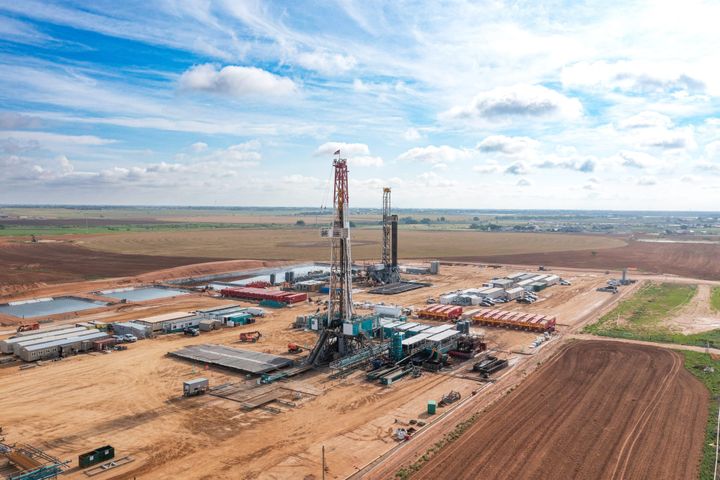
The H2 2026 question is now squarely on the table. Most US upstream operators built their 2026 activity programs assuming WTI in the $75–$80 band. The Permian's breakeven economics at scale — particularly for the majors and super-independents — are generally sub-$60 on a full-cycle basis for tier-one acreage, so $70 does not threaten production from existing wells. What it threatens is the authorization of new programs: Q3 and Q4 completion schedules, frac crew commitments, and any discretionary infrastructure spending. Operators like DVN and COP have the balance sheet depth to hold through a prolonged patch at $70. Smaller independents with higher leverage ratios face a harder conversation with their banks in the next borrowing base redetermination cycle.
What To Watch
- DVN integration timeline: Devon should announce a post-exchange capital structure update within 30 days. Watch for whether management chooses to reduce total debt outstanding or simply simplify the liability stack — the answer will indicate how much financial flexibility they retained from the Coterra deal economics.
- OPEC+ July meeting signals: With Iraq publicly threatening exit and Saudi Arabia apparently comfortable letting prices drift lower, any communiqué language around compliance enforcement will be the single most important catalyst for crude direction before Q3 earnings season.
- DUC completion rates in the Permian: EIA's weekly production data through July will be the first empirical test of whether $70 WTI is actually slowing US output or whether hedged operators are running through their programs as planned. A 50,000 bbl/d deceleration in Permian output would be the first real signal of demand destruction at the wellhead.
- WES throughput guidance: Western Midstream's material agreement filing warrants a closer read when details emerge. Any volume-floor renegotiation against a DVN-Coterra combined entity would be a leading indicator of how the Devon integration is reshaping midstream commercial structures in the Delaware Basin.
Crude Intelligence Report is an independent upstream oil and gas intelligence publication. The content in this article is for informational purposes only and does not constitute investment advice, financial advice, or a recommendation to buy or sell any security. Always conduct your own due diligence before making investment decisions. CIR and its contributors may hold positions in companies mentioned; any such positions will be disclosed when known. © 2026 Crude Intelligence Report. All rights reserved.