Year in Review: The 10 Biggest Upstream Stories of 2025
Twelve months. Eight articles a month from CIR. Dozens of stories tracked, hundreds of data points analyzed. Here are the ten upstream stories that actually mattered in 2025 — the ones that will shape what comes next.
1. The Post-Merger Integration Test
2024 was the year of the megadeal. 2025 was the year of the reckoning. ExxonMobil absorbed Pioneer Natural Resources — 65 employees, 100,000 net Permian acres, and roughly 720,000 net Boe/d of production — and did it cleanly. The Pioneer integration proceeded faster and more smoothly than most observers expected. ConocoPhillips similarly absorbed Marathon Oil with minimal operational disruption. These integrations answered the skeptic's question: yes, the majors can buy and run independent shale operations without destroying the efficiency that made them valuable.
2. Natural Gas Finally Got Religion
After two years of punishing oversupply, the gas market started behaving. Curtailments worked. LNG pulled demand. Henry Hub recovered from sub-$2.00 to approaching $3.50 by year-end. The producers who held discipline — EQT's deliberate curtailments, Expand Energy's measured pace — were vindicated. The ones who drilled through the downturn are sitting on higher-cost inventory. Lesson: price signaling works in U.S. shale, especially in gas, when operators actually listen to it.
3. Devon Energy Goes to the Bakken
Devon's $5.0 billion acquisition of Grayson Mill Energy's Williston Basin assets was the most consequential basin-entry by a major independent in years. It added 60,000 net acres in core Bakken/Three Forks territory, roughly 300 MMBoe of reserves, and a high-quality operational team. More importantly, it diversified Devon away from its Delaware Basin concentration at a point in the cycle when Permian valuations were elevated. Bold move. Solid execution.
4. Diamondback Solidifies Permian Dominance
The Double Eagle IV acquisition for $4.1 billion cemented Diamondback as the leading pure-play Permian independent. With Endeavor Energy absorbed in late 2024 and Double Eagle added in Q2 2025, Diamondback's inventory runway extended meaningfully at economics that remain among the best in the basin. The company's per-well cost structure — approximately $650–$700 per foot in the Midland Basin — sets the efficiency benchmark that everyone else measures against.
5. LNG Build-Out Reaches Critical Mass
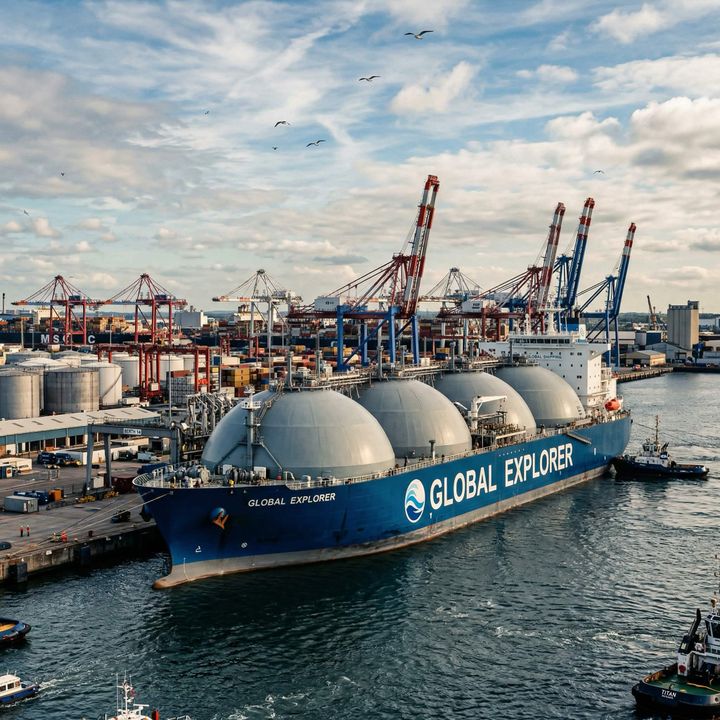
Plaquemines LNG Phase 1 reached first production. Port Arthur LNG broke ground. Corpus Christi Stage 3 trains came online. The aggregate effect: U.S. LNG export capacity crossed 14 Bcf/d of nameplate in 2025, permanently re-plumbing how domestic gas supply and demand balance. The Haynesville Basin is the direct beneficiary. The implications for the U.S. position in global energy geopolitics are significant and still being absorbed.
6. The Rig Count Held Steady — and That Was the Story
The U.S. rig count neither collapsed nor expanded in 2025. Baker Hughes' weekly count ranged from approximately 570 to 600 active land rigs all year, reflecting an industry that has found its equilibrium. That stability, historically unusual in an industry known for wild activity swings, reflects genuine capital discipline from public operators, efficiency improvements that reduce rig needs per unit of production, and a price environment that neither demanded more activity nor punished existing programs.
7. OPEC+ Delayed Its Unwind — Again
For the third consecutive time, OPEC+ postponed the gradual return of its 2.2 MMbbl/d voluntary production cut. Saudi Arabia's priority remained price support over market share, a rational choice given the kingdom's fiscal needs. The consequence for U.S. producers was a price floor that held WTI largely above $65 — uncomfortable but workable. The political dynamics within OPEC+ — particularly Iraq and Kazakhstan overproducing — remained unresolved.
8. Appalachia Waited Patiently and Was Rewarded
EQT, Range Resources, Coterra, and CNX all spent 2025 constraining growth and protecting cash flow in a sub-$2.50 gas price environment. By year-end, that patience was paying off as prices recovered. Mountain Valley Pipeline added critical egress capacity. The long-term LNG demand signal was confirmed. Appalachian gas, the lowest-cost resource in North America, is positioned for a sustained recovery period entering 2026.
9. Private Equity Continued Its Exit
The PE-to-public transfer that began in earnest in 2023 continued through 2025. Warburg Pincus, Quantum, KKR, and Kayne Anderson all monetized upstream positions. Double Eagle was the marquee exit. The cumulative effect has been a healthier industry: private operators built the inventory, public operators bought it at fair prices, and PE capital recycled into the next vintage of opportunities. The system is working.
10. Efficiency Kept Running
The efficiency story never makes the front page, but it is the most important trend in U.S. upstream. Average lateral lengths in the Permian exceeded 11,000 feet in 2025. Drill-to-total-depth times continued compressing. Completion intensity — measured in pounds of proppant per foot — reached new records. The result: more production from the same rig, at lower cost per barrel, quarter after quarter. It is the reason U.S. shale remains competitive at $70 WTI when conventional wisdom said it would need $80. Efficiency is the story. It just never stops being the story.
CIR will be back in January with the Q1 2026 kickoff. See you in the New Year.
Crude Intelligence Report is an independent upstream oil and gas intelligence publication. Content is for informational purposes only and does not constitute investment advice, financial advice, or a recommendation to buy or sell any security. Always conduct your own due diligence before making investment decisions. The author and publisher hold no positions in any companies mentioned in this article. © 2026 Crude Intelligence Report. All rights reserved.