Solaris Energy Infrastructure: The Oilfield Logistics Company That Became a Hyperscaler Power Supplier (SEI)
SEI | NYSE | Source data: Q1 2026 earnings release (April 27, 2026), Form 10-Q filed May 1, 2026 (SEC accession 0001628280-26-029046), 8-K filed April 27, 2026 (SEC accession 0001628280-26-027520), 8-K filed May 5, 2026 (SEC accession 0001193125-26-205278)
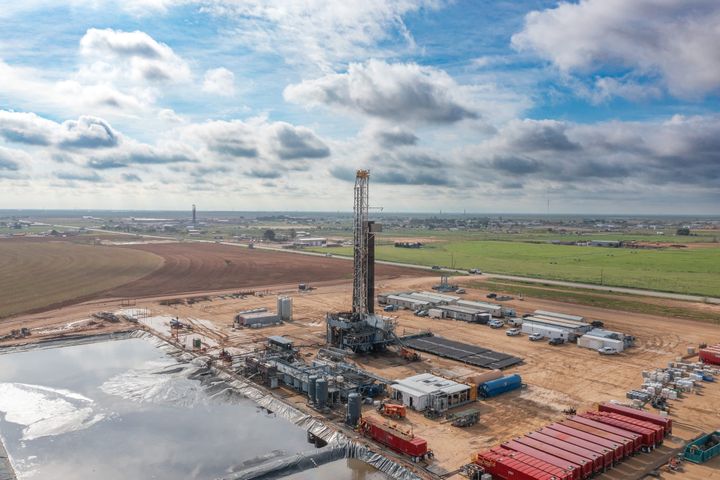
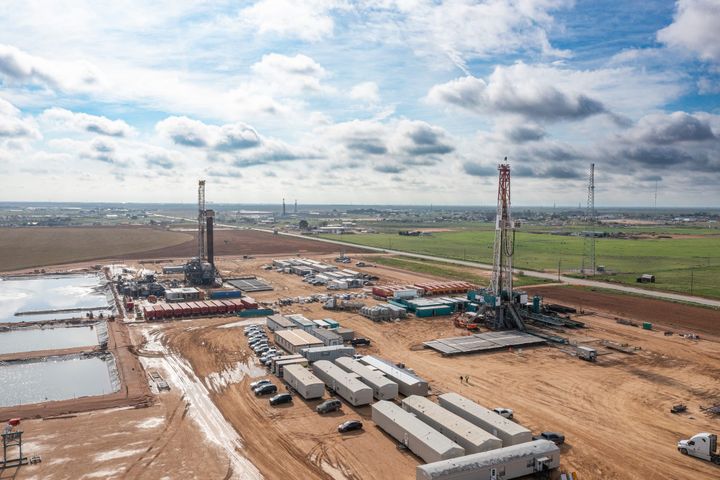
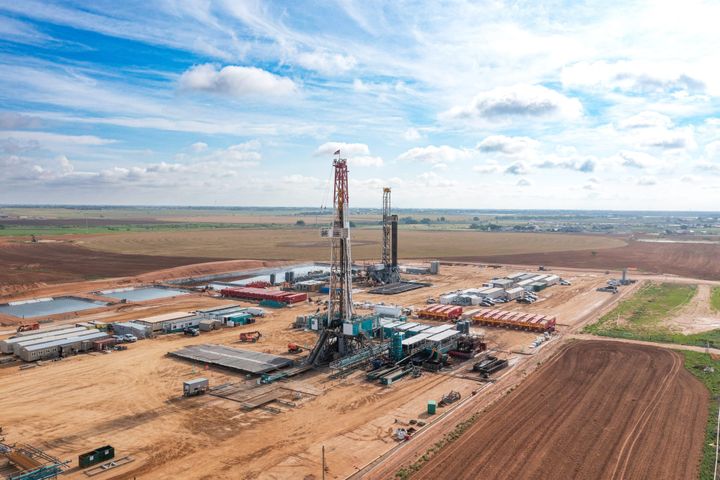
Solaris Energy Infrastructure is not the company it was two years ago. The Houston-based firm that made its name moving proppant to Permian frac sites has pivoted to become a distributed power provider for hyperscale data centers, closed a near-half-billion-dollar acquisition in a single quarter, signed three long-term power contracts with global technology companies, and raised $1.3 billion in senior notes. Q1 2026 results tell the story: total revenue hit $196.2 million, up 55% year-over-year from $126.3 million, with the Power Solutions segment posting $128.5 million against Logistics' $67.7 million. Two years ago, proppant logistics was the whole business. Today it is 35% of it.
The Pivot: From Wellsite to Data Center Pad
Solaris rebranded from Solaris Oilfield Infrastructure in 2024 when it became clear that distributed natural gas power was a larger opportunity than completions logistics. The thesis: hyperscale data center developers need power at scale, on compressed timelines, in locations where the grid cannot deliver. Solaris has the equipment, the field operations capability, and the gas-fired generation assets to fill that gap.
The Q1 10-Q lays out the two-segment structure explicitly. Solaris Power Solutions delivers power generation, power control, and power distribution solutions across data center, energy, and commercial-industrial customers. Solaris Logistics Solutions remains the proppant-handling and last-mile wellsite business that served Permian operators for years. Management now evaluates both on Adjusted EBITDA, and the disparity in capital allocation has become stark.
In Q1 2026, Power Solutions absorbed $343.3 million in capital expenditures. Logistics received $103,000. That is not a typo.
Segment Economics: Where the Margin Is Going
Power Solutions Adjusted EBITDA hit $71.9 million in Q1 on $128.5 million revenue, a 56% EBITDA margin. Logistics posted $23.2 million Adjusted EBITDA on $67.7 million revenue, a 34% margin.
Both margins are high by oilfield services standards, but the Power Solutions trajectory is what drives the investment thesis. Year-over-year comparisons:
Solaris Power Solutions:
Current quarter revenue: $128.5M | Prior year same quarter: $49.4M | YoY growth: +160%
Current quarter Adj. EBITDA: $71.9M | Prior year same quarter: $31.9M | YoY growth: +125%
Solaris Logistics Solutions:
Current quarter revenue: $67.7M | Prior year same quarter: $77.0M | YoY change: -12%
Current quarter Adj. EBITDA: $23.2M | Prior year same quarter: $26.0M | YoY change: -11%
Source: Solaris Energy Infrastructure Q1 2026 earnings release, April 27, 2026; Form 10-Q, SEC accession 0001628280-26-029046
The Logistics business is not collapsing. 104 fully utilized systems in Q1 represents a 12% sequential increase, and revenue fell sequentially due to lower last-mile transportation, not lost customers. But it is clearly the funding mechanism for an infrastructure build-out happening at extraordinary pace.
The Genco Acquisition and Capacity Math
On March 16, 2026, Solaris closed the acquisition of Genco Power Solutions through its subsidiary Project G Buyer, a distributed power generation company. Total acquisition cost was $484.3 million, funded through a combination of cash, 4.18 million shares of Class A common stock (valued at $238.4 million at close), and assumed debt obligations. The deal was structured as an asset acquisition under ASC 805-50, not a business combination, meaning all costs were capitalized to the acquired gas turbine generators and a customer relationship intangible, with no goodwill recognized.
Equipment held for lease jumped from $1.07 billion at December 31, 2025 to $1.96 billion at March 31, 2026. That is an $885 million increase in a single quarter, driven by the Genco turbine fleet and organic additions. Pro forma generation capacity now stands at 3,100 MW; deployed and earning revenue in Q1 was approximately 910 MW.
CIR Analysis: At $484.3 million for 900 MW of nameplate capacity, Solaris paid roughly $0.54 per watt. That is a premium to replacement cost for generation equipment, but it reflects contracted revenue and timeline advantage. Building equivalent capacity from scratch at current lead times would take two to three years. Solaris bought the queue position.
Three Hyperscaler Contracts and What They Signal
The April 27 earnings release disclosed a third long-term power contract with an unnamed global technology company. Terms: more than 600 MW of power capacity including balance of plant, 10-year term with a five-year extension option, deployments beginning late 2026 and scaling through 2028. Combined with the Stateline joint venture (900 MW to a data center customer, structured as a 50.1%/49.9% JV with MZX Tech LLC) and one additional previously announced contract, Solaris has now committed to supply power to three distinct hyperscalers.
The Stateline project has not yet generated revenue as of March 31, 2026. No leases had commenced because equipment deployment and commissioning were still underway. When Stateline commences, it flows through the consolidated balance sheet (Solaris is the VIE primary beneficiary), with the 49.9% partner interest shown as non-controlling interest. Solaris' maximum equity exposure to Stateline is $86.4 million.
CIR Analysis: For operators and E&P executives watching this space, Solaris is now a counterparty to multiple investment-grade technology companies on long-duration contracts. That changes its credit profile, its capital markets access, and the nature of its customer concentration risk compared to the cyclical oilfield services business it came from. A completions slowdown hurts Logistics; it does not touch the power contracts.
Capital Stack: $1.6 Billion in Consolidated Debt
Consolidated debt as of March 31, 2026 reached $1.597 billion, up from $1.064 billion at year-end 2025:
Long-term debt (current): $319.7M | Long-term debt (non-current): $395.4M | Convertible notes: $881.6M | Total: $1,597M
Source: Solaris Energy Infrastructure Form 10-Q, March 31, 2026
On May 5, Solaris filed an 8-K disclosing plans to offer $1.3 billion aggregate principal in Senior Notes due 2031 in a Rule 144A/Reg S private placement. Proceeds were designated to repay outstanding borrowings and fund growth capital expenditures. The May 12 8-K confirmed the notes were priced and the revolving credit facility and term loan were terminated in connection with the new structure.
CIR Analysis: Running $1.6 billion in debt against $344 million in cash and $84 million quarterly EBITDA generates net leverage of approximately 3.7x trailing twelve months. That is manageable for an infrastructure-leasing business with long-term contracted revenue, but tight if equipment deployment slips or a hyperscaler contract is restructured. The $1.3 billion senior notes offering extends maturity and simplifies the capital stack. It also represents a bet that power demand from data centers remains structural, not cyclical.
The Logistics Business at $73 WTI
The Logistics segment is the part of Solaris that oilfield operators know best. With WTI around $73.30 (Yahoo Finance, June 23, 2026), proppant volumes are under pressure across the Permian and Eagle Ford as E&P companies manage capital discipline in a price environment that has deteriorated since spring. That softness is visible in Solaris Logistics' 12% year-over-year revenue decline.
The sequential system count recovery to 104 suggests Solaris is holding market share. Last-mile transportation revenue, which is lower-margin and higher-activity-dependent, is what fell sequentially, not the core equipment utilization. For Permian completions teams evaluating Solaris contracts: the equipment and field support are not going away, but the company's capital investment and management attention are clearly flowing elsewhere. The Q1 capex split of $343.3 million to Power Solutions versus $103,000 to Logistics communicates strategic priority more plainly than any earnings call language.
What To Watch
- Stateline commencement: When the first MZX Tech lease commences, it will be the single largest revenue catalyst in Solaris' history. No specific timeline has been disclosed. Watch for 8-K filings on commissioning milestones.
- Q2 EBITDA vs guidance: Guidance of $83-93M in Q2 implies flat to modest sequential growth. With Stateline not yet contributing, Q2 depends on ramp from the Genco fleet and existing contracted capacity.
- Third contract deployment: The 600 MW third contract targets late 2026 start. Permitting, equipment delivery, or customer commissioning delays would push revenue recognition into 2027.
- WTI and completions activity: If oil recovers above $80, Permian frac activity accelerates and Logistics gets a tailwind. Below $70, E&P budget cuts could reduce proppant volumes materially in H2.
- Debt service coverage: $1.3 billion in 2031 Senior Notes represents material fixed cash cost. Monitor quarterly interest coverage as the power segment scales up deployed capacity.
Crude Intelligence Report is an independent upstream oil and gas intelligence publication. The content in this article is for informational purposes only and does not constitute investment advice, financial advice, or a recommendation to buy or sell any security. Always conduct your own due diligence before making investment decisions. CIR and its contributors may hold positions in companies mentioned; any such positions will be disclosed when known. Copyright 2026 Crude Intelligence Report. All rights reserved.
This article contains forward-looking statements and analytical opinions. Actual results may differ materially.