SM Energy Q1 2026: Civitas Integration Delivers, Synergy Target Jumps 25%
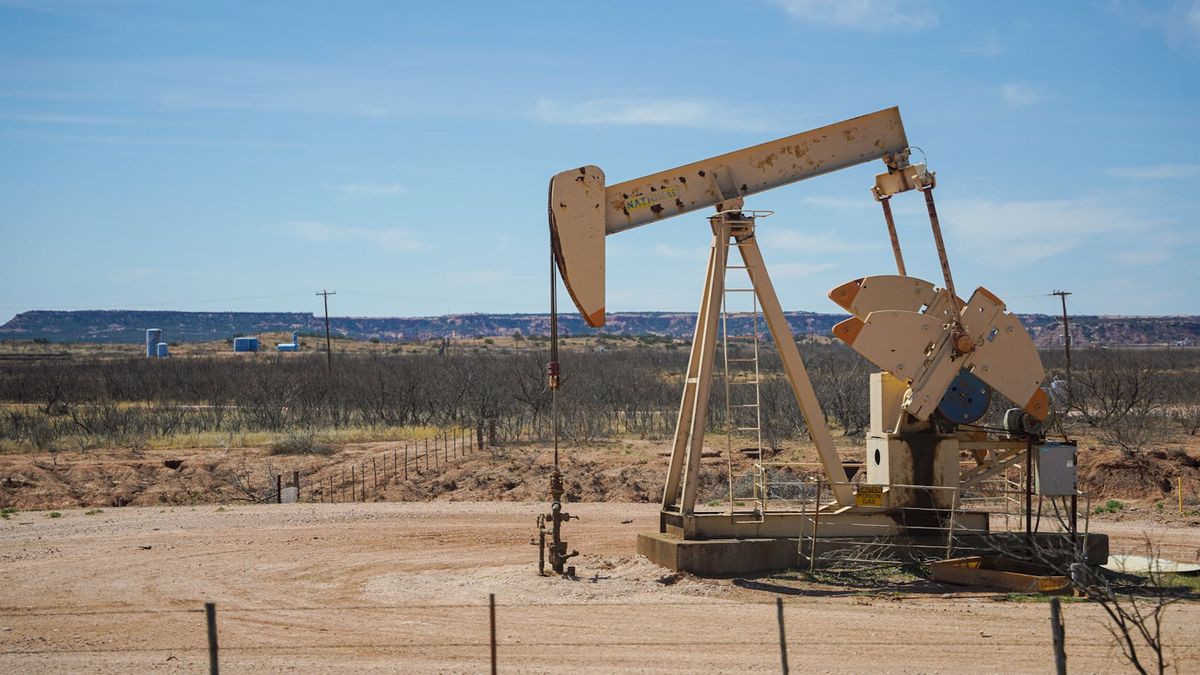
SM | NYSE | Source data: Q1 2026 earnings release (May 6, 2026), SM Energy 10-Q (SEC accession 0000893538-26-000061), January 30, 2026 Civitas merger close
The Civitas integration isn't just on track — it's running ahead. SM Energy's Q1 2026 results delivered a production beat more than 6% above guidance midpoint, a synergy target raised from an initial $200-$300 million range to $375 million annualized, and a balance sheet repositioning that eliminated two tranches of high-cost debt within 90 days of merger close. The company that absorbed a transformative transaction in late January is already proving the thesis.
Scale Story in the First Full Quarter
SM closed its merger with Civitas Resources on January 30, 2026, meaning Q1 results include only two months of contribution from the acquired Permian Basin and DJ Basin assets. Despite that partial-period inclusion, SM reported average net daily production of 371.2 MBoe/d, including 190.3 MBbl/d of oil. The guidance midpoint was 350 MBoe/d (182 MBbl/d oil). SM came in 21.2 MBoe/d above midpoint — and above the guidance ceiling.
Production by the numbers:
- Q1 2026 total: 371.2 MBoe/d vs. 350 MBoe/d guidance midpoint (+6.1%)
- Oil: 190.3 MBbl/d vs. 182 MBbl/d guidance midpoint (+4.6%)
- Gas: 804.1 MMcf/d | NGLs: 46.9 MBbl/d
- Prior quarter (Q4 2025, legacy SM only): 206.9 MBoe/d
The sequential jump from 207 to 371 MBoe/d is almost entirely Civitas contribution, not organic growth — but that's the point. SM's merger rationale was scaled, multi-basin production with differentiated returns. One quarter in, the volumes are there.
Synergy Capture Running Ahead of Schedule
The most significant headline from the release is the synergy revision. SM initially guided $200-$300 million in annualized run-rate savings when the deal was announced. The target is now $375 million, above the high end of the initial range by 25% and above the initial midpoint by more than 50%. Approximately $300 million has been actioned within 60 days of close.
The mechanics driving that acceleration: procurement consolidation, G&A overlap elimination, and technical synergies from applying legacy SM completion designs across the combined Permian portfolio. Full-year recurring G&A guidance of $280-$300 million reflects the capture progress, with the majority of one-time integration costs ($135 million absorbed in Q1 against $180 million full-year guidance) already behind the company.
CIR Analysis: The pace of synergy capture validates the management team's execution capability in a way that pre-close modeling never could. More importantly, with approximately $7.4 billion in net debt, SM needs cost reduction accreting to free cash flow quickly. A $375 million run-rate improves the debt service math meaningfully at any strip price, and the $300 million already actioned means this isn't forward-looking guidance — it's largely already in the cost structure.
Balance Sheet Repositioning
SM moved simultaneously on three fronts while integrating a company twice its prior size:
South Texas Divestiture: $950 million gross, approximately $900 million net after adjustments. Closed April 30, 2026. Net proceeds are being used to retire $819 million aggregate principal of the 6.75% and 5.0% Senior Notes due 2026, eliminating the near-term maturity wall at an accretive valuation.
Debt refinancing: In March, SM issued $1.0 billion of 6.625% Senior Notes due 2034, deploying proceeds to repurchase approximately $894 million of 8.375% Civitas-legacy Senior Notes due 2028. The coupon step-down on that tranche trims annual interest expense by approximately $15-16 million on the face amount retired.
Revolver reaffirmation: Post-divestiture, both the borrowing base and aggregate lender commitments were confirmed at $5.0 billion and $2.5 billion respectively. Lenders viewed the South Texas sale as improving the portfolio, not weakening it. No outstanding balance on the revolver as of March 31.
Total liquidity: $2.9 billion as of March 31, 2026. Net debt: approximately $7.4 billion. At EBITDAX of $970 million in a partial-Civitas quarter, a full-year run rate in the $3.5-$4.0 billion range makes the leverage picture manageable at current strip.
Guidance and the Second-Half Ramp
Full-year 2026 production guidance raised to 410-430 MBoe/d (222-228 MBbl/d oil), from 400-420 MBoe/d (216-226 MBbl/d oil). Capital plan held at $2.65-$2.85 billion.
Q2 2026 guidance: 435-450 MBoe/d (228-235 MBbl/d oil). That's a sequential step-up from Q1's 371, reflecting the first full quarter of all four basins contributing. The H2 2026 run rate target of approximately 430 MBoe/d (238 MBbl/d oil) implies a stable back half — SM is targeting consistency, not another volume surge.
CIR Analysis: Holding capital flat while raising production guidance is the cleanest signal of integration-driven efficiency improvement. Company-wide average well cost guidance of approximately $710/lateral foot reflects the early application of completion design improvements across the combined Permian position. SM is not buying incremental production with incremental spend — it's extracting better returns from the existing program.
The Reported Loss Is Not the Story
SM reported a net loss of $335 million, or $1.68 per diluted share. That headline will mislead anyone not reading past it. The loss is driven almost entirely by a $697 million derivative mark-to-market charge: as WTI moved sharply higher through Q1, SM's hedge book generated non-cash paper losses.
Adjusted net income: $1.55 per diluted share. Operating cash flow: $640 million ($692 million before working capital changes). EBITDAX: $970 million. These are the operating metrics that matter.
Realized oil price before hedges was $73.69/Bbl; after hedges, $69.56/Bbl. The $4.13/Bbl hedge drag will persist through 2026 as SM works off positions established at lower strip. At current WTI above $100, the company is sacrificing realized price for certainty — a tradeoff management has signaled it intends to rebuild at current strip prices heading into 2027.
What To Watch
- Q2 production delivery: The 435-450 MBoe/d guide is a significant ramp from Q1. First full quarter across all four basins. How the combined Permian and DJ Basin execute against that target will either validate or test the integration thesis.
- G&A in Q2: With most one-time integration costs absorbed in Q1 ($135M of $180M full-year), recurring G&A should drop sharply. Watch for recurring G&A trending toward the $280-$300 million annualized target.
- Hedge book rebuild pace: As 2026 hedges roll off, SM's realized price exposure to $100+ WTI improves. Management's stated intent to rebuild the book at current strip will show up in derivative positions disclosed in the Q2 10-Q.
- Capital return execution: Dividend raised 10% to $0.88/share annually. Share repurchases guided at 20% of post-dividend free cash flow. Actual Q2-Q3 execution will confirm whether the balance sheet strength is real or aspirational.
Crude Intelligence Report is an independent upstream oil and gas intelligence publication. The content in this article is for informational purposes only and does not constitute investment advice, financial advice, or a recommendation to buy or sell any security. Always conduct your own due diligence before making investment decisions. CIR and its contributors may hold positions in companies mentioned; any such positions will be disclosed when known. © 2026 Crude Intelligence Report. All rights reserved.
This article contains forward-looking statements and analytical opinions. Actual results may differ materially.