SM Energy Clears Bonanza Creek Legacy: $400M Debt Retirement Caps Civitas Integration Sprint (SM)
SM redeemed $400M in 5.000% Senior Notes on May 11, completing the Bonanza Creek indenture retirement and capping a 100-day balance sheet offensive that also retired the 8.375% high-coupon debt and closed the $950M South Texas divestiture.
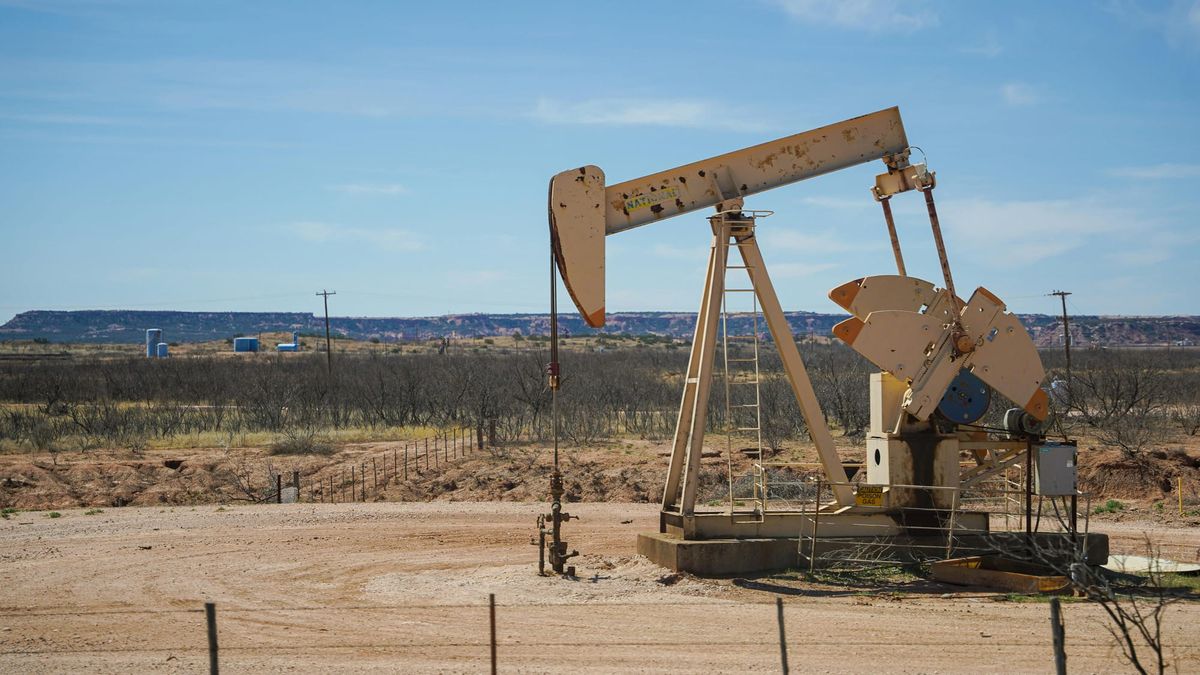
SM | NYSE | Source data: SM Energy Q1 2026 earnings release (8-K Item 2.02, May 6, 2026), 8-K Item 1.02 (May 12, 2026), Q1 2026 10-Q filed May 7, 2026, SM Energy investor presentation
SM Energy cleared the last piece of its Bonanza Creek legacy on May 11, 2026. The $400 million redemption of its 5.000% Senior Notes due October 2026 — notes originally issued under an indenture where SM is the successor to Bonanza Creek Energy — extinguished the final obligation under that indenture. The trustee cancelled the notes and the guarantees. The Bonanza Creek chapter is closed.
That single transaction caps a balance sheet offensive that SM has run in compressed fashion since closing the Civitas Resources merger on January 30, 2026. In roughly 100 days, SM refinanced nearly $900 million in high-coupon 8.375% debt, divested $950 million in South Texas assets, and retired both tranches of its 2026 senior notes — a combined $819 million in near-term maturities. The borrowing base was reaffirmed at $5.0 billion post-divestiture. No revolver draw as of March 31.
The Bonanza Creek Thread
The 5.000% Senior Notes due 2026 originated with Bonanza Creek Energy, a DJ Basin-focused independent that SM acquired in late 2021. SM assumed the indenture as successor, and the notes sat on the balance sheet as an obligation with a fixed October 2026 maturity. At $101 WTI, calling them early cost cash but eliminated a maturity event and a rate carrying into the back half of the year.
The other 2026 tranche — $419 million of 6.750% Senior Notes due September 2026 — was addressed in parallel via the South Texas Divestiture proceeds. Per SM's Q1 10-Q and the subsequent earnings release, both the 6.75% and 5.0% 2026 notes were redeemed using the approximately $900 million in net proceeds from the $950 million South Texas sale closed April 30.
The 8-K filed May 12 makes the legal finality explicit: all obligations under the Bonanza Creek indenture satisfied, notes and related guarantees cancelled. For investors tracking SM's post-merger integration, this is the last visible trace of the 2021 acquisition in the capital structure.
What the Q1 Balance Sheet Actually Shows
The Q1 2026 snapshot, before the April 30 South Texas close, is worth staging correctly. As of March 31, total outstanding principal debt was $7.8 billion, net debt approximately $7.4 billion, with $449 million cash on hand. Total liquidity of approximately $2.9 billion. That's the pre-South Texas, pre-final-redemption number — the trough before the clean-up.
Post-April 30, the math shifts substantially. The $819 million in 2026 maturities is gone. The 8.375% Senior Notes due 2028 — originally Civitas-issued, carrying the highest coupon in the stack at a rate well above current market — have been reduced to approximately $0 after a cash tender offer that retired $894 million in aggregate principal. SM replaced that with $1.0 billion of new 6.625% Senior Notes due 2034, capturing lower coupon, longer tenor, and reducing annualized interest expense in one transaction.
The remaining debt stack is now anchored by notes ranging from 6.5% (2028) to 7.0% (2029), plus the Civitas-originated legacy tranches being amortized. The $5.0 billion revolver sits undrawn.
The Synergy Story Behind the Numbers
SM raised its total annualized synergy target to $375 million in Q1 — up from the original $200-$300 million range set when the Civitas deal was announced — with approximately $300 million actioned to date. That's the financial accelerant behind the capital activity. Faster synergy capture means faster cash generation, which enables debt paydown ahead of schedule.
Q1 production came in at 371.2 MBoe/d, including 190.3 MBbl/d of oil — above the midpoint guidance of 350 MBoe/d. That two-month-of-Civitas result showed immediate operational integration. Full-year 2026 production guidance was raised to 410-430 MBoe/d (222-228 MBbl/d oil) from 400-420 MBoe/d, with a second-half run rate target of approximately 430 MBoe/d including 238 MBbl/d of oil. Capital expenditure guidance held at $2.65-$2.85 billion.
Adjusted EBITDAX was $970 million in Q1. Operating cash flow was $640 million, or $692 million before working capital changes. Adjusted free cash flow after one-time integration and capital costs came in at $20 million — thin, but the $135 million of Q1 transaction costs and $60 million of one-time capital costs explain most of the gap. Both are burning down: SM guided approximately $180 million in full-year integration costs, with the majority of remainder hitting Q2.
H2 Capital Allocation at $101 WTI
CIR Analysis: The sequencing here matters for how SM's back half of 2026 shapes up. With the 2026 maturities cleared and the 8.375% coupon retired, the cash previously earmarked for debt service frees up for the return of capital framework SM formalized in Q1. That framework: 10% increase in the annual fixed dividend to $0.88 per share, plus approximately 20% of post-dividend free cash flow allocated to share repurchases.
CIR Analysis: At $101 WTI, SM's $2.65-$2.85 billion capital program is fully funded from operating cash flow with room for debt service and buybacks. The borrowing base reaffirmation at $5.0 billion post-South Texas sale removes any near-term RBL concern. The question for H2 is whether WTI holds above the mid-$90s — the level at which SM's hedged volumes and production ramp rate can sustain the capital return commitment without drawing the revolver.
SM disclosed its hedge book carried a $697 million net derivative loss in Q1, nearly all non-cash mark-to-market from the sharp rise in forward oil prices. That's the accounting artifact of being partially hedged into a strong tape — actual realized prices will depend on how the hedge book is structured going forward as positions roll off.
What To Watch
- Q2 integration costs: SM guided the "majority" of remaining transaction costs hit Q2 — expect another elevated quarter before the cost structure normalizes in H2
- Net debt trajectory: With no revolver draw and 2026 maturities cleared, the next test is the October 2026 borrowing base redetermination — currently scheduled, though management indicated it would be reaffirmed
- Hedge book roll-off: The Q1 derivative loss is paper; the realized hedge outcome in Q2-Q4 will determine actual cash realization at current WTI levels
- H2 production step-up: The 430 MBoe/d H2 run rate requires continued execution in both the Permian and DJ Basin — SM's first full two-quarter integration test comes in Q2 and Q3 reporting
Disclosure: The author/publisher holds a position in EQT, EXE, FLNG, VGAS, LAC, SLI, and VLTLF as of the publication date. SM Energy (SM) is not among the disclosed positions. This does not constitute investment advice.
Crude Intelligence Report is an independent upstream oil and gas intelligence publication. The content in this article is for informational purposes only and does not constitute investment advice, financial advice, or a recommendation to buy or sell any security. Always conduct your own due diligence before making investment decisions. CIR and its contributors may hold positions in companies mentioned; any such positions will be disclosed when known. © 2026 Crude Intelligence Report. All rights reserved.
This article contains forward-looking statements and analytical opinions. Actual results may differ materially.