Murphy Oil at $70 WTI: Eagle Ford Efficiency Holds, Chinook #8 Is the Offshore Bet (MUR)
MUR | NYSE | Source data: Q1 2026 earnings release (8-K filed May 6, 2026), Q1 2026 10-Q (filed May 6, 2026, accession 0001628280-26-031370), Yahoo Finance commodity data
Murphy Oil's Eagle Ford program delivered one of the more significant efficiency improvements in US onshore this quarter. At $70.51 WTI, the structural cost reduction separates companies that can sustain the cycle from those that can't. Combined with the Chinook #8 deepwater development advancing in the Gulf of America, Murphy's Q1 2026 results sketch an operator making deliberate long-cycle bets at precisely the moment most peers are pulling back.
Eagle Ford: 31% LOE Drop, 17% Better Wells
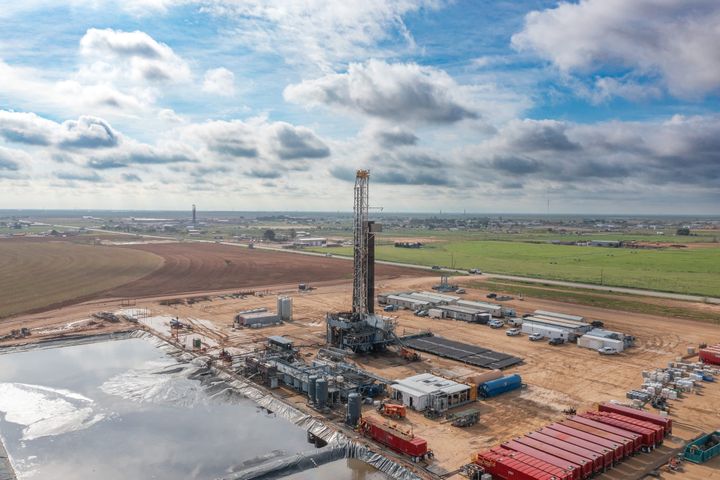
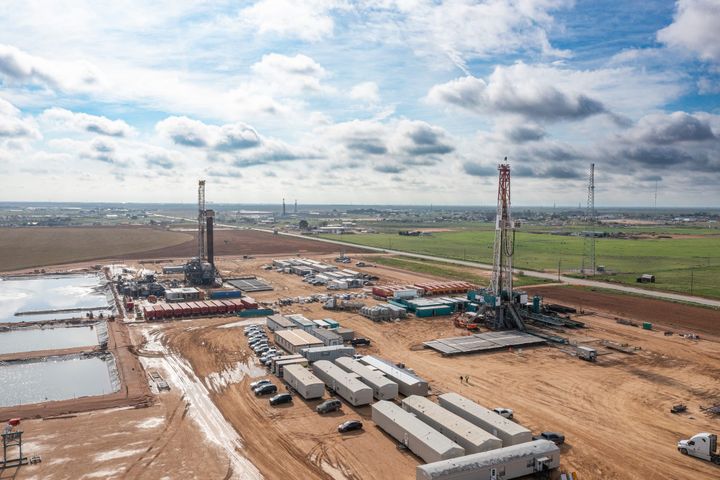
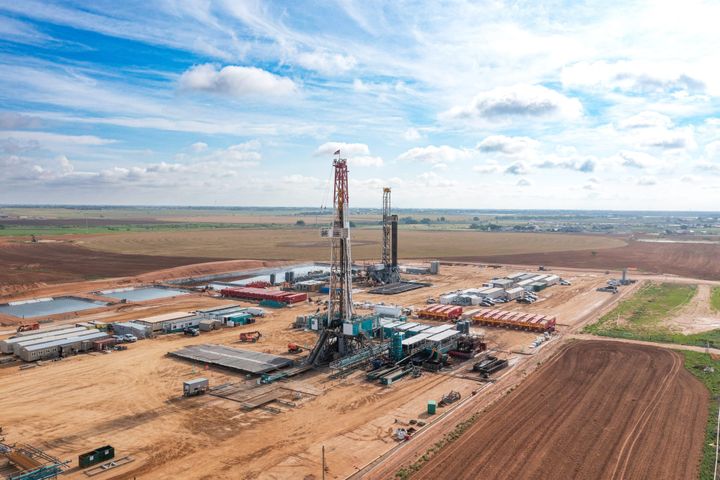
Murphy's Eagle Ford operations produced 39,900 BOEPD in Q1 2026, with 28,500 BOPD oil, exceeding the top end of quarterly guidance. US Onshore lease operating expense came in at $9.02/BOE, down $4.00/BOE year-over-year (from $13.02/BOE in the year-ago period). That reduction equals roughly $58,000 per day in cost savings at Q1 production rates. Per Murphy's Q1 2026 earnings release (8-K filed May 6, 2026).
The quality metric behind the headline: the 15 operated wells Murphy brought online in Q1 (12 in Karnes County, 3 in Catarina) posted 60-day cumulative oil production 17% above wells drilled last year. The 60-day cumulative metric is a clean proxy for completion program quality because it normalizes for base decline and commodity price effects.
CIR Analysis: The Karnes-heavy well mix (12 of 15 wells) inflates the 60-day cumulative figure relative to what a Catarina-weighted program would show. Karnes carries a higher oil cut and better rock. Murphy has 20 additional Catarina wells scheduled for the rest of 2026. As that shift occurs, the efficiency metric faces a tougher test. Q2 Eagle Ford guidance is 38,200 BOEPD, below Q1's 39,900 BOEPD, consistent with the timing gap before Catarina volumes ramp. The full-year Eagle Ford story will be written in the Catarina wells, not the Karnes outperformance.
Peer context: Murphy's $9.02/BOE Eagle Ford LOE is structurally lower than what most Permian and DJ Basin operators are running on a comparable per-BOE basis. Eagle Ford condensate economics and installed infrastructure generally support lower per-BOE LOE than newer basin entrants on less-developed acreage. Per Murphy's Q1 2026 10-Q (accession 0001628280-26-031370).
Chinook #8 and the Gulf Portfolio
Murphy's Gulf of America offshore business produced 58,800 BOEPD in Q1 2026 (excluding noncontrolling interest), with 88% liquids and 46,600 BOPD oil. US Offshore LOE dropped to $11.17/BOE from $21.37/BOE in the year-ago period, a 48% reduction driven by the Pioneer FPSO acquisition from BW Offshore in early 2025 for $125 million. Buying the vessel converted the daily charter rate from operating expense into depreciation, improving the LOE line while adding to the PP&E base.
CIR Analysis: Total cost of production (LOE plus DD&A) is the right metric, not LOE alone. US Offshore DD&A rose to $17.69/BOE from $15.42/BOE year-over-year. Combined with LOE, total per-barrel upstream cost came to $28.86/BOE versus $36.79/BOE in the prior-year period — a genuine $7.93/BOE structural improvement rather than a pure accounting reclassification. At $70.51 WTI with Murphy's realized offshore crude averaging $70.97/BOE in Q1, the economics are tight but viable. Per Murphy's Q1 2026 earnings release (8-K filed May 6, 2026).
The Chinook #8 development well, spud in Q1 2026, targets first oil in H2 2026 with a gross initial production rate of 15 MBOEPD (Walker Ridge 469 and 425). Murphy also approved development of the Banjo #1 and Cello #1 deepwater discoveries in Mississippi Canyon 385 subsequent to quarter end, following Q1 announcements of 50 feet and 30 feet of net pay, respectively. First production from Banjo and Cello is targeted in Q4 2027. Murphy had $266.8 million of capitalized exploratory well costs pending reserve determination at March 31, 2026. Per Murphy's Q1 2026 10-Q.
Financial Scorecard
Q1 2026 net income attributable to Murphy: $52.986 million ($0.37 diluted EPS) on revenue of $732.4 million. Three factors explain why earnings declined despite higher revenue compared to the year-ago period: exploration expenses spiked to $82.8 million from $14.5 million (Cote d'Ivoire dry holes and suspended well costs); DD&A rose to $254.4 million from $194.2 million (FPSO in the asset base); and the effective tax rate climbed to 41.9% from 26.7% (international exploration losses with no current tax benefit available).
Free cash flow was positive at $41.4 million. Adjusted free cash flow after dividends, debt costs, and acquisitions was negative $61.7 million. Murphy is investing ahead of near-term cash generation. With $1.55 billion of total debt, $2.38 billion of liquidity, and no revolver drawings at March 31, the balance sheet can absorb it. The $500 million senior notes issued in Q1 at 6.50% (maturing 2034) funded early redemption of near-term maturities, extending the weighted average maturity to 8.9 years at a 6.2% weighted coupon. Per Murphy's Q1 2026 10-Q.
What To Watch
- Chinook #8 IP rate: H2 2026 target. At Murphy's effective approximately 80% working interest in MP GOM, the 15 MBOEPD gross IP translates to approximately 12 net MBOEPD. That is a meaningful swing variable against a 174,000 BOEPD total portfolio.
- Catarina well performance in Q2-Q4: The 60-day cumulative improvement from Q1 was built on Karnes wells. Twenty Catarina wells across the rest of the year will confirm or qualify that efficiency claim.
- Vietnam first oil timing: The FSO vessel was on track for Q3 2026 delivery to location and Q4 2026 first oil. Murphy's full-year production guidance of 167,000-175,000 BOEPD (excluding NCI) depends on Vietnam arriving on schedule.
- WTI price sensitivity: Murphy's full-year capex guidance is $1.2-1.3 billion. The company has not cut it, and the deepwater commitments are still economic at current prices. If WTI breaks materially lower from current levels, expect capital allocation questions around the remaining Catarina program as a discrete area of discretionary spend within the 2026 plan.
Crude Intelligence Report is an independent upstream oil and gas intelligence publication. The content in this article is for informational purposes only and does not constitute investment advice, financial advice, or a recommendation to buy or sell any security. Always conduct your own due diligence before making investment decisions. CIR and its contributors may hold positions in companies mentioned; any such positions will be disclosed when known. © 2026 Crude Intelligence Report. All rights reserved.
This article contains forward-looking statements and analytical opinions. Actual results may differ materially.