The $90 Floor Test: What Memorial Day's WTI Break Means for Operators This Week

Source data: FRED WTI daily close series (last close May 18, 2026: $112.25), EIA Weekly Petroleum Status Report (May 15, 2026), Baker Hughes weekly rig count (May 15, 2026), Goldman Sachs commodity research, ADNOC CEO public statements
WTI printed $90.88 on Memorial Day — the first sub-$100 tick since this cycle began — on Iran deal speculation and a holiday order book running at 30-40% of normal volume. The structural case for elevated crude has not changed. What changed is that the market is now demonstrably more vulnerable to deal-noise than it was at $112. That asymmetry is the real story of Monday's session, and it's the primary variable operators need to price into decisions about H2 completions activity before the week is out.
A Holiday Move, Not a Verdict
Memorial Day sessions are notoriously thin. The same Iran deal speculation — a partial agreement on enrichment caps, White House signaling, State Department walkbacks — circulated in early April without a comparable WTI move. The difference then was Brent near $115 and a market still learning the Hormuz disruption premium. The difference now is a market that has partially absorbed that premium and is testing where the floor actually is.
That test was $90.88 intraday, recovering toward $92-93 into the close as Rubio's press statement landed. The session's message is not that oil has broken down. It's that the gap between the geopolitical bid and the physical supply reality has narrowed enough that $5 of deal-noise can take WTI from $96 to $91 on low volume. That's a two-way market developing where it wasn't before.
Reading the Rubio Signal
Secretary Rubio explicitly played down an imminent deal Monday, describing negotiations as "still in early stages" with significant gaps on enrichment limits and inspection access. That's the market's floor — no deal, no Hormuz resolution, no return of 1.5-2.0 MMbpd of Iranian barrels to global supply.
CIR Analysis: Rubio's language is deliberately calibrated. "Early stages" after months of Oman-channel talks suggests either a genuine impasse or a tactical signal to Tehran that the US isn't closing on Iran's terms. Either reading keeps the Hormuz disruption premium structurally intact. ADNOC's CEO has already stated publicly that Hormuz transit disruptions extend through mid-2027 — a 13-month timeline that the State Department hasn't contradicted.
The operative question isn't whether a deal closes this week. It's whether a credible partial agreement — enrichment caps without full inspection access, for example — emerges before end of Q2. Current signals say no. If that changes, WTI has another $8-12 of downside to absorb before US production economics get threatened. At $78-82 WTI, the activity calculus starts to shift materially. At $90-95, it doesn't.
The Operator Decision Framework at Sub-$95
US upstream operators are not panicking at $91 WTI. Here's why, and where the real decision points sit:
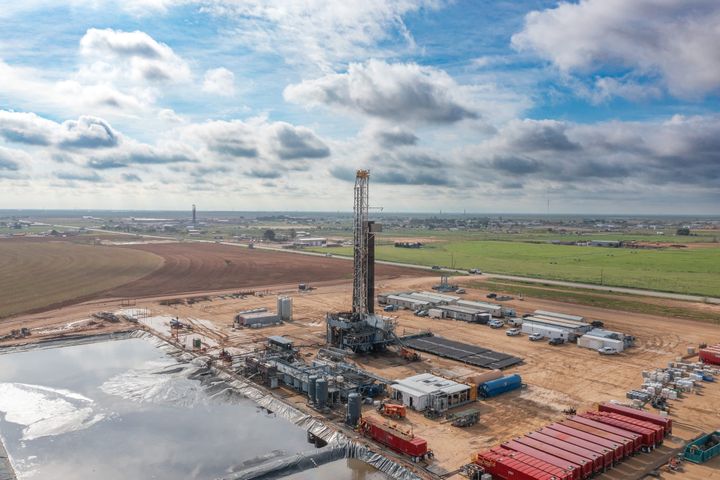
Q2 2026 production: Unchanged. Operators running hedged programs at $95-105 WTI are insulated from a single-day holiday print. Well-level break-evens across the Permian range from $38 to $55 WTI. At $90, these wells are still profitable. Nothing stops in Q2.
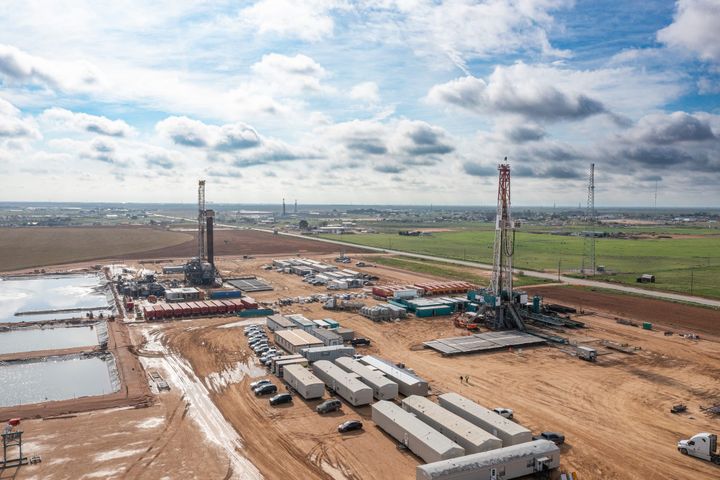
H2 2026 completions: On hold pending a price signal. This is where the market's Memorial Day move matters. Operators evaluating whether to accelerate Q3 fracs or hold capacity in reserve need a two-week settlement pattern, not a single holiday session. If WTI holds $93-97 through the week of May 27, most H2 programs stay on track. If it settles $88-92 for two weeks, budget conversations start.
2027 planning: Under review. The Permian rig count was 308 as of May 15, per Baker Hughes. CIR Analysis: a sustained move below $95 WTI through June expiry would likely trim preliminary 2027 rig assumptions by 10-15 rigs as operators mark their long-range plans to a lower strip. That's not a collapse — it's the normal capex sensitivity mechanism operating at the margin.
The critical threshold is $90 sustained, not $90 touched. One holiday session doesn't move budgets. Three weeks below $92 starts to.
What To Watch This Week
- Wednesday, May 27 — EIA crude inventory report: Market consensus is a 2-3 MMbbl draw reflecting Memorial Day demand pull. A surprise build (any positive number) confirms the physical market is softening and keeps WTI sub-$95. A 4+ MMbbl draw reasserts the inventory deficit thesis and likely puts $96-98 back on the table by Thursday.
- Friday, May 30 — Baker Hughes rig count: Any move below 551 total (410 oil) would be the first signal that price anxiety is bleeding into planning decisions. A flat-to-up count confirms operators are holding the line.
- Iran channel: Any Rubio/Araghchi meeting confirmation, Oman channel communiqué, or IAEA inspection access agreement. These are the binary events that would move WTI $5-8 in either direction regardless of fundamentals.
- Friday settlement: Memorial Day week historically has the real price signal in Friday's close. The week's high-volume session will establish whether Monday's move was noise or the beginning of range compression.
CIR Verdict
Monday's $90.88 print was a holiday liquidity event amplified by Iran deal noise, not a structural breakdown. The inventory math that drove WTI from $95 to $112 in April hasn't changed: US commercial crude stocks at 445 MMbbl remain 2% below the five-year average, Goldman's 6-8 MMbpd global deficit thesis is unrevised, and ADNOC's mid-2027 disruption timeline is intact. For operators, this week is a test of conviction. Those who hold H2 completions schedules at current levels will look right by July if prices recover to $100. Those who defer will scramble for frac spread availability when they need it. The services market doesn't give that time back easily.
Crude Intelligence Report is an independent upstream oil and gas intelligence publication. The content in this article is for informational purposes only and does not constitute investment advice, financial advice, or a recommendation to buy or sell any security. Always conduct your own due diligence before making investment decisions. CIR and its contributors may hold positions in companies mentioned; any such positions will be disclosed when known. © 2026 Crude Intelligence Report. All rights reserved.
This article contains forward-looking statements and analytical opinions. Actual results may differ materially.