Matador's Hidden Hedge Bomb: What $70 WTI Reveals About the Delaware Basin's Most Leveraged Balance Sheet (MTDR)
Matador entered Q1 2026 with $306 million in derivative losses, $30.5 million in cash, and a lender waiver it needed to issue $500 million in new notes. WTI was in the mid-80s. Today it is $69.73.
MTDR | NYSE | Source data: Q1 2026 10-Q (SEC accession 0001520006-26-000023, filed May 8, 2026), PNC Bank Limited Waiver and Amendment (EX-10.2, Feb 27, 2026), Yahoo Finance commodity data
Matador Resources ended Q1 2026 with $30.5 million in cash, $306.2 million in derivative losses sitting on the current liabilities line, and a net loss of $35.9 million attributable to shareholders. WTI was still in the mid-$80s for most of the quarter. Today it's $69.73.
The morning brief flagged Matador as today's stress test candidate because the Delaware Basin operator has the highest leverage ratio among mid-cap Permian E&Ps, a $500 million senior note issuance that required a lender waiver in February, and a hedge book that wasn't built for sub-$75 oil. At $69.73, the math is considerably harder than it was nine days ago when this publication covered MTDR at $80 WTI.
The Balance Sheet: Three Layers of Debt
MTDR's capital structure as of March 31, 2026 carries three distinct debt obligations:
Corporate credit facility (PNC/RBL): $185 million drawn at quarter-end, down from $398 million at year-end 2025
San Mateo midstream credit facility: $918 million, up from $883 million
Senior unsecured notes: $2.37 billion, up from $2.12 billion at year-end
Total long-term debt: $3.47 billion. Against Q1 2026 operating income of $46.8 million, that's a debt-to-operating-income ratio that turns punishing below $75 WTI. Interest expense alone ran $51.5 million in Q1, more than the entire operating income for the quarter.
The jump in senior notes from $2.12 billion to $2.37 billion is the February transaction: Matador launched a new senior notes offering and specifically requested a limited waiver from PNC Bank, the administrative agent for its RBL, to avoid an automatic borrowing base reduction that would have been triggered by the incremental debt. PNC granted the waiver for up to $500 million in additional senior notes, but explicitly noted it was a one-time waiver with no obligation to grant future relief.
CIR Analysis: The waiver itself is not a red flag: this is standard liability management, and Matador used the proceeds to pay down the revolving credit facility (the $213 million reduction from $398M to $185M). But the timing matters. They locked in $500 million at fixed rates before WTI fell another $15. That's either excellent capital markets instinct or luck. The question now is what the fall redetermination looks like with WTI under $70.
The Hedge Book Problem
Q1 2026 revealed a derivative picture that deteriorated sharply as prices climbed into the quarter. Matador reported:
Realized loss on derivatives: $14.5 million
Unrealized loss on derivatives: $255.5 million
Current derivative liabilities: $306.2 million (zero at year-end 2025)
In plain English: Matador's hedge book was positioned for lower prices and got hit as WTI ripped to $94-plus in early May. Those unrealized losses are now the dominant item on the current liabilities side of the balance sheet, larger than accounts payable ($702 million includes royalties payable and AP combined, but the derivative exposure is a standalone $306 million).
CIR Analysis: Here is the painful irony at $70 WTI. If prices had stayed below $75 all year, Matador's hedge book would be generating gains right now; the derivatives would be in the money, offsetting weak realized oil prices. Instead, the company got whipsawed: hedges were underwater when prices spiked to $94, generating that $306 million current liability, and now prices have collapsed back through the hedge strike levels. Whether those hedges are now back in the money depends entirely on the specific strike prices, which aren't disclosed form in the 10-Q. But the $90.6 million derivative asset on the current asset side suggests some recovery since Q1-end.
Production: The One Number That's Actually Working
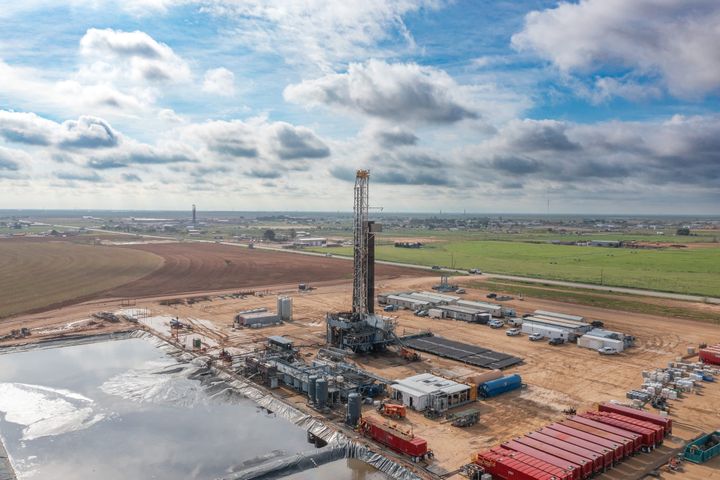
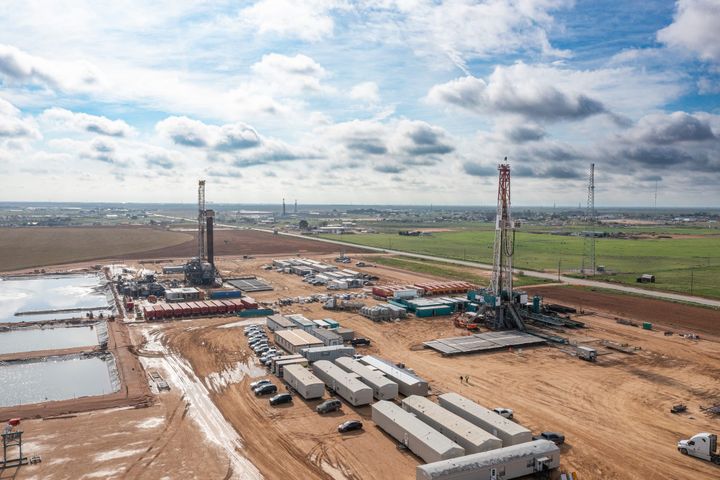
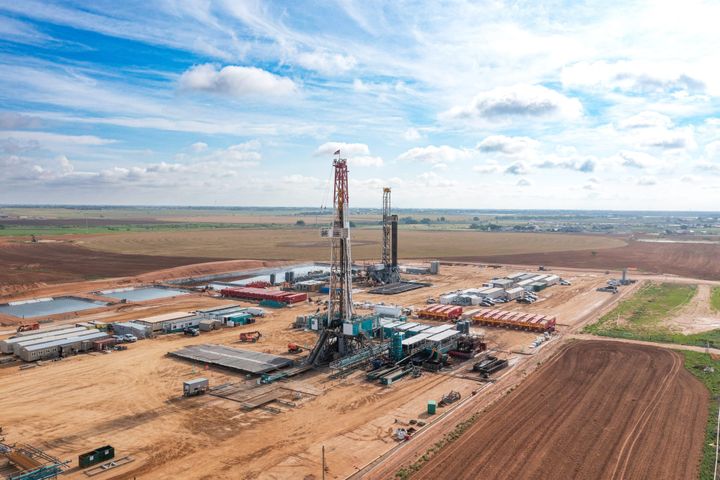
The operational story at Matador is better than the financial statements suggest at first glance. Q1 2026 oil and natural gas revenues of $818.7 million came in well above Q4 2025 levels, reflecting the Hugh Brinson midstream acquisition integration and continued Delaware Basin well productivity. The San Mateo midstream segment contributed $42 million in third-party revenue, up 26% year-over-year, a non-correlated revenue stream that makes MTDR structurally different from a pure-play E&P.
Lease operating expense of $107.5 million on the production base puts MTDR in the mid-range for Delaware Basin operators. Transportation costs dropped significantly, from $20 million to $14.8 million, reflecting the value of owning San Mateo's gathering and processing infrastructure rather than paying third-party fees.
The production figure itself wasn't separately broken out in the Q1 balance sheet excerpt, but the prior-period data point from the June 15 CIR article remains relevant: Matador guided full-year 2026 production at roughly 175,000 Boe/d, including approximately 105,000 Bbl/d of oil. At $69.73 WTI, that's a realized revenue base (before hedges and before differentials) running well below what the $80 stress test assumed.
The Peer Context at $70 WTI
This is what distinguishes today's article from the June 15 coverage: at $80, MTDR looked stressed but manageable. At $70, the peer comparison changes the picture.
Diamondback Energy (FANG), covered June 17, has $3 billion of RBL capacity and spent $9.28/Boe in total cash operating costs in Q1 2026. FANG's breakeven is comfortably below $50 WTI on a cash flow basis. Permian Resources (PR) disclosed a cash breakeven in the $45-50 range at its Q1 earnings in May. EOG Resources, covered June 18, runs well costs under $7/Boe on its best Delaware Basin locations.
CIR Analysis: Matador is not in the same cost tier as these operators. The San Mateo midstream drag ($55 million in operating costs against $42 million in third-party revenue) creates a structural headwind that pure-play E&Ps don't carry. The integrated model works brilliantly at $85-plus; at $70, the midstream cost base becomes a real problem unless volumes are high enough to push the third-party revenue above the operating cost line. Q1 showed a $13 million net cost to run San Mateo. That math doesn't improve at $70 WTI.
Fall RBL Redetermination: The Key Date
The PNC waiver document referenced a borrowing base determination scheduled for approximately May 1, 2026. The next formal redetermination in the typical semi-annual RBL cycle falls in October or November 2026. That's the moment that matters most for MTDR's capital structure.
RBL borrowing bases are set using reserve-based price decks, typically a 5-year strip average, not spot. If WTI averages $70-75 for the next few months, the fall strip is going to look considerably different than the spring strip, which was still being set against $85-95 WTI expectations. A 10-15% reduction in the borrowing base would trim Matador's credit agreement capacity meaningfully.
The company reduced revolver drawings from $398 million to $185 million by issuing the senior notes in February — that creates $800+ million of potential revolving capacity under a $1 billion facility, assuming the borrowing base holds. But a borrowing base cut doesn't have to be dramatic to bite. A 15% reduction on a $1 billion facility removes $150 million of theoretical liquidity at precisely the moment the company needs it most.
What To Watch
- WTI holding above $70 through August matters enormously. The fall price deck is being set in real time. Every week sub-$70 prints expands the strip-average deterioration.
- San Mateo throughput volumes. If production holds and third-party volumes grow, the midstream segment turns accretive. If operators in the area cut activity, San Mateo's third-party revenue stagnates against a fixed cost base.
- Whether Q2 2026 shows derivative position improvement. The $90.6 million derivative asset at March 31 suggests some recovery, but the Q2 print will reveal whether the hedge book is now generating gains below $75 WTI or still net-negative on settlement.
- Fall redetermination language. Watch for any amended credit agreement filings on EDGAR in September-October. A second PNC waiver request, or any reduction in the borrowing base commitment, would be a material signal.
Crude Intelligence Report is an independent upstream oil and gas intelligence publication. The content in this article is for informational purposes only and does not constitute investment advice, financial advice, or a recommendation to buy or sell any security. Always conduct your own due diligence before making investment decisions. CIR and its contributors may hold positions in companies mentioned; any such positions will be disclosed when known. © 2026 Crude Intelligence Report. All rights reserved.
This article contains forward-looking statements and analytical opinions. Actual results may differ materially.