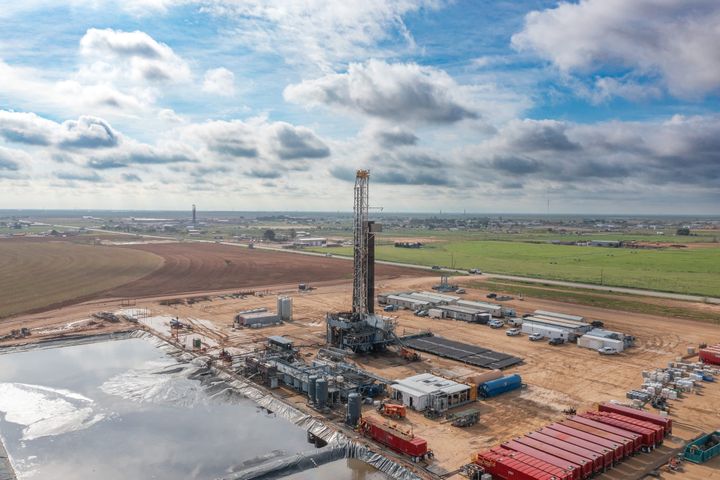
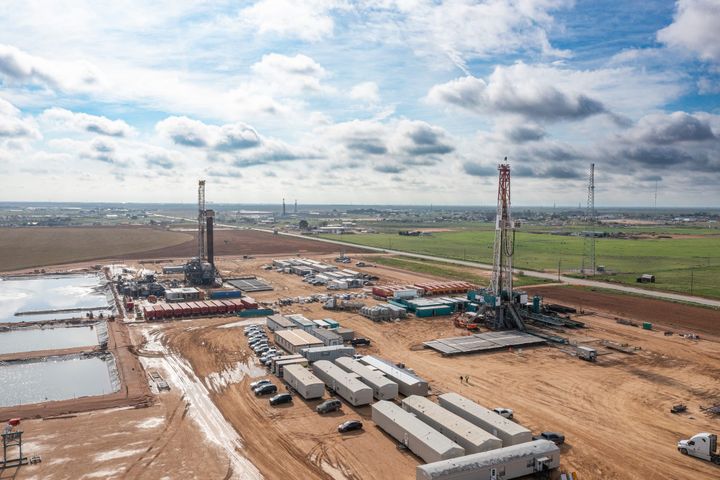
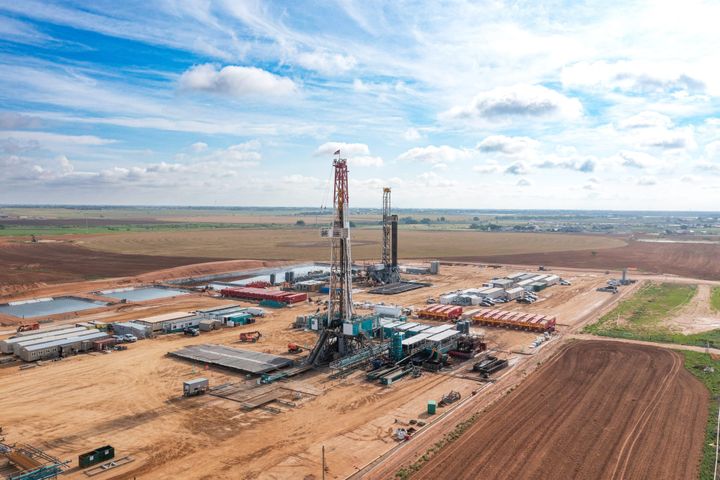
Flowback's Frac Signal: What Solaris and TETRA Are Telling Us About Q1 Completion Activity
Solaris Logistics revenue fell 11% QoQ in Q1. TETRA held flat on share gains, not activity. The frac discount is flowing downstream — here's what the flowback sector is actually signaling.
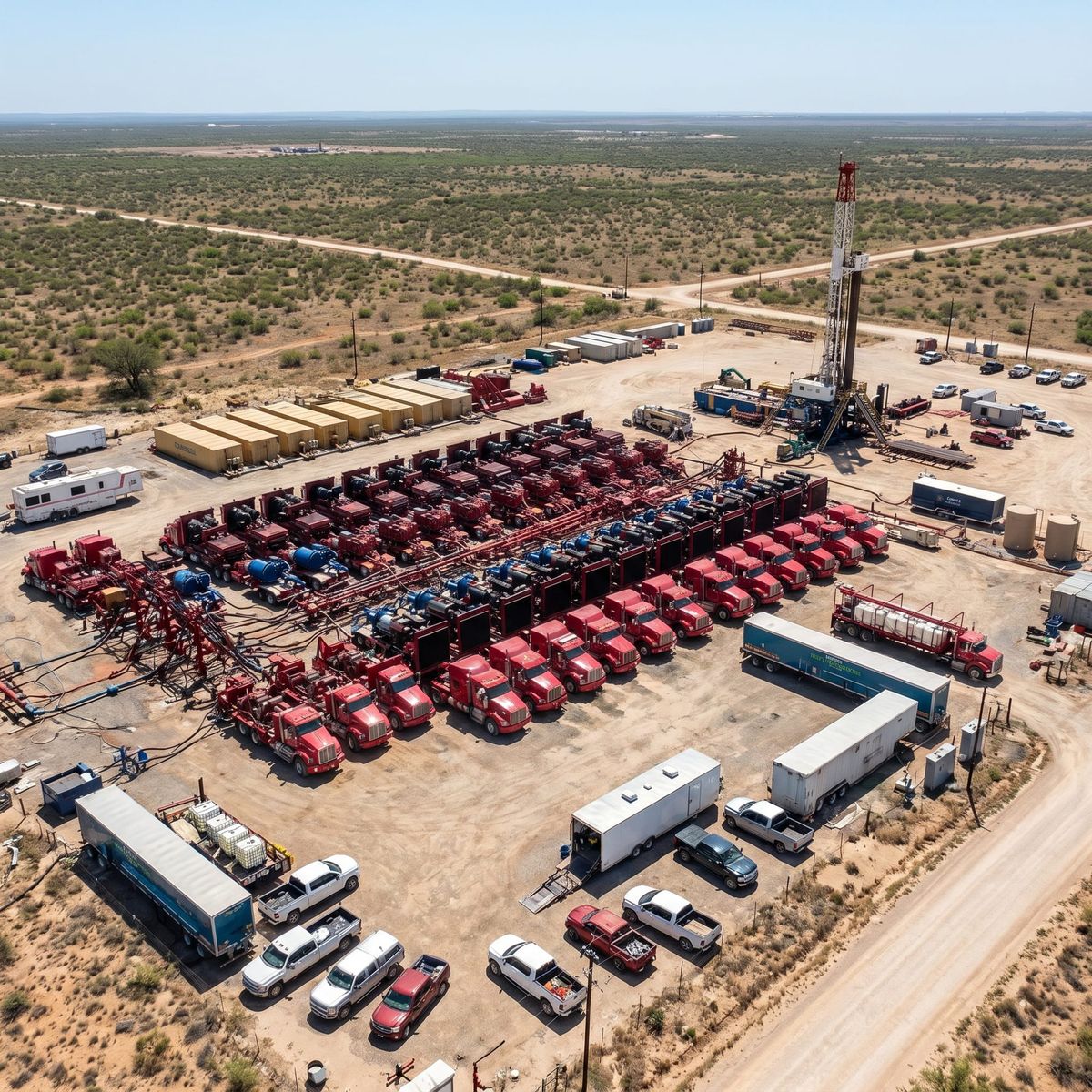
TTI | NYSE | SEI | NYSE | Source data: TETRA Technologies Q4 2025 8-K (SEC accession 0000844965-26-000014, filed February 25, 2026); Solaris Energy Infrastructure Q1 2026 8-K (SEC accession 0001628280-26-027520, filed April 27, 2026); EIA U.S. natural gas gross withdrawals data
The flowback and well testing sector enters Q1 earnings season carrying a deceptively simple question: when frac spread counts dropped 24% year over year in 2025, how much of that damage flowed downstream? The early answer, from two companies that bookend the completion activity chain, is that the headline declines masked selective resilience — and one of them just pivoted toward AI data centers in a way that changes what their numbers actually mean.
Solaris Breaks the Mold — and the Signal
Solaris Energy Infrastructure's Q1 2026 results, filed with the SEC on April 27, require a read-through correction before they say anything about completion activity. Revenue of approximately $196 million rose 9% sequentially — but that gain came entirely from Power Solutions, the company's data center power segment, which averaged approximately 910 MW of revenue-generating capacity in Q1, up 17% from 780 MW in Q4 2025. Power Solutions revenue hit $129 million, up 24% from Q4 2025.
The legacy business — Logistics Solutions, which includes last-mile proppant delivery — told a different story. Logistics revenue of $68 million dropped 11% sequentially from Q4 2025. Activity declined on lower last-mile transportation demand. Logistics Adjusted EBITDA managed a modest 2% sequential gain, driven by improved system utilization and mix, but the revenue trajectory confirms what the rig count data implied: completions-adjacent activity softened into early 2026.
CIR Analysis: Solaris's Logistics segment is one of the cleaner leading indicators for completion-stage activity because last-mile sand delivery is among the final steps in the completion sequence. A $68 million Q1 from Logistics, down 11% QoQ, against $96 WTI is the frac discount thesis made visible in logistics revenue.
TETRA's Defense: Market Share Over Market Conditions
TETRA Technologies didn't report Q1 2026 before this article's publication — that comes in late April or May. But the company's Q4 2025 results, reported February 25, 2026, established the baseline that Q1 will be measured against.
The standout in those results was durability in the face of real adversity. According to TETRA's 8-K, U.S. frac activity was down 15% sequentially and 24% year over year in Q4 2025, per Primary Vision frac spread count data. TETRA's Water and Flowback Services segment held revenue flat: $63 million to $64 million every quarter through 2025, per the company's disclosure. Margins actually improved sequentially in Q4, to 12.9% Adjusted EBITDA from 11.9% in Q3.
The mechanism was market share, not macro. TETRA management explicitly cited market share gains, cost reduction initiatives, and automation-driven technology penetration as the reasons their flowback revenue didn't move with the broader frac count. That's a legitimate differentiation story — but it also means their Q1 numbers may again look stable even if underlying completion activity is soft. Stable flowback revenue in a weak frac market tells you TETRA is winning accounts from competitors, not that customers are completing more wells.
There's a secondary angle worth watching: TETRA disclosed at year-end that customers in West Texas were pivoting quickly toward large-scale produced water reuse, specifically for data center cooling demands in the Permian Basin. That request to redesign for "much larger-volume projects" to support West Texas data center opportunities is the same energy infrastructure demand that's propelling Solaris's Power Solutions segment. TETRA isn't there yet — their desalination work is still in engineering — but it's a signal that the flowback/produced water sector is being asked to serve a new customer class.
The Frac Discount Downstream
The broader context is the frac pricing paradox described in Monday's CIR analysis. PUMP, PTEN, and LBRT are trading at cycle lows despite crude near $100. SLB reported organic North America revenue contraction excluding the ChampionX production chemistry acquisition. The explanation isn't mysterious: operators are not accelerating completions, they're harvesting existing DUC inventories and holding completions activity roughly flat as they wait for certainty on price direction.
That wait translates directly into the Solaris Logistics number and sets up the TETRA Q1 read-through. If completion activity stays compressed through Q1 2026, Water and Flowback Services should again hold in the $62-64 million range — resilient on share gains, not on activity growth. Select Water Solutions (WTTR), which reports later, serves the broader produced water and fluid management market and will confirm or complicate this picture when numbers arrive.
CIR Analysis: The flowback sector is behaving like a mature oilfield services sub-segment in a late-cycle flat market. Share-based competition is intensifying as the revenue pool stagnates. Companies with technology differentiation — TETRA's automation, Solaris's data center pivot — are posting stable-to-growing numbers. Commodity flowback providers without differentiation are the ones absorbing the frac discount.
What To Watch
- TETRA Q1 2026 earnings (expect late April/early May): The Water and Flowback segment will confirm whether the $63-64M quarterly floor holds. Margins above 12% would signal continued cost discipline. Anything below $60M would indicate market share gains are no longer enough to offset activity headwinds.
- Select Water Q1 2026: WTTR's produced water volumes are a direct proxy for Permian basin completion intensity. Their pricing per barrel of water handled will show whether the frac discount is bleeding into fluid management.
- Solaris Logistics revenue trend: A recovery in Q2 last-mile sand delivery would signal that Q1 soft patch was seasonal. A second consecutive decline would validate the frac activity compression thesis heading into XOM and CVX's Q2 guidance.
- Produced water / data center intersection: TETRA's West Texas desalination opportunity for data center cooling is early-stage, but it's real. Watch for engineering announcements or JV structures in H2 2026 as hyperscaler water demand in the Permian competes with operators for the same flowback infrastructure.
Crude Intelligence Report is an independent upstream oil and gas intelligence publication. The content in this article is for informational purposes only and does not constitute investment advice, financial advice, or a recommendation to buy or sell any security. Always conduct your own due diligence before making investment decisions. CIR and its contributors may hold positions in companies mentioned; any such positions will be disclosed when known. © 2026 Crude Intelligence Report. All rights reserved.