EOG Resources 2026: Production Strategy, Well Economics, and Why the Benchmark E&P Keeps Outperforming
EOG Resources, Inc. | NASDAQ: EOG | Source data: EOG Q1 2026 earnings release, 10-Q filing, EIA Drilling Productivity Report (May 2026), Baker Hughes rig count data
EOG Resources set the benchmark for US upstream capital efficiency in 2025 — and its Q1 2026 results suggest that discipline is holding even as WTI gyrates between $95 and $112. Understanding EOG's production strategy, well economics, and basin-level execution gives operators and investors a reference point for what premium execution looks like at current commodity prices.
EOG Resources 2026: What the Numbers Show
EOG reported Q1 2026 production of 1,383 Mboe/d, including 994 Mbbl/d of crude and condensate. That output beat the company's own guidance midpoint and came at a cash operating cost of roughly $10.14/boe — among the lowest in the US E&P peer group. Earnings per share of $3.70 reflected the combination of volume outperformance and strong NGL and natural gas realizations, with Henry Hub averaging above $3.00/MMBtu through most of the quarter.
The EIA Drilling Productivity Report places EOG's primary operating basins — the Permian (Delaware), Eagle Ford (South Texas), and Dorado natural gas play — among the highest-productivity drilling zones in North America. Per EIA data, the Delaware Basin averaged new-well oil production per rig of 1,204 bbl/d in April 2026, while Eagle Ford averaged 992 bbl/d per rig. EOG consistently operates above basin averages on both metrics, driven by its premium acreage positioning and multi-zone stacking strategy.
Basin-by-Basin Breakdown
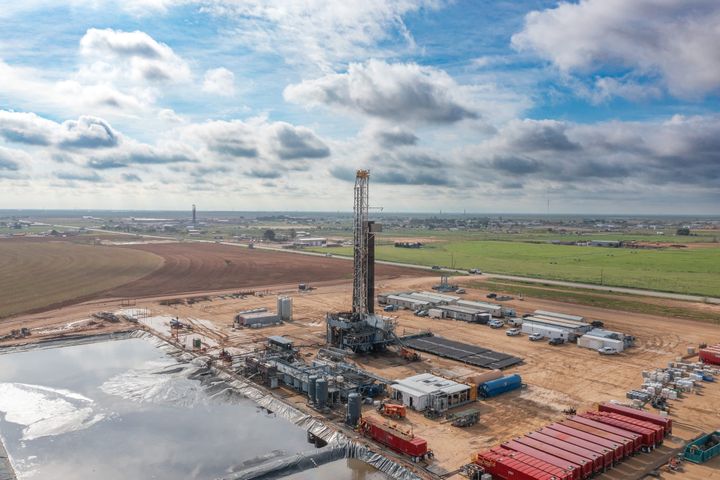
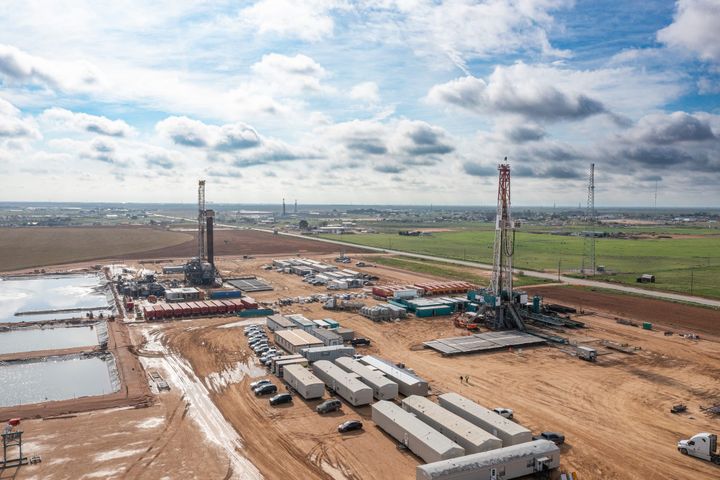
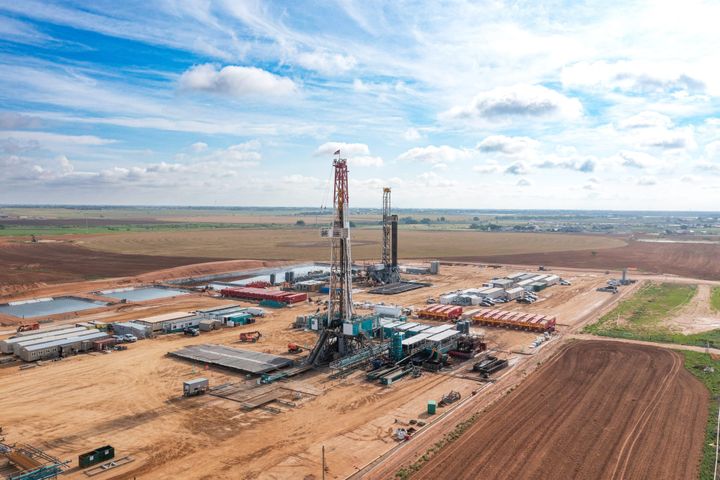
Delaware Basin (Permian): EOG's largest oil growth engine. The company holds premium positions in the Wolfcamp and Bone Spring formations across Lea and Eddy counties, New Mexico. Well productivity per Baker Hughes data and EOG's own investor presentations indicates 30-day initial production rates running 1,500-2,000 boe/d on the best pads. According to EIA data, the Permian Basin as a whole produced 6.78 MMbbl/d in May 2026, with EOG representing one of the top ten producers by gross output.
Eagle Ford (South Texas): EOG's original high-return basin remains a significant cash flow contributor. The company pioneered the Eagle Ford shale and maintains what analysts consider the best-quality acreage in the play. EOG's Q1 2026 Eagle Ford production contributed roughly 20% of total company crude and condensate volumes. Return on investment in the Eagle Ford runs higher than the Permian on a well-cost basis due to shallower targets and lower completion complexity, though Permian economics have converged significantly over the last three years.
Dorado Gas Play (South Texas): EOG's proprietary natural gas play in the Austin Chalk formation has emerged as a strategic differentiator. Dorado wells are high-deliverability dry gas, targeting markets where Henry Hub pricing — currently above $3.00/MMBtu and near a 12-month high — translates directly into margin expansion. CIR Analysis: Dorado positions EOG uniquely among Permian-dominant peers: it has meaningful gas optionality without the basis risk exposure that plagues pure Haynesville or Appalachian producers relying on Waha or AECO hub pricing.
Well Economics at Current Prices
At WTI around $112/bbl and Henry Hub above $3/MMBtu, EOG's well-level economics are strong. The company's standard Delaware Basin well at a $7-8 million all-in cost and 1,500 boe/d 30-day IP generates payback in under 12 months at these prices. Eagle Ford wells, at lower cost and shorter laterals, show similarly fast payback periods.
EOG's 2026 capital program is guided at roughly $6.1-6.4 billion, targeting 3-7% crude volume growth year-over-year. According to EIA's Drilling Productivity Report for May 2026, US crude production hit 13.57 MMbbl/d — and EOG's sustained capital discipline is a meaningful contributor to holding US output above 13.5 MMbbl/d even as lower-quality operators trim budgets at volatile strip prices.
CIR Analysis: EOG is one of the few large-cap E&Ps that consistently delivers on guidance without revising down. That operational credibility is increasingly valued in the current environment, where the gap between promised and delivered capital efficiency is wider than most management teams admit.
Capital Allocation: Buybacks, Dividends, Balance Sheet
EOG maintained its pattern of regular plus special dividend payments in Q1 2026, distributing approximately $1.20/share. The balance sheet carries modest leverage — net debt below 0.5x trailing EBITDAX — giving EOG flexibility to add opportunistic acreage or sustain buybacks through a price cycle. According to SEC filings, EOG held $5.8 billion in liquidity (cash plus revolver availability) at March 31, 2026.
The company does not pursue large acquisitions. That's a deliberate choice: EOG has historically generated better returns through the drill bit than through bolt-ons, and management has been consistent in communicating that organic development is the priority capital allocation path.
What To Watch in 2026
- Dorado ramp pace: EOG has been deliberate about not oversupplying the Austin Chalk market. Watch for any guidance updates on Dorado rig count and production volume targets as Henry Hub stabilizes above $3.
- Delaware Basin well productivity trends: Any step-change in initial production rates or well costs in the Wolfcamp A and B zones will signal whether EOG's acreage quality is holding.
- Capital allocation discipline at $112 WTI: The temptation to accelerate at high prices is real. EOG's Q2 2026 guidance will be the tell. CIR Analysis: Expect EOG to hold its 2026 program flat — the company's entire brand equity rests on not being reactive to commodity price swings.
- NGL realization premium: EOG captures above-average NGL pricing due to its LPG export exposure via the Mont Belvieu hub. International LPG demand from Asia remains elevated in 2026, supporting a premium over Henry Hub that benefits EOG disproportionately relative to gas-weighted peers.
CIR Verdict
EOG Resources in 2026 is exactly what its reputation suggests: a capital-efficient, operationally credible E&P with best-in-class well economics in the two most productive US shale basins. At WTI above $100 and Henry Hub above $3, the company generates free cash flow that funds both organic growth and substantial shareholder returns. For operators benchmarking their own well economics against a standard, EOG's Permian and Eagle Ford performance metrics are the reference point.
CIR Analysis: The only scenario where EOG underperforms its own guidance is a WTI collapse below $70 sustained for multiple quarters. At current prices, EOG is running its playbook exactly as designed.
Crude Intelligence Report is an independent upstream oil and gas intelligence publication. The content in this article is for informational purposes only and does not constitute investment advice, financial advice, or a recommendation to buy or sell any security. Always conduct your own due diligence before making investment decisions. CIR and its contributors may hold positions in companies mentioned; any such positions will be disclosed when known. © 2026 Crude Intelligence Report. All rights reserved.