The Demand Driver WTI Can’t Touch: AI Data Centers and the Haynesville-Appalachian Gas Thesis
EQT | NASDAQ | EXE | NASDAQ | Source data: Expand Energy Q1 2026 10-Q (EDGAR, filed April 28, 2026); EIA weekly natural gas price data; Yahoo Finance commodity prices, June 9, 2026
While WTI trades at $87.93 and Saudi Arabia's second consecutive OSP cut confirms the demand signal on the oil side, natural gas is holding at $3.18 per MMBtu. That gap is not noise. The market is sorting two very different demand narratives: one tied to global macro and OPEC pricing discipline, the other anchored to a structural buildout with no ceiling in sight. AI data centers are driving that second narrative.
The Structural Demand Case
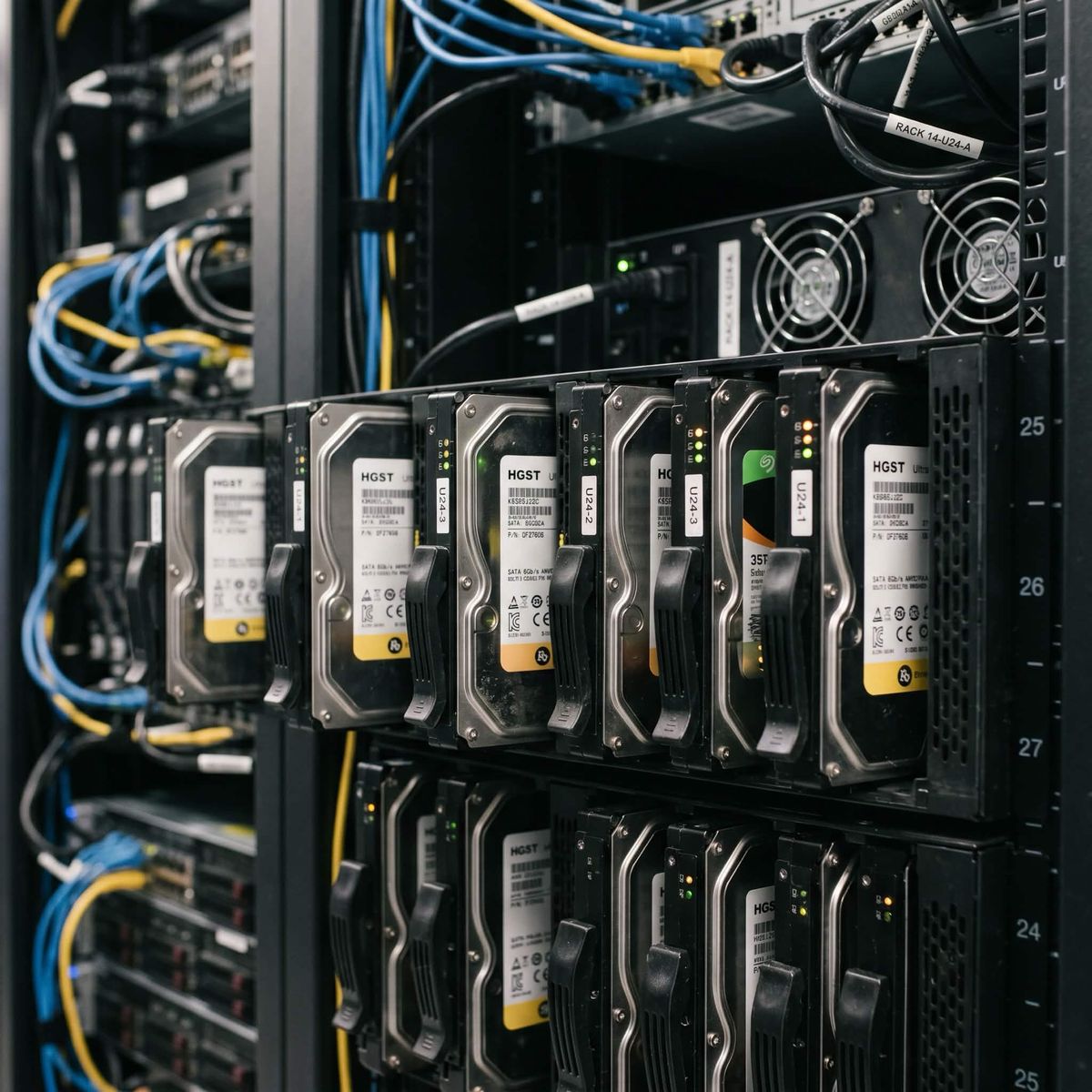
Data centers are power-hungry in ways that strain the grid at both scale and reliability. AI inference workloads require continuous power with near-zero tolerance for interruption. Renewables cannot carry that load alone. Natural gas, dispatchable and scalable with effectively unlimited supply from Appalachia and the Gulf Coast, is the answer operators are choosing. Long-term power purchase agreements between hyperscale operators and gas-fired generators are already being signed at volumes that show up in regional gas demand forecasts.
CIR Analysis: The data center gas demand story differs structurally from prior LNG export-driven cycles. LNG demand is price-sensitive; it competes with coal and pipeline gas in Asia and Europe. Data center power demand is not. A hyperscale operator running a $200M per year GPU cluster does not curtail because Henry Hub moves from $3.00 to $3.50. This demand is inelastic in a way Appalachian and Haynesville producers have not encountered before.
Haynesville vs. Appalachian: Different Routes, Same Destination
Both basins benefit from AI infrastructure buildout, but through different pathways. Haynesville gas flows south toward Gulf Coast LNG export terminals. As US LNG export capacity expands through Commonwealth LNG (FID reached May 15) and other projects, Haynesville producers capture index-plus pricing for molecules destined for Europe and Asia. Expand Energy (EXE) holds one of the lowest-cost Haynesville positions in the basin, with wellhead breakevens that work well below $2.50/MMBtu on core acreage.
Appalachian gas has a geographic advantage Haynesville cannot replicate. Northern Virginia, Ohio, Pennsylvania, and western North Carolina host the largest concentration of hyperscale data center capacity on the eastern seaboard. Every megawatt of new data center load in that corridor draws from a grid where Appalachian gas dominates the dispatchable base. EQT, the largest Appalachian producer, has been targeting direct power offtake structures, and the hyperscale buildout is now accelerating that path.
CIR Analysis: The Haynesville-Appalachian dynamic is not a competition. It is a complementary demand exposure that EXE, with material positions in both basins, holds in a way single-basin peers cannot match. Appalachian producers capture the data center premium from proximity. Haynesville captures LNG export economics. EXE is largely hedged against a divergence between the two by design.
What Expand Energy's Q1 Numbers Say
EXE's Q1 2026 results, filed with the SEC on April 28, confirm the integration is delivering. Natural gas, oil, and NGL revenue came in at $3,315M, up from $2,300M in Q1 2025. Net income swung from a $249M loss to $1,159M profit. Basic EPS reached $4.83 on 239.9M weighted average shares. Operating cash flow was $2,402M against $707M in capital expenditures, producing $1,695M in free cash flow in a single quarter.
The balance sheet reflects that inflection. Cash and equivalents jumped from $616M at year-end 2025 to $2,220M at March 31, 2026. Long-term debt stands at $4,133M, with $875M classified current. CIR Analysis: At current cash generation rates, EXE is tracking toward near-zero net debt within two years at $3-plus Henry Hub. That is not a price-spike bet. It is math at strip pricing.
The WTI-Gas Divergence as Operator Signal
WTI at $87.93 and Henry Hub at $3.18 represent a spread that tells two different stories. Oil is pricing Saudi demand signals and macro uncertainty. Gas is pricing structural demand that does not respond to the same geopolitical variables.
For completions contractors and E&P operators primarily leveraged to crude, the $87.93 print is a planning constraint for H2 activity. For gas producers with EXE's or EQT's exposure profile, the $3.18 print at a time when oil is under pressure is validation that their demand driver is structurally independent. According to EIA weekly data, Henry Hub averaged $3.16/MMBtu in the week ended May 29, consistent with the current intraday reading and above where summer 2026 strip was pricing three months ago.
What To Watch
- Commonwealth LNG construction: FID reached May 15. Execution timeline determines when Haynesville molecules flow through export capacity and whether EXE captures the LNG premium above Henry Hub.
- Northern Virginia power permitting: Dominion Energy's transmission upgrade filings and interconnection queue are leading indicators for how fast Appalachian demand can absorb new hyperscale load.
- EXE direct power offtake: Any gas sales agreements structured as power-off-take proxies or direct utility contracts would signal the company is converting structural demand into contracted revenue. Watch Q2 disclosures closely.
- Waha basis: Permian gas staying elevated keeps Waha under pressure. This does not affect Haynesville or Appalachian pricing, but it is a reminder that not all natural gas carries the same structural demand story.
Disclosure: The author/publisher holds positions in EQT Corporation (EQT) and Expand Energy Corporation (EXE) as of the publication date. This does not constitute investment advice.
Crude Intelligence Report is an independent upstream oil and gas intelligence publication. The content in this article is for informational purposes only and does not constitute investment advice, financial advice, or a recommendation to buy or sell any security. Always conduct your own due diligence before making investment decisions. CIR and its contributors may hold positions in companies mentioned; any such positions will be disclosed when known. © 2026 Crude Intelligence Report. All rights reserved.
This article contains forward-looking statements and analytical opinions. Actual results may differ materially.