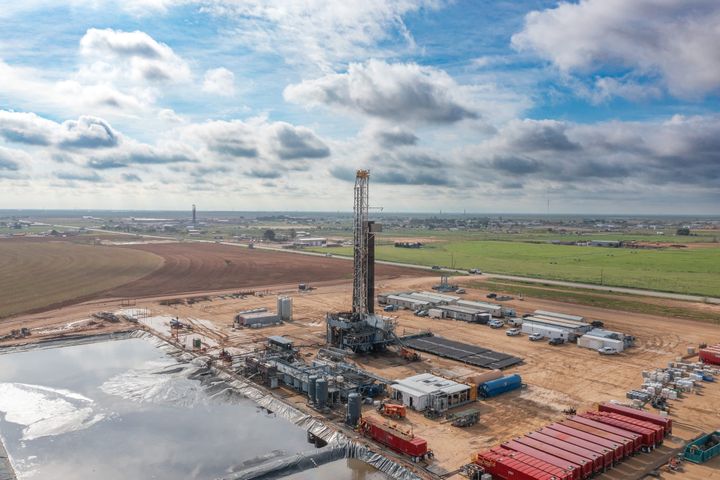
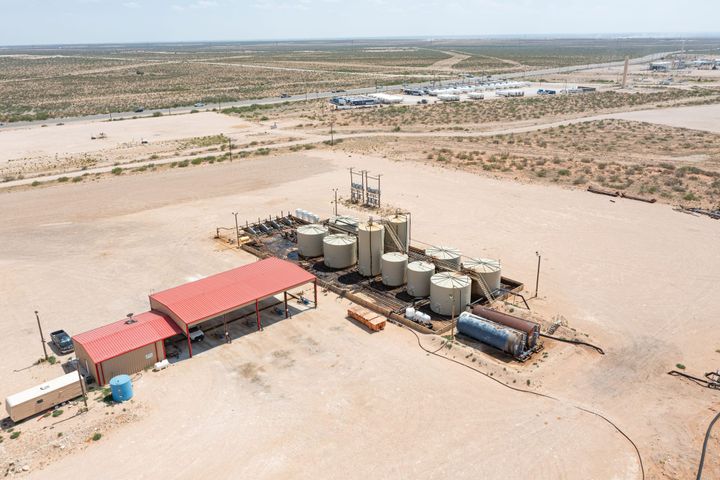
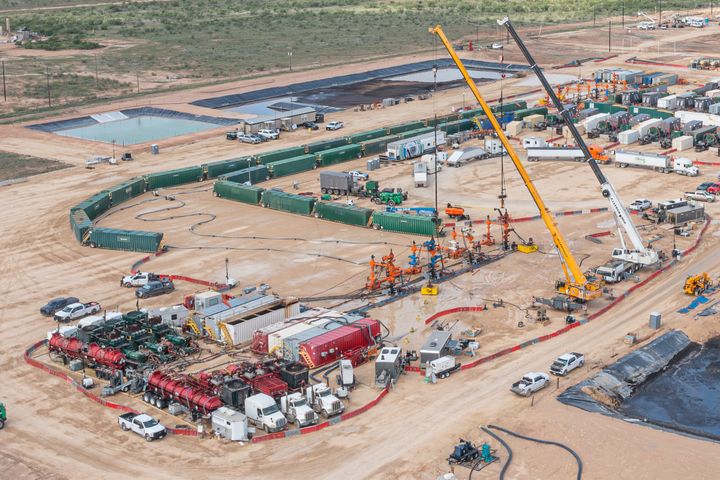
Wellhead Equipment at Sub-$90 WTI: Cactus, Core Labs, Archrock, and Expro (WHD, CLB, AROC, XPRO)
At sub-$90 WTI, spending pressure lands differently across wellhead equipment and production services. Archrock's contracted compression backlog insulates it; Cactus faces direct US completion exposure. Core Labs and Expro have international buffers — but not immunity.
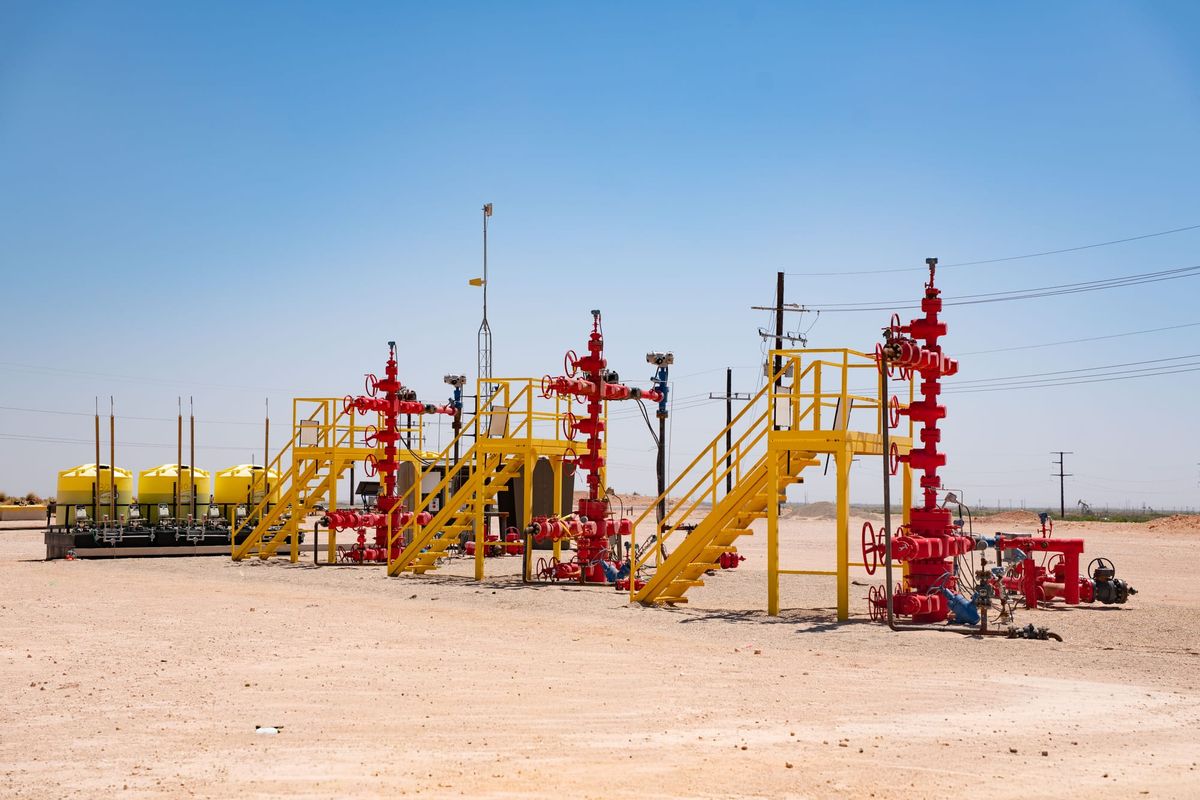
WHD | NYSE | CLB | NYSE | AROC | NYSE | XPRO | NYSE | Source data: Q1 2026 10-Q filings (SEC EDGAR), Q1 2026 8-K earnings releases. WTI spot: $96.00/bbl (FRED, June 1, 2026). Henry Hub: $3.07/MMBtu (FRED, June 1, 2026).
The wellhead equipment and production services market is not breaking uniformly under sub-$90 WTI pressure. Four companies — Cactus (WHD), Core Laboratories (CLB), Archrock (AROC), and Expro (XPRO) — expose four different answers to the same question: when US operators tighten their fists on capex, who takes the hit and who doesn't feel it yet?
Cactus: Domestic Pressure, International Cover
Cactus reported Q1 2026 total revenue of $388.3 million, up sharply from $280.3 million in Q1 2025, but the story is almost entirely driven by the Cactus International acquisition completed at the end of 2025. Strip that out and the picture gets more complicated.
The Pressure Control segment — the legacy wellhead business — posted Q1 2026 revenue of $300.2 million versus $178.4 million in Q4 2025, a 68.2% sequential jump. International contributions from the Baker Hughes joint venture dominated that move. Domestic rental revenue, meanwhile, declined. Rental revenue across the company fell from $27.1 million in Q1 2025 to $15.9 million in Q1 2026, a drop that tracks directly with US completion activity softening.
Spoolable Technologies (the FlexSteel business) held relatively firm: $89.9 million in Q1 2026 versus $84.2 million in Q4 2025, up 6.8% sequentially, driven by both domestic and international customer activity. But Pressure Control operating income fell 20.7% sequentially to $38.6 million, with purchase accounting impacts from the Cactus International acquisition masking some of the operational picture.
The key read for Cactus at sub-$90 WTI is this: domestic well completions drive wellhead equipment demand, and domestic completions are the soft spot. Cactus has bought itself a geographic buffer through the Baker Hughes international JV, but that only partially offsets the US-side exposure. Per the Q1 10-Q (SEC accession 0001628280-26-032636), the company is also navigating a complex purchase price allocation for Cactus International that won't be finalized for up to a year — adding financial noise on top of operational noise.
Archrock: Contracted, Compounding, Insulated
Archrock is the outlier in this group. Not because its business is better managed — though the gross margins are solid — but because its revenue model is structurally different from the other three.
Archrock's Q1 2026 contract operations revenue came in at $330.9 million, up 10.1% from $300.4 million in Q1 2025. Adjusted gross margin on the contract operations side reached 72% — up 2 percentage points year-over-year. The company's fleet ran at 95% utilization (period end) on 4,528,000 operating horsepower. That is not a business feeling spot market pressure at the moment.
The reason is structural: as of March 31, 2026, Archrock carried $864.6 million in remaining performance obligations under its contract operations segment, extending through 2032. Per the Q1 2026 10-Q (SEC accession 0001389050-26-000019), $441.0 million of that backlog is scheduled for 2026, with $288.0 million extending into 2027 and beyond. These are not spot service calls that disappear when WTI drops $10 — these are multi-year compression contracts that operators cannot easily unwind without paying penalties.
The NGCS Acquisition (closed May 2025) added significant horsepower and helped drive the year-over-year revenue increase. But even stripping out acquisition effects, Archrock's core contract compression business has a defensible floor at virtually any oil price that keeps associated gas flowing.
CIR Analysis: Archrock is the compression play, not the completion play. Its revenue looks more like a midstream infrastructure annuity than an oilfield service cycle. Sub-$90 WTI is a headache for E&P capex; it is not, in the near term, a headache for gas compression contracts already on the books.
Core Labs: Late-Cycle Logic, Mixed Signals
Core Laboratories posted Q1 2026 total revenue of $121.8 million, essentially flat with $123.6 million in Q1 2025. Services revenue was $94.3 million; product sales $27.5 million. The story here is in where that revenue comes from: over 70 offices in more than 50 countries, serving both conventional and unconventional operators globally.
Core's two segments — Reservoir Description and Production Enhancement — are philosophically late-cycle businesses. Reservoir characterization work and production enhancement services tend to be ordered to improve recovery rates from existing fields, not just to drill new ones. That makes CLB less sensitive to new-well drilling activity than, say, a wellhead equipment manufacturer like Cactus.
But "late-cycle resilient" is not the same as "immune." Core's Q1 2026 revenue was down $1.8 million year-over-year, a modest decline that reflects OPEC+ uncertainty and cautious North American operator spending. The company's international orientation provides a genuine buffer — international NOCs and operators fund reservoir work on longer planning cycles and budget timelines than US independents responding to strip prices — but that buffer has limits.
CLB's outlook section in its Q1 2026 10-Q (SEC accession 0001193125-26-198109) acknowledged that OPEC+ production increase announcements, combined with global trade uncertainty, raised the risk of a supply surplus. The company did not provide specific Q2 guidance in the 8-K, but the revenue trajectory entering mid-year points to a business that's holding ground rather than growing.
CIR Analysis: Core Labs' revenue flatness reflects an operator spending environment where international and conventional work is stable, but US unconventional completion-related production enhancement activity is softening. At sub-$90 WTI, CLB is not a disaster — it's a holding pattern.
Expro: International Diversification as the Real Buffer
Expro is the most internationally exposed of the four, and Q1 2026 shows both the benefit and the limit of that positioning. Total revenue was $367.6 million, down from $390.9 million in Q1 2025 — a 6.0% year-over-year decline. Well construction revenue fell to $122.6 million from $130.4 million; well management to $245.0 million from $260.5 million.
Expro's business spans over 60 countries with approximately 7,000 employees. The revenue decline is not primarily a WTI story — most of Expro's work is in regions where operators are less directly exposed to WTI spot dynamics. The North Sea, Middle East, and Africa are all operating under different budget frameworks. What's hitting Expro more directly is the broader softening in new well construction and testing activity globally, as operators across multiple geographies have moderated their completion programs in response to commodity price uncertainty.
The company also disclosed a redomicile from the Netherlands to the Cayman Islands, effective pending shareholder vote at its 2026 annual meeting. The structural change shouldn't affect operations, but it adds a layer of corporate complexity during a period when investors are already cautious about the oilfield services cycle.
Expro's story at sub-$90 WTI is geographic diversification without immunity. International operators move more slowly — budgets are longer-cycle, work is more contracted — but when global capex softens, well management and testing services eventually follow.
CIR Analysis: Who Has Cover and Who Doesn't
Editor's Note: The following assessments represent CIR's analytical opinion based on publicly available financial data. They are not statements of fact and should not be construed as such.
The four companies in this piece expose a clear spectrum of sub-$90 WTI exposure. Archrock is the most insulated — contracted compression revenue, $864 million in backlog extending to 2032, and 95% utilization on must-run infrastructure. A meaningful WTI correction doesn't change how much gas needs to be compressed from existing wells. Core Labs is next — late-cycle positioning and international orientation provide a real buffer, but flat revenue and softening US unconventionals indicate the cushion isn't infinite. Expro is partially protected — international exposure slows the reaction to US price swings, but global capex moderation is already showing up in the revenue decline. Cactus is the most directly exposed to US activity — wellhead demand follows completions, completions follow WTI, and domestic rental revenue has already started falling.
The contrast is structural, not managerial. Archrock built a contract-backlog model. Core Labs built an international analytic service model. Expro built a global well management model. Cactus built a domestic US completion equipment model. At $86/bbl WTI, the first three models have meaningful buffers. The fourth is watching the rig count.
What To Watch
- WHD domestic rental revenue trajectory. Q1 2026 rental revenue fell 41% year-over-year. If US completions soften further in H2, this line gets worse before it gets better — and Cactus International won't fully offset it.
- AROC backlog conversion and renewal rates. The $864.6 million backlog is the shield. Watch whether Q3/Q4 contract renewals come in at current rates or whether operators begin negotiating lower terms as the market softens.
- CLB international vs. domestic segment mix. Core Labs doesn't break out Q1 segment revenue publicly in its 8-K, but the 10-Q will show whether international production enhancement is holding while US work softens — which would confirm the late-cycle buffer thesis.
- XPRO redomicile outcome and H2 well management demand. If OPEC+ continues to unwind voluntary cuts through September 2026 as announced, international operators may reassess new well programs — which directly hits Expro's well flow management and testing services.
Crude Intelligence Report is an independent upstream oil and gas intelligence publication. The content in this article is for informational purposes only and does not constitute investment advice, financial advice, or a recommendation to buy or sell any security. Always conduct your own due diligence before making investment decisions. CIR and its contributors may hold positions in companies mentioned; any such positions will be disclosed when known. © 2026 Crude Intelligence Report. All rights reserved.
This article contains forward-looking statements and analytical opinions. Actual results may differ materially.