OPEC+ in 2026: The Discipline Question Returns
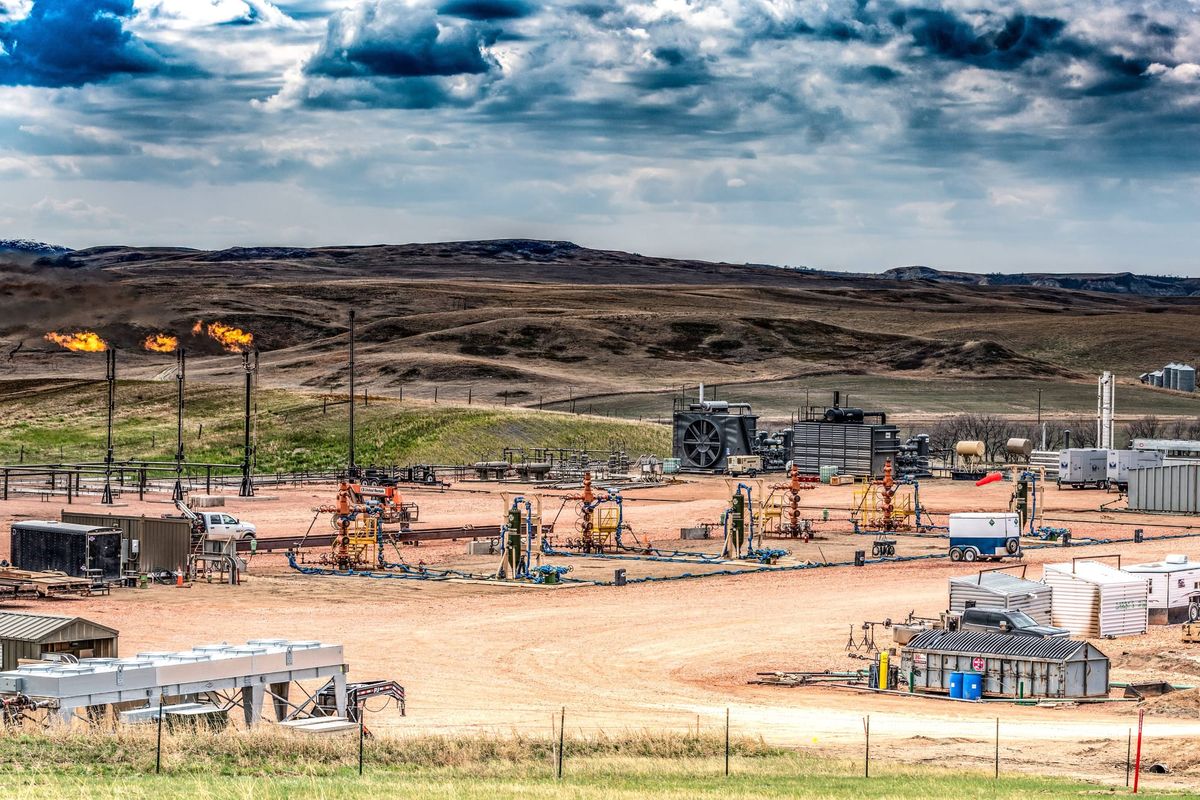
OPEC+ enters the second quarter of 2026 facing a familiar problem: the gap between stated production targets and what members actually want to pump is widening again. The cartel's credibility is structurally tested every time oil prices threaten to recover toward levels that would incentivize non-OPEC growth — and the U.S., at 13.2 MMbbl/d and climbing, is the most consequential non-OPEC variable on the board.
The Compliance Picture
Saudi Arabia is producing at or near its stated target of roughly 9.0 MMbbl/d — a notable constraint given its fiscal needs. The kingdom requires approximately $85-90/bbl to balance its 2026 budget, and Riyadh has been consistent in defending production discipline even when it means short-term revenue pain. The Saudis have internalized the lesson from 2020 and 2022: market share grabs against U.S. shale don't work when shale producers have clean balance sheets and $40 breakevens.
The compliance problem lives elsewhere. Iraq continues to produce above quota by 150,000-250,000 bbl/d, citing ongoing budget pressure and domestic political dynamics. The UAE has been quietly pushing for higher allocations — their expanded production capacity (Adnoc has invested heavily in capacity growth to 5 MMbbl/d by 2027) creates structural pressure to monetize before the energy transition accelerates demand destruction. Kazakhstan's Tengiz expansion adds another 250,000+ bbl/d of production that flows regardless of OPEC+ preferences — the Chevron-operated field has its own production logic.
The U.S. Overhang
At 13,246 Mbbl/d in January 2026 (down slightly from the November 2025 cycle high of 13,789), U.S. production is the most important price-dampening variable outside OPEC's control. The trend matters as much as the level: U.S. production has grown ~400,000 bbl/d year-over-year despite the rig count running 12% below 2023 averages. Every OPEC cut announcement triggers a question from commodity traders: how much of this cut does U.S. shale efficiency offset within 12 months?
The honest answer in 2026 is "less than before." The Permian's tier-1 inventory is not infinite. Operators are disciplined but not growth-averse; at sustained $80+ WTI, you'd see a rig count response. The magic number where U.S. production growth resumes meaningfully is somewhere in the $80-85/bbl range — which is exactly where Saudi Arabia wants prices to stabilize. The equilibrium is therefore narrow and fragile.
Scenarios for H2 2026
Base case (55% probability): Managed discipline, WTI $68-78. OPEC+ maintains current quotas through midyear, rolls them over with modest adjustments in June, and the market stays range-bound. U.S. production plateaus near 13.2-13.4 MMbbl/d. No significant price breakout in either direction. This is the steady-state environment that E&P operators have budgeted around.
Bullish scenario (25% probability): Demand surprise + compliance, WTI $82-90. If China's demand recovery shows a genuine second half, or if a geopolitical event tightens supply, and OPEC+ holds discipline, prices could push into the mid-$80s. Saudi Arabia would quietly welcome this and wouldn't move to defend market share below $85. U.S. operators would see accelerating FCF and face board pressure to answer the "why aren't you growing?" question.
Bearish scenario (20% probability): Compliance breakdown, WTI $58-65. If Iraq and the UAE push for production increases that are implicitly condoned, the market reads OPEC+ as functionally unraveling. Add any demand disappointment and you're looking at sub-$65 WTI, which stress-tests E&P budgets and triggers capex deferrals. The Permian survives this; marginal plays and leveraged operators don't.
What Drives the Decision
Watch Saudi Arabia's July meeting posture. June is typically when OPEC+ sets H2 production levels. The input variables for Saudi decision-making will be: (1) actual oil demand trends through May, (2) U.S. production trajectory in the Q1 EIA data releases, and (3) the fiscal pressure from Riyadh's ambitious Vision 2030 spending program. A Saudi Arabia under budget pressure will defend price floors aggressively. A Saudi Arabia with comfortable reserves might tolerate market-share competition for a quarter.
For U.S. E&P operators, the OPEC+ dynamic is backdrop, not driver. They've built their 2026 plans around $65-75 WTI. The upside scenario is gravy; the downside scenario is manageable at current cost structures. The cartel's power over U.S. companies peaked in 2014. What it retains is price-band influence — keeping oil from running too far in either direction. For now, that's enough to matter.
Crude Intelligence Report is an independent upstream oil and gas intelligence publication. Content is for informational purposes only and does not constitute investment advice, financial advice, or a recommendation to buy or sell any security. Always conduct your own due diligence before making investment decisions. The author and publisher hold no positions in any companies mentioned in this article. © 2026 Crude Intelligence Report. All rights reserved.