NextEra Buys Dominion: The Largest Utility Merger in History Is a Natural Gas Demand Story
NextEra Energy is acquiring Dominion Energy in an all-stock deal creating the world's largest regulated utility. The exchange ratio, the 130 GW large-load pipeline, and what it means for Appalachian gas producers at $101 WTI.
NEE | NYSE | D | NYSE | Source data: NextEra Energy 8-K (Item 1.01) filed May 18, 2026 (SEC accession 0000753308-26-000034); Dominion Energy 8-K (Item 1.01) and Exhibit 99.1 (joint press release) filed May 18, 2026 (SEC accession 0001193125-26-227930); FRED WTI daily close series
The largest utility merger in American history was announced Monday morning, and the upstream oil and gas sector is the most important audience that hasn't fully priced it in yet. NextEra Energy and Dominion Energy signed a definitive all-stock merger agreement on May 15, 2026. The combined entity will serve 10 million utility customers across Florida, Virginia, North Carolina, and South Carolina and own 130 gigawatts of generation capacity. The deal isn't a utility story — it's a natural gas demand story dressed in a utility press release.
What the Deal Actually Is
Dominion Energy shareholders receive a fixed exchange ratio of 0.8138 NextEra Energy shares per Dominion share, resulting in existing NEE shareholders owning approximately 74.5% and existing Dominion shareholders owning 25.5% of the combined company. The transaction is structured as 100% stock-for-stock and is expected to be tax-free. The combined company will trade under the NEE ticker on the NYSE.
John Ketchum will remain chairman and CEO of the combined company. Robert Blue, Dominion's current CEO, will serve as president and CEO of regulated utilities and join the board. Dominion Energy Virginia, Dominion Energy North Carolina, and Dominion Energy South Carolina will continue operating under those names. Headquarters will split between Juno Beach, Florida, and Richmond, Virginia.
The deal includes $2.25 billion in proposed customer bill credits across Virginia, North Carolina, and South Carolina spread over two years post-close — a regulatory concession designed to ease state commission approval. The combined company projects 9%+ annual adjusted earnings per share growth through 2032 and expects its credit profile to improve at close.
The Natural Gas Demand Signal
NextEra Energy CEO John Ketchum's statement on the deal is worth reading carefully: "Electricity demand is rising faster than it has in decades. Projects are getting larger and more complex. Customers need affordable and reliable power now, not years from now."
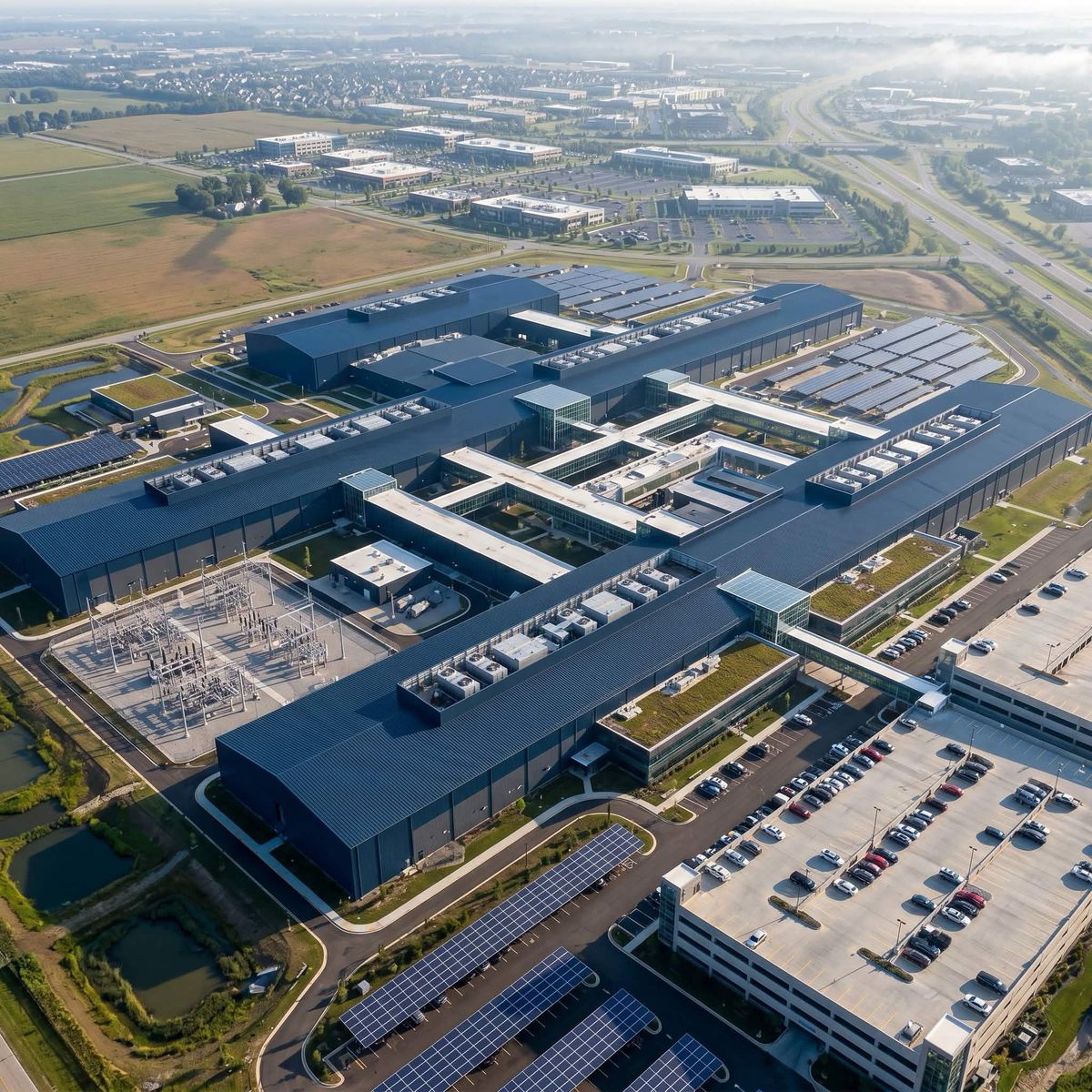
That is not utility boilerplate. It is a direct acknowledgment that hyperscaler data center load growth in Northern Virginia — the world's largest data center market by capacity — is accelerating faster than the existing grid can absorb. Dominion Energy Virginia is the incumbent utility for that corridor. Its transmission and generation buildout is the rate-limiting factor on how fast AI infrastructure can scale in the mid-Atlantic.
The combined company's pipeline includes more than 130 GW of "large-load opportunities" — the utility industry's term for data center and industrial customer interconnection requests. NextEra brings its renewables development platform and balance sheet. Dominion brings the Virginia franchise territory and existing customer relationships with Amazon, Microsoft, Google, and Meta, all of whom have hyperscale campuses in Northern Virginia.
CIR Analysis: The relevant upstream signal is this: large-load data center growth on a grid served primarily by natural gas generation means more gas demand, not less. Dominion Energy Virginia's generation mix is roughly 40% natural gas. FPL (Florida Power and Light, NextEra's Florida utility) is also heavily gas-dependent. When you combine those two load profiles and add 130+ GW of queued large-load requests on top, you are looking at a structural increase in baseload gas demand anchored in two of the fastest-growing states in the country. This is not a marginal swing. It is a multi-decade demand floor.
What This Means for Appalachian Gas Producers
Virginia is directly adjacent to the Appalachian Basin. EQT, Antero Resources, and Range Resources are the dominant producers in the Marcellus and Utica shale plays that feed Virginia's gas-fired power generation. The Mountain Valley Pipeline, which reached full service in 2024, runs directly into Dominion Energy Virginia's service territory.
A combined NextEra-Dominion entity with an explicit mandate to meet surging large-load demand will need firm gas supply. Dominion Energy's existing gas transport and storage infrastructure (Dominion Energy Transmission) is part of the deal. NextEra brings operational discipline and a balance sheet with improved credit ratings post-close. The combined entity's procurement scale — explicitly cited as a deal rationale — means larger, longer-term gas supply agreements.
CIR Analysis: EQT and Antero are the most directly positioned beneficiaries. Both have existing pipeline relationships into the Dominion service territory and have spent the past two years building LNG export optionality. A structural increase in gas-fired power demand in their backyard is an incremental floor under Appalachian spot prices — which have historically been the weakest link in the US natural gas basis complex.
The Florida and Southeast Angle
Florida Power and Light serves 12 million people across Florida and is one of the most gas-dependent large utilities in the country. Florida's data center buildout, while smaller than Northern Virginia's, is accelerating as latency requirements push compute infrastructure closer to Southeast population centers. The combined company's Florida-Virginia-Carolinas footprint essentially covers the southern corridor of the US AI infrastructure buildout.
Gulf of Mexico production and LNG regasification capacity in the Southeast Gulf Coast feeds directly into this corridor. The Sabal Trail pipeline system, in which NextEra has interests, connects Gulf supply into the FPL service territory.
Regulatory Risk and Timeline
This deal requires approvals from the Virginia State Corporation Commission, the North Carolina Utilities Commission, the South Carolina Public Service Commission, the Federal Energy Regulatory Commission, and the DOJ/FTC Hart-Scott-Rodino review. State utility commission approvals in Virginia and the Carolinas will be the long poles in the tent. The $2.25 billion bill credit concession is NextEra pre-negotiating the political price of approval.
CIR Analysis: Expect 18 to 24 months from announcement to close. The Virginia SCC is the most consequential approval — Northern Virginia's data center load growth makes the commission's decisions politically visible in a way they haven't been historically. Closing is not guaranteed. But the deal's strategic logic is tight enough that both boards approved it unanimously, which is a meaningful signal about how both management teams assess the regulatory path.
What To Watch
- Virginia SCC docket: The commission's initial response to the merger filing will set the tone for the regulatory process. Watch for intervenor filings from industrial customers and data center operators — their support or opposition will influence the commission's timeline.
- Appalachian basis: If this deal signals a durable increase in gas-fired power demand in the mid-Atlantic, Appalachian basis differentials vs. Henry Hub should tighten over time. Watch EQT and Antero guidance on take-or-pay arrangements and firm transport commitments for H2 2026 and 2027.
- NextEra earnings Q2 2026: Management's first post-announcement earnings call will give the market a detailed read on how they plan to finance the transaction and what the combined large-load pipeline looks like quantitatively.
- Other utility M&A: A deal this size will force every other large regulated utility to reassess its competitive position. Watch for countermoves from Southern Company, Duke Energy, and Entergy — all of whom operate in adjacent territories with overlapping large-load demand growth dynamics.
Crude Intelligence Report is an independent upstream oil and gas intelligence publication. The content in this article is for informational purposes only and does not constitute investment advice, financial advice, or a recommendation to buy or sell any security. Always conduct your own due diligence before making investment decisions. CIR and its contributors may hold positions in companies mentioned; any such positions will be disclosed when known. © 2026 Crude Intelligence Report. All rights reserved.
This article contains forward-looking statements and analytical opinions. Actual results may differ materially.