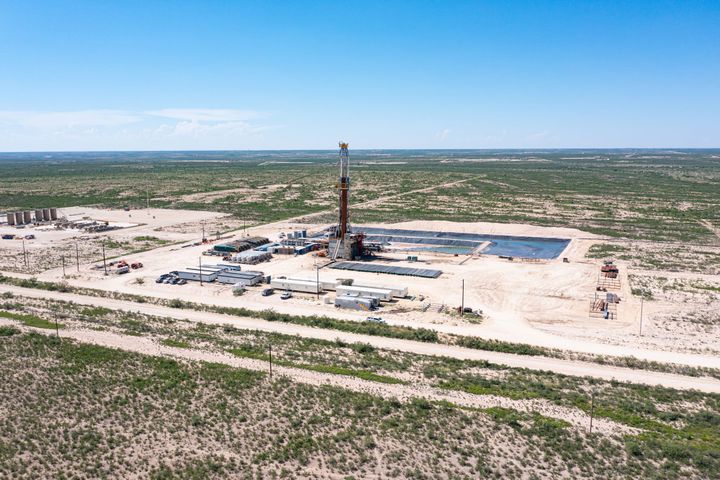
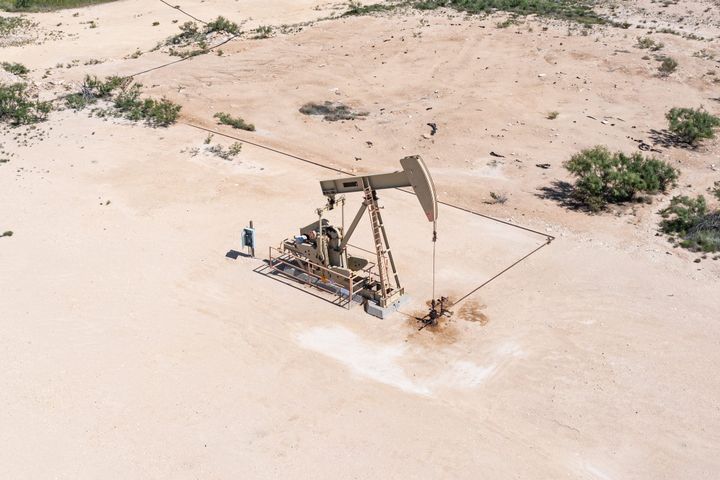
Natural Gas: 2025 Review and 2026 Setup

Natural gas producers entered 2025 with cautious optimism. They are exiting it with something approaching genuine optimism — a change in tone that reflects real fundamental improvement, not just seasonal weather effects. Here is what happened and where things stand heading into 2026.
The 2025 Review: From Pain to Recovery
Henry Hub opened January 2025 near $3.00/MMBtu on the back of a cold December 2024. It did not hold. Warm winter weather and a well-supplied storage picture pushed prices back below $2.00 in February and March, and the market spent most of Q1 and Q2 in the $1.80–$2.30 range. That is below the cash operating cost for much of Appalachian production and barely covers lifting costs in Haynesville.
The response was swift and rational. EQT, the largest U.S. natural gas producer, curtailed approximately 1.0 Bcf/d of Appalachian production in Q1. Chesapeake (now Expand Energy) had already planned curtailments. Coterra cut Marcellus activity. These were not forced curtailments — they were deliberate capital allocation decisions that reflected managements' willingness to protect price rather than grow into a oversupplied market. The discipline worked.
By Q3, storage trajectories had shifted. The five-year average storage surplus that had characterized the first half was shrinking. By late October, EIA data showed storage near 3,600 Bcf — above average but not dramatically so. Henry Hub had recovered to $2.75–$3.00 by November, and winter weather risk was supportive heading into year-end.
LNG: The Game-Changer Takes Hold
The structural story that has been promised for years is finally materializing. U.S. LNG export capacity ended 2025 at approximately 14.5 Bcf/d of nameplate capacity, with actuals running around 12–13 Bcf/d. Sabine Pass, Corpus Christi, Freeport, Cameron, Cove Point, and Golden Pass (ramping) collectively represent a permanent and growing source of gas demand that simply did not exist at scale five years ago.
The projects in the pipeline add incremental confidence: Plaquemines LNG Phase 1 (Venture Global) reached first production in 2025 and is ramping toward 10 Bcf/d of nameplate capacity across its full build-out. Corpus Christi Stage 3 is adding trains. Port Arthur LNG broke ground. Each of these projects pulls a fixed volume of gas off the domestic market permanently.
The Haynesville Basin sits at the center of this story. Located in northwest Louisiana, the Haynesville is the closest major gas basin to the Gulf Coast LNG export terminals. Producers like Expand Energy, Comstock Resources, and Southwestern Energy's legacy assets are positioned directly in the LNG demand path. Pipeline connections from the Haynesville to Sabine Pass, Corpus Christi, and Plaquemines are well-developed. When LNG terminals run, Haynesville producers get paid. It is that direct a relationship.
Appalachia: The Distance Problem Remains
Appalachian producers — EQT, Range Resources, CNX, Coterra in Marcellus/Utica — face a different calculus. Their gas must move west or south via long-haul pipelines to reach LNG markets, and those basis differentials matter. Mountain Valley Pipeline, which entered service in 2024, added needed egress capacity from West Virginia and Virginia. But the structural basis discount that Appalachian producers accept relative to Henry Hub has not been eliminated; it has been managed.
EQT's argument for Appalachia remains compelling on a cost basis: well costs in the core Marcellus Shale are among the lowest in the country, all-in breakevens run $1.80–$2.20/MMBtu at the wellhead, and the basin has decades of remaining inventory. The challenge is not geology; it is marketing. Getting Marcellus gas to premium markets efficiently is the bottleneck that management teams spend real time solving.
2026 Setup
Our base case for Henry Hub in 2026 is $3.00–$3.75/MMBtu annual average, with winter peaks potentially touching $4.00–$4.50 if cold weather materializes. The structural floor is higher than it was three years ago because LNG exports provide a baseline demand that does not fluctuate with domestic weather. The ceiling is also higher because storage is not as deep as it was in the 2023–2024 period.
Watch two things closely in Q1 2026. First: storage trajectory. If the January–February draw is aggressive — cold weather-driven — entering spring with below-average storage sets up a constructive summer fill season. Second: LNG feed gas demand. Daily LNG feed gas nominations are available in near-real-time via pipeline bulletins; those numbers tell you what the global LNG market is paying for and pulling from the U.S. system.
For natural gas equities, 2026 is the year the patience trade finally gets paid. EQT, Expand Energy, Range Resources, and Coterra all trade at discounts to their NAV at $3.50+ gas. The stocks are not priced for the recovery that the fundamentals now appear to support.
Crude Intelligence Report is an independent upstream oil and gas intelligence publication. Content is for informational purposes only and does not constitute investment advice, financial advice, or a recommendation to buy or sell any security. Always conduct your own due diligence before making investment decisions. The author and publisher hold no positions in any companies mentioned in this article. © 2026 Crude Intelligence Report. All rights reserved.