Life Support: Iran Ceasefire Falters, Brent Nears $110, Qatar Goes Dark at Ras Laffan
Trump says the Iran ceasefire is on 'life support.' Brent nears $110. Qatar asks LNG vessels at Ras Laffan to switch off transponders. Japan and South Korea burn coal. Tuesday closes on structural disruption, not a spike.
The Iran ceasefire that briefly pulled crude back from its May highs is deteriorating fast. President Trump told reporters Tuesday the framework is on "life support," and the market responded the only way it knows how at this point: Brent crude climbed toward $110 and the downstream damage from the Hormuz disruption spread wider, this time pulling Qatar's own LNG export terminal into the operational threat zone.
Tuesday's close is telling operators something they already suspected: the supply shock isn't a spike with a defined endpoint. It's a structural dislocation that keeps metastasizing.
The Ceasefire That Isn't
Trump's "life support" characterization followed Iran's rejection of the latest U.S.-backed framework for de-escalation. Both sides are still signaling interest in talks — sanctions relief, nuclear restrictions, shipping terms — but the gap between stated positions remains wide. Washington has described Iran's latest counter as "totally unacceptable." Tehran's position on Hormuz hasn't moved.
CIR Analysis: The market has spent three weeks attempting to price in a ceasefire resolution that now looks increasingly unlikely before June. The Brent curve is starting to reflect this. The $110 threshold, tested intraday Tuesday, is no longer a ceiling — it's becoming a floor conversation. Every diplomatic failure pushes the floor higher.
Qatar Goes Dark at Ras Laffan
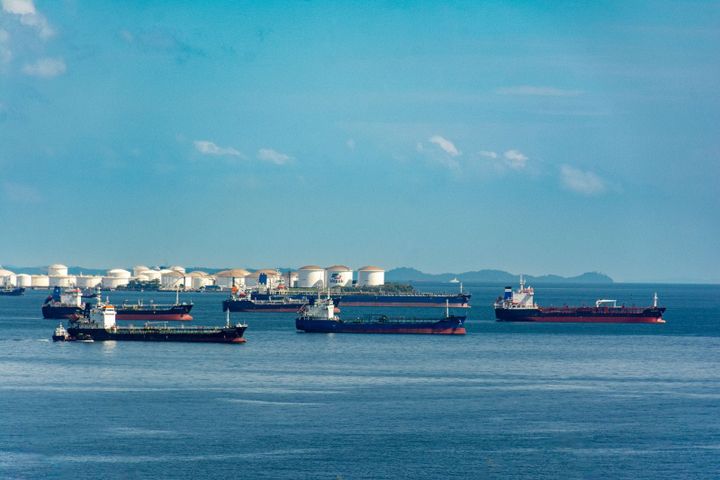
The more operationally significant development Tuesday came out of Qatar. Ras Laffan LNG port — the world's largest LNG export facility — asked vessels near the terminal to switch off their AIS transponders, citing safety concerns. The de facto Hormuz closure has already trapped roughly 20% of daily global LNG flows, most of it Qatari. No Qatari LNG cargo cleared the Strait between February 28 and this past weekend, when the first shipment in over two months passed through.
The transponder request is the operational signal that Qatar's management of Ras Laffan has shifted from "disrupted but functional" to "defensive posture." Iranian drone and missile strikes on regional energy infrastructure have been the backdrop for weeks. Going dark at the world's biggest LNG port is not a routine request.
The downstream effect is now visible in Asia. Japan and South Korea — the second and third largest LNG importers globally — slashed gas-fired power generation in April and early May as supply shrank and spot LNG prices spiked. Both countries are substituting coal. This is the demand destruction signal that European and US gas markets have not yet fully priced. When the world's wealthiest LNG buyers start burning coal because LNG is unavailable or too expensive, the price signal is unambiguous.
Trump's Gas Tax Play
On the domestic front, Trump floated a temporary federal gas tax holiday Tuesday in response to pump prices tracking crude higher. "Yup, we're going to take off the gas tax for a period of time," he told CBS. The administration framed this as a response to consumer sentiment — which has dropped to its lowest since the early 1950s.
CIR Analysis: The gas tax holiday is a retail optics move, not a supply fix. The 18.4-cents-per-gallon federal gasoline tax provides roughly $6 billion in Highway Trust Fund revenue monthly. Suspending it doesn't change Hormuz, doesn't add a barrel of supply, and doesn't address the structural reason retail prices are elevated: Brent is near $110 because the world's most critical shipping lane is functionally closed. For operators, the headline matters because it signals the administration views elevated oil prices as a political liability — which could inform future posture on Iran negotiations and domestic production incentives.
Brazil Steps Into the Void
One data point worth tracking: Brazil's crude oil exports to China more than doubled in Q1 2026, with export values up 94.6% to $7.2 billion. Volume shipped was 122% higher year-over-year, per Brazilian government data. This is the Americas-as-Atlantic-Basin thesis playing out in real trade data. Brazilian crude filling the Gulf vacuum for Chinese refiners — while US LNG fills European storage gaps — is the new baseline.
For Permian and Gulf Coast producers, the read-through is positive: the market needs US barrels and US molecules, and it needs them in volume. The infrastructure question is no longer whether demand exists. It's whether export capacity can absorb it fast enough.
What To Watch
- Brent $110 test — if it holds as support through Wednesday's open, the market is pricing in extended Hormuz disruption
- EIA's new quarterly choke-point tracking report launches Wednesday — first publication of direct strategic petroleum reserve and shipping lane flow data
- Trump administration signals on Iran — any hardening or softening of the "life support" framing will move prices
- Japan/South Korea coal substitution — if this persists into June, expect LNG spot prices to reset structural highs
- US LNG export capacity utilization — Sabine Pass, Corpus Christi, Calcasieu Pass throughput relative to nameplate
Crude Intelligence Report is an independent upstream oil and gas intelligence publication. The content in this article is for informational purposes only and does not constitute investment advice, financial advice, or a recommendation to buy or sell any security. Always conduct your own due diligence before making investment decisions. CIR and its contributors may hold positions in companies mentioned; any such positions will be disclosed when known. © 2026 Crude Intelligence Report. All rights reserved.
This article contains forward-looking statements and analytical opinions. Actual results may differ materially.