IEA Flips to Deficit, Iran Cracks the Door: What Wednesday's Numbers Mean for US Upstream

The IEA doesn't flip its annual balance from surplus to deficit without a reason. Today it did, and the reason is sitting at the bottom of the Persian Gulf. The agency's May 2026 Oil Market Report projects global supply will fall 3.9 million barrels per day across the year — with roughly 10.5 million bpd of Gulf production currently offline due to the Hormuz conflict. That's not a disruption. That's a restructuring of the global oil market.
The Deficit Math
According to the IEA, demand destruction from surging prices has clipped global consumption by an estimated 420,000 bpd — but even that demand contraction can't close a 3.9 MMbpd supply gap. The result: a projected 1.78 MMbpd global supply deficit for 2026. The IEA estimates Q2 alone will see inventory draws of 8.5 million barrels per day, the steepest in the agency's tracked history.
The 32 IEA member nations agreed to release a combined 400 million barrels from strategic reserves. That's roughly two weeks of global demand at current drawdown rates. A buffer, not a fix.
Brent was trading near $107.50 early Wednesday, mildly lower on the day as Iran's foreign minister indicated the country is open to "case-by-case" discussions on Hormuz passage for specific flagged vessels — a softer posture than the full closure language of recent weeks. WTI pulled back similarly to $101.67. The market read the signal correctly: it's not a ceasefire. It's Iran managing the corridor for leverage. The underlying deficit hasn't moved.
What It Means for US Operators
CIR Analysis: The IEA report is the most consequential piece of market structure analysis released this week, and it validates the thesis running through CIR's coverage since April: the geopolitical floor isn't going away because the structural deficit keeping it in place keeps getting wider.
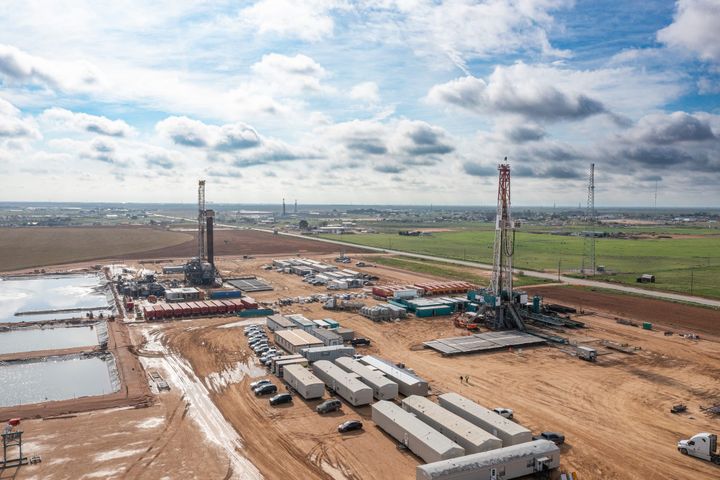
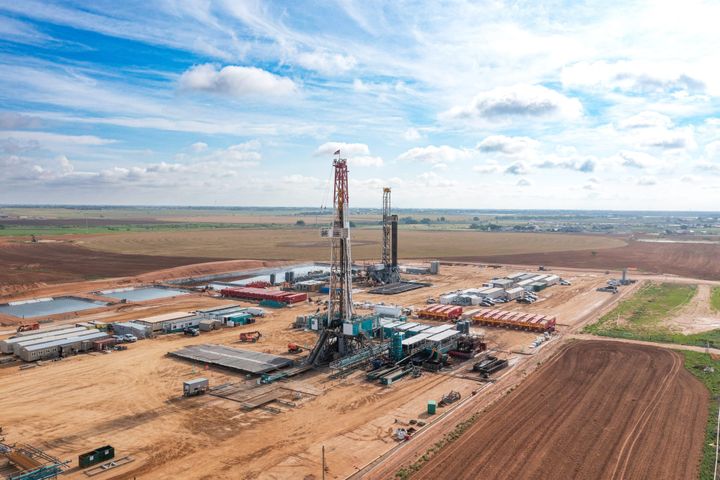
At $101 WTI with a 1.78 MMbpd annual deficit baked into IEA's base case, the calculus for US operators isn't complicated. Activity levels that looked stretched at $75 look sensible at $95 and are deeply economic at $101. The Eagle Ford and Permian both generate positive free cash flow at prices well below current spot. The question isn't whether to drill — operators settled that in Q1 — it's how fast supply chains can absorb the demand.
The Wednesday EIA crude inventory report confirms the direction. US commercial crude stocks have been drawing steadily as domestic refiners fill the gap left by disrupted Middle Eastern flows. Asian refiners pulling alternate barrels from the Americas are stretching US export logistics — exactly the dynamic that pushed WTI Midland above $103 today before settling back.
Iran's Managed Opening
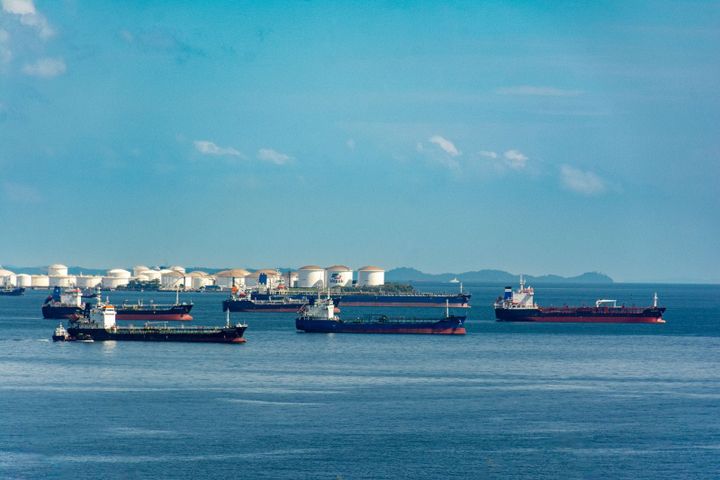
The "case-by-case" Hormuz language is worth parsing carefully. Iran is not reopening the strait. It is offering conditional access — meaning Iranian authorities retain the right to inspect, board, or deny passage on an individual vessel basis. That's closer to a toll booth than a ceasefire.
For LNG shippers, the practical implication is that Qatar's output remains functionally offline for Asian buyers who won't risk a vessel seizure. The Ras Laffan transponder blackout that CIR noted last week appears ongoing. US LNG export volumes are the direct beneficiary: EIA data through April showed US LNG exports averaging 17.6 Bcf/d, with the EU and UK taking 72% of cargoes.
CIR Analysis: If Iran's managed-opening gambit holds through June — conditional access rather than full closure — the market will interpret it as a modest de-escalation. That's what today's -1% Brent move suggests. But a 1.78 MMbpd annual deficit doesn't resolve from Iranian diplomacy alone. The fundamental picture the IEA laid out today keeps the floor intact through the summer.
What To Watch
- EIA Weekly Petroleum Status Report (Thursday): The official US inventory print. Cushing levels are the tell. If they draw again, the $101 floor thesis gets another leg.
- Trump-Xi Beijing summit (Thursday-Friday): Any signal on Hormuz mediation or Chinese crude purchases will move Brent. Watch China's posture on Iranian vessel access.
- Iran's case-by-case corridor: If the first flagged-vessel transits proceed without incident, expect Brent to soften another $2-3. If one gets seized, the move will be the other direction and sharper.
- Q1 2026 earnings tail: Battalion Oil (BATL) reported this afternoon — a micro-cap, but the Monument Draw "cube" development program and debt reduction story adds texture to the small-operator resilience narrative at $101 WTI.
Crude Intelligence Report is an independent upstream oil and gas intelligence publication. The content in this article is for informational purposes only and does not constitute investment advice, financial advice, or a recommendation to buy or sell any security. Always conduct your own due diligence before making investment decisions. CIR and its contributors may hold positions in companies mentioned; any such positions will be disclosed when known. © 2026 Crude Intelligence Report. All rights reserved.
This article contains forward-looking statements and analytical opinions. Actual results may differ materially.