Halliburton's Latin America Bet Is Paying Off — and Vaca Muerta Is the Reason (HAL)
HAL | NYSE | Source data: Q1 2026 10-Q (SEC accession 0000045012-26-000039, filed April 24, 2026), Yahoo Finance commodity prices
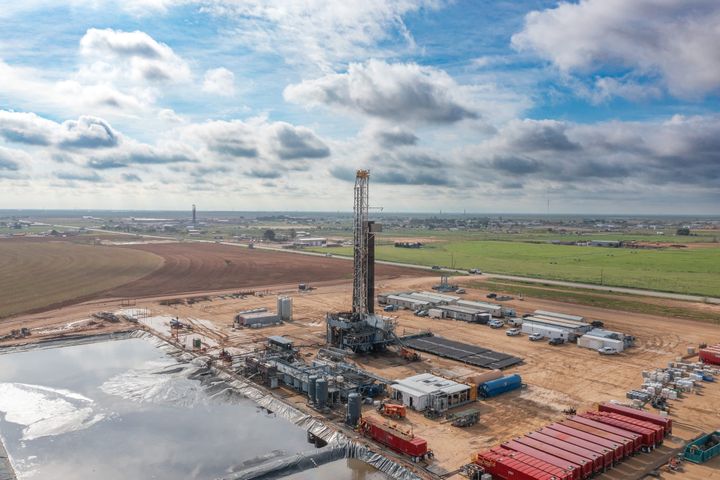
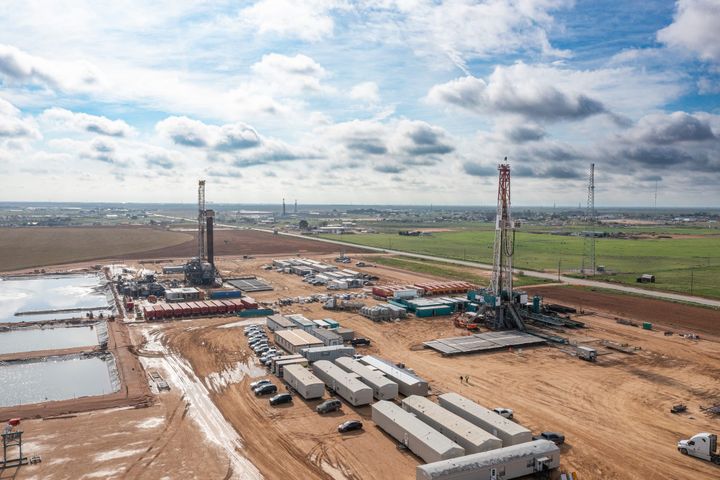
Halliburton's Q1 2026 results tell a geographic bifurcation story that matters well beyond the earnings release. North America is contracting. Latin America is surging. The driver is Vaca Muerta , where HAL is deploying digital completions technology at a scale that has repositioned the region from a footnote to a structural growth engine.
The Numbers Behind the Bifurcation
Halliburton reported Q1 2026 total revenue of $5.4 billion, essentially flat against the same quarter a year earlier. But flat totals hide a sharp split. North America revenue fell 4% year-over-year to $2.1 billion, driven by lower stimulation and artificial lift activity in US Land and the Gulf of America. Latin America revenue grew 22% to $1.1 billion , adding $194 million in a single quarter year-over-year.
Per Halliburton's 10-Q, the Latin America gain was driven by higher activity across multiple product service lines in Ecuador, the Caribbean, and Brazil, and — critically — improved stimulation activity in Mexico and Argentina. Argentina is Vaca Muerta. That is not a minor contributor. HAL's Latin America segment is now generating more than $4 billion in annualized revenue run-rate, and Argentina is among the fastest-growing components within it.
The Completion and Production segment, which includes stimulation and cementing, reported $3.0 billion in first-quarter revenue, down 3% from the prior-year period. Operating income in C&P fell 17% to $439 million. The drag is almost entirely North America and the Middle East , where geopolitical conflict cost HAL an estimated $0.02 to $0.03 per diluted share in Q1. Latin America and the Western Hemisphere partially offset both headwinds, with higher completion tool sales and improved pressure pumping services. WTI at the time of these results averaged approximately $72 per barrel for Q1. It sits at $88.01 today.
What Vaca Muerta Actually Represents
Vaca Muerta is the most important shale development story outside the United States right now. Located in the Neuquén Basin of western Argentina, the formation spans roughly 30,000 square kilometers and holds an estimated 16 billion barrels of technically recoverable oil and 308 trillion cubic feet of gas. YPF (NYSE: YPF), Chevron, Shell, and TotalEnergies all operate at scale there. Argentina produced approximately 700,000 barrels per day of crude in early 2026, with Vaca Muerta driving the majority of the incremental growth.
The challenge operators face is repeating North American-style lateral efficiency in a basin with less infrastructure, smaller service vendor density, and longer lead times on equipment. That is the opening HAL is exploiting. Halliburton's strategic priorities in its 10-Q explicitly list unconventionals as a primary international growth target : their digital toolkit is the competitive differentiator.
Digital as the Edge in Unconventionals
HAL has structured its international unconventionals play around digital and automation technology. The 10-Q references iCruise rotary steerable systems and LOGIX automation for North America, but the underlying digital infrastructure: Halliburton's Landmark Software and Services platform, real-time wellbore placement, and production optimization tools. This stack is deployed internationally including in Latin American unconventionals.
CIR Analysis: The digital edge in unconventionals is not a marketing slogan for HAL at this point : it is the mechanism that converts raw Latin American rig demand into service pricing power. When an operator in Vaca Muerta is drilling multi-lateral horizontals with North American-style stage counts, they need the same precision wellbore placement, stimulation design, and real-time data integration that Permian operators use. HAL has that. Smaller regional competitors do not. This gives HAL asymmetric leverage in contract negotiations . The Q1 Latin America revenue surge is the proof of concept.
HAL's D&E segment , which houses Landmark, Sperry Drilling, and wireline, grew 4% to $2.4 billion in Q1 2026. Operating income held flat at $351 million, absorbing the Middle East drag. In Latin America, D&E gains were driven by higher project management activity, which signals multi-well integrated services contracts , the type that carry better margins than spot market work.
The North America Contrast
The domestic softness in HAL's Q1 is a known story at $88.01 WTI (Yahoo Finance, June 11, 2026), but the context matters. Lower stimulation and artificial lift in US Land reflects operator capital discipline at current prices, not structural demand destruction. HAL's Q1 North America rig exposure is skewed toward Permian, Eagle Ford, and Haynesville . These operators are running maintenance-mode completions programs until WTI gives a clearer H2 signal.
CIR Analysis: The frac market in North America is soft right now : PUMP, PTEN, and LBRT data from this quarter confirm the trend. HAL is not immune. But the key difference between HAL and pure-play North American frac companies is precisely this Latin America offset. When NA completions pull back, HAL's international segment absorbs the slack. Pure-play frac companies like ProPetro have no such hedge.
HAL committed to maintaining capital expenditures at approximately $1.1 billion for 2026, targeting technology leverage and process improvement over new fleet expansion. That capital discipline, combined with the international growth trajectory, is what produced $461 million in net income on essentially flat total revenue . Quality of earnings matters as much as the headline number.
What To Watch
- Argentina oil output trajectory: YPF's Q2 production guidance and any Argentine government policy updates on Vaca Muerta export royalties: HAL's stimulation activity there scales directly with well counts
- WTI floor test: At $88.01 today and OPEC+ adding barrels through summer, the $87-88 range is where Latin American operators begin reassessing H2 completion schedules. Per CIR Analysis, the $85 floor is the key threshold. Below $85 sustained for more than a month, expect deferrals
- HAL Q2 earnings (late July): The key question is whether Latin America can sustain its 20%+ growth rate into Q2, and whether Middle East disruptions ease enough to claw back the $0.02 to $0.03 per-share drag
- Digital contract wins: Watch for any 8-K or press release announcing integrated digital services contracts in Argentina or Brazil : these tend to be multi-year and carry margin premiums
Crude Intelligence Report is an independent upstream oil and gas intelligence publication. The content in this article is for informational purposes only and does not constitute investment advice, financial advice, or a recommendation to buy or sell any security. Always conduct your own due diligence before making investment decisions. CIR and its contributors may hold positions in companies mentioned; any such positions will be disclosed when known. © 2026 Crude Intelligence Report. All rights reserved.
This article contains forward-looking statements and analytical opinions. Actual results may differ materially.