The $90 Test: HAL and SLB Completions Diverge as North America Softens and International Holds
HAL | NYSE | SLB | NYSE | BKR | NASDAQ | Source data: Q1 2026 earnings releases and 10-Q filings (SEC EDGAR), FRED commodity price series, Baker Hughes rig count
Halliburton and SLB both reported North America completions under pressure in Q1 2026: softer stimulation volumes, lower artificial lift activity, compressed margins. Yet both companies grew international revenue, won major contracts outside the US, and laid out outlooks that assumed $90 WTI wouldn't last but that post-conflict spending would recover. With WTI now printing above $95, the question shifts: does the North America recovery Jeff Miller called "early innings" accelerate, or does the geopolitical premium masking a weaker demand signal keep operators from pulling the trigger?
The Bifurcation in Q1 Numbers
Halliburton's Completion and Production segment reported revenue of $3.0 billion in Q1 2026, down $104 million or 3% year-over-year, with operating income falling $92 million or 17% over the same period. The driver was straightforward: lower stimulation activity in North America, compounded by lower completion tool sales and decreased pressure pumping in the Middle East. Latin America and Africa provided partial offsets, but not enough to hold the segment flat.
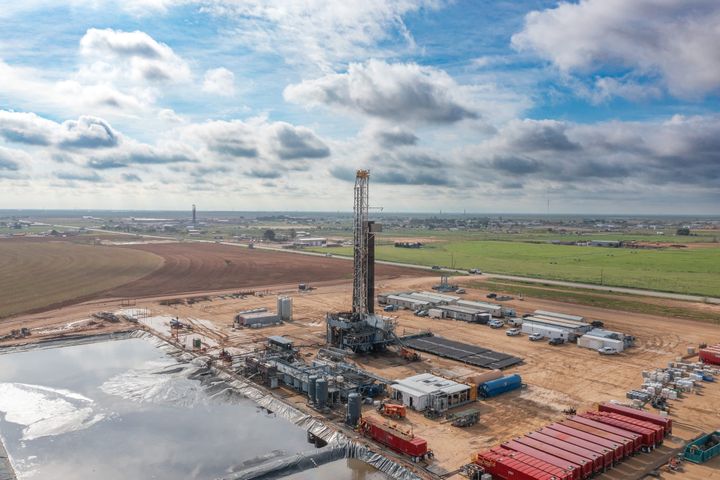
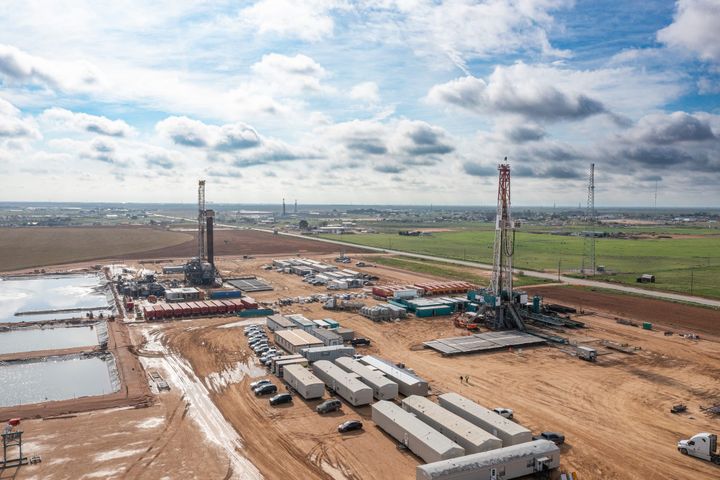
North America revenue came in at $2.1 billion for Q1, a 4% decrease versus Q1 2025, driven by reduced stimulation and artificial lift activity in US Land plus softer fluid services in the Gulf of America. Drilling-related services in US Land were a bright spot, which Miller cited when framing the quarter as "early innings of a recovery."
SLB's numbers are harder to read cleanly because of the ChampionX acquisition closed in Q3 2025, which contributed $838 million of Q1 2026 revenue. Strip that out and the picture is less constructive: excluding ChampionX, SLB's global Q1 revenue fell 7% year-over-year, international fell 7%, and North America fell 8%. The ChampionX production chemistry and artificial lift portfolio is doing real work for SLB's top line. It's the underlying OFS business that's under pressure.
SLB's Well Construction division reported Q1 revenue of $2.797 billion, down 6% year-over-year, with pretax segment operating margin compressing 463 basis points to 15.2%. Reservoir Performance fell 6% with margins down 47 basis points. The Middle East conflict was the immediate culprit. SLB CEO Olivier Le Peuch said the company "demobilized operations in a number of countries in response to customer actions to safeguard personnel and facilities."
HAL quantified the Middle East impact at 2 to 3 cents of net income per diluted share for Q1.
International: Where the Growth Story Still Lives
Strip out the Middle East disruption and the international completions picture looks different. HAL's Latin America revenue hit $1.1 billion in Q1, up 22% year-over-year, driven by Ecuador, the Caribbean, Brazil, and improved stimulation in Mexico and Argentina. Europe/Africa added 11%, led by Norway drilling and Angola pressure pumping. These aren't the numbers of a services market in structural retreat. They're the numbers of a market interrupted by a specific, identifiable disruption concentrated in one region.
Baker Hughes reinforced that read. BKR reported Q1 revenue of $6.6 billion, up 2% year-over-year, with its OFSE segment logging international contract wins that point toward durable activity: a major flexible pipe contract with Petrobras for Brazil pre-salt and post-salt fields, a 3-year well construction agreement with YPF for Vaca Muerta unconventional development, and a significant subsea systems award for Turkey's Black Sea. The common thread is long-cycle, large-scope, international work that doesn't cancel or defer on a WTI print.
What $90+ WTI Does to the North America Decision
The services companies entered 2026 expecting a gradual recovery. Stimulation activity in US Land had softened through late 2025 as operators ran capital discipline playbooks in a $70 WTI environment. The geopolitical spike that pushed WTI through $90 and now toward $98 changes the math, but not uniformly.
CIR Analysis: The operators most likely to accelerate completions at current prices are those with large DUC inventories in the Permian and Eagle Ford where frac cost per lateral foot has been pushed down by electric frac adoption. These operators can add completions activity without necessarily adding rigs, which is why the rig count signal has lagged the price move. The stimulation demand that would benefit HAL, SLB, and BKR's North America business will show up in completions, not in new drill permits.
HAL's Jeff Miller articulated the dynamic: "In North America, I see clear signs that we are in the early innings of a recovery." The language is measured — "early innings" rather than "inflection" — suggesting HAL's field teams haven't yet seen the backlog growth that would justify more aggressive guidance. SLB's Le Peuch put it differently, flagging that North America unconventional would benefit from "tailored reservoir chemistry to enhance recovery" as operators prioritize production from existing wells at current prices. That's a ChampionX-driven thesis about production optimization, not a frac fleet utilization thesis.
The Margin Question
Higher commodity prices don't automatically translate to better OFS margins. SLB's adjusted EBITDA margin compressed 346 basis points year-over-year in Q1 to 20.3%. HAL's Completion and Production operating margin fell from roughly 19.5% in Q1 2025 to 14.6% in Q1 2026, a 490 basis point compression, as revenue declined while cost structures didn't flex proportionally.
CIR Analysis: The margin compression tells the real story. North America stimulation pricing was under pressure well before the Middle East conflict. Operators had been pushing back on frac pricing since mid-2025, and the softening activity backdrop gave them leverage. A commodity price spike doesn't immediately restore that pricing power. It takes a sustained pickup in demand for services before the companies can push rates back up. The margin recovery will lag the activity recovery by two to three quarters.
What To Watch
- HAL Q2 guidance: Miller's "early innings" language will be tested against Q2 North America stimulation backlog. If North America Completion and Production revenue doesn't inflect, the recovery thesis gets pushed to H2.
- Permian DUC inventory: According to EIA drilling productivity data, Permian DUCs have been declining. A further drawdown at $95+ WTI accelerates the completions call.
- Middle East normalization: Both HAL and SLB cited Middle East disruption as a measurable headwind. Any ceasefire or deescalation that allows remobilization in Saudi Arabia, UAE, and Qatar would restore the international revenue base that's currently impaired. That's the bigger earnings driver for both companies than North America pricing.
- BKR IET vs OFSE divergence: Baker Hughes' IET division (gas turbines, LNG equipment, data center power systems) reported record Q1 orders of $4.9 billion and backlog of $33.1 billion. If IET continues to outperform OFSE, BKR's exposure to the OFS market softness is structurally hedged in a way HAL's isn't.
Crude Intelligence Report is an independent upstream oil and gas intelligence publication. All content is for informational purposes only and does not constitute investment advice, financial advice, or a recommendation to buy or sell any security. Always conduct your own due diligence before making investment decisions. CIR and its contributors may hold positions in companies mentioned; any such positions will be disclosed when known. © 2026 Crude Intelligence Report. All rights reserved.