Guyana's 900K Barrel Moment: Why Stabroek Is the Atlantic Basin's Best Hormuz Hedge
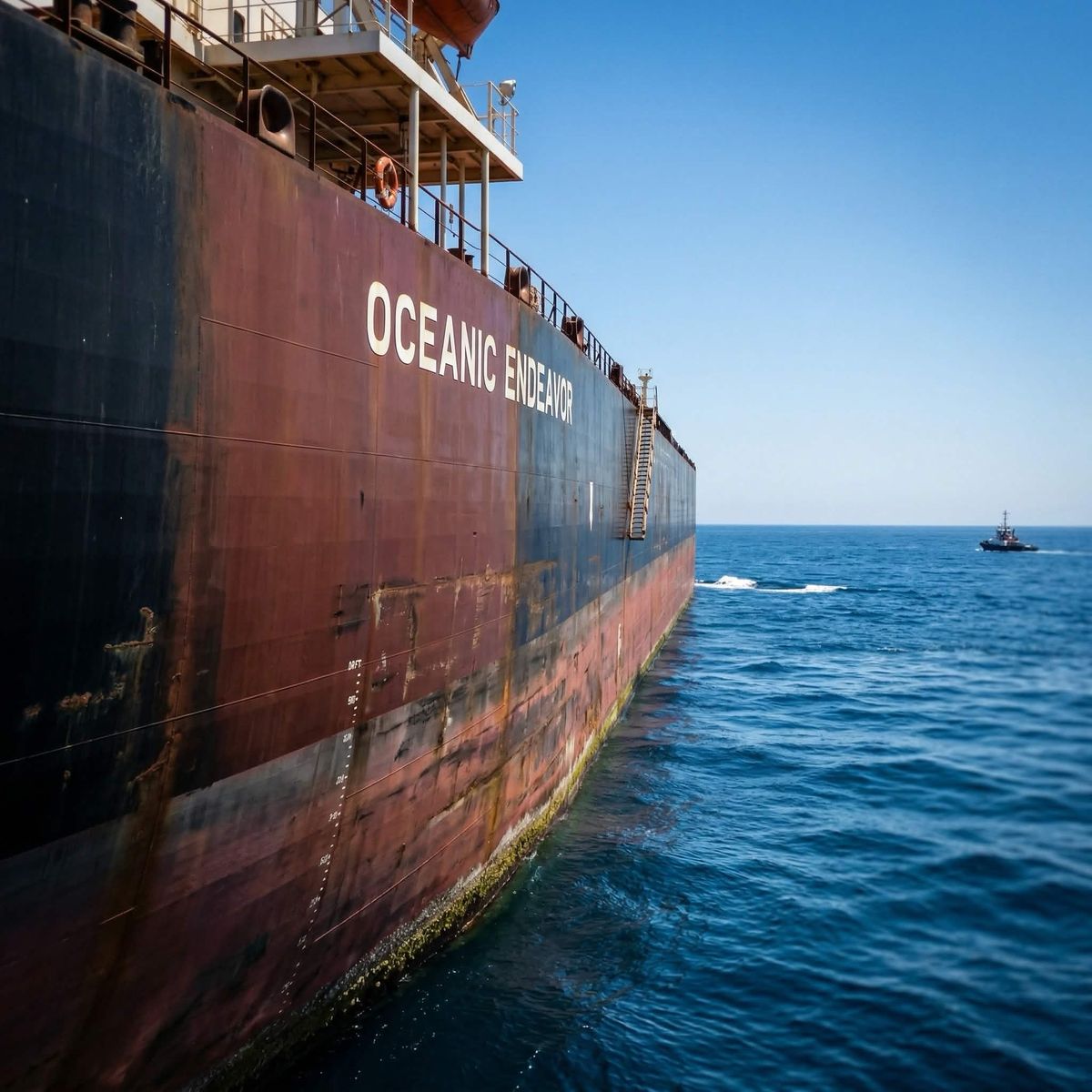
While Strait of Hormuz risk premiums have dominated market headlines since early March, a quieter structural shift is unfolding in the Atlantic Basin that may prove more durable for US refinery supply chains: Guyana's Stabroek Block is on the verge of becoming a 900,000 barrel-per-day production complex — and it arrived here faster than almost anyone predicted five years ago.
According to EIA international production data, Guyana's total crude and liquids output averaged approximately 895,000 bbl/d in the second half of 2025, up sharply from the 625,000–650,000 bbl/d range that characterized early 2025. The step-change reflects the full ramp of the Payara FPSO (Prosperity), which came online in late 2024 and has reached nameplate capacity ahead of schedule. With the Yellowtail FPSO (One Guyana) targeting first oil in 2026, Stabroek Block's production path toward 1.2–1.4 million bbl/d by 2027 is looking increasingly credible.
Why This Matters for US Refiners Right Now
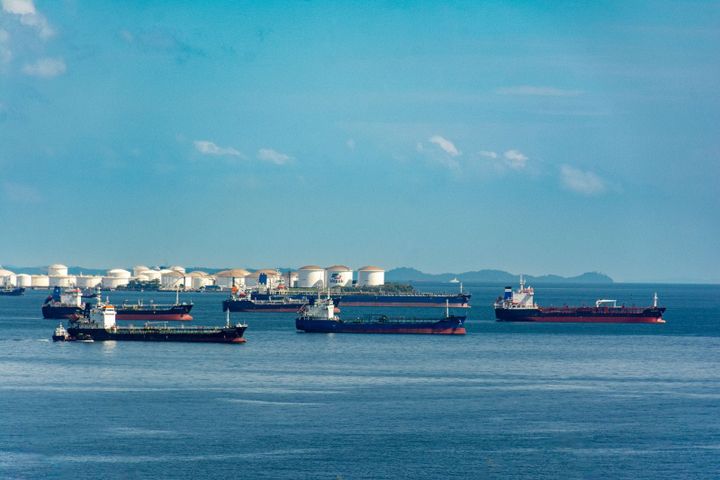
The strategic relevance is straightforward: Guyana's Liza and Payara crude grades are medium-gravity, low-sulfur barrels — broadly comparable to Arab Light — and the Georgetown-to-USGC freight run is approximately eight days, versus 35+ days from the Arabian Gulf. In the current environment, where Hormuz insurance surcharges and tanker diversion risks are inflating landed cost of Middle Eastern crude, Guyanese barrels are arriving at US Gulf Coast refineries with a meaningful freight and risk-premium advantage.
CIR Analysis: The freight math is particularly compelling for complex refiners along the Texas and Louisiana coast. At current very large crude carrier (VLCC) rates from the Arabian Gulf versus Aframax/Suezmax rates from Georgetown, Guyana crude is arriving with an estimated .50–.00/bbl delivered cost advantage over comparable Arab Light grades — before accounting for the Hormuz risk surcharge that has been running .50–.50/bbl on Arabian Gulf insurance policies since the tanker disruptions began in late Q1 2026. That combined freight-and-risk arbitrage of –/bbl is not trivial when refinery margins are already compressed by high crude input costs.
ExxonMobil's Stabroek Position: The Decade's Most Consequential Upstream Asset
ExxonMobil operates the Stabroek Block with a 45% working interest alongside Hess Corporation (30%) and CNOOC (25%). The asset has become central to ExxonMobil's production growth story — Stabroek is projected to contribute roughly 700,000–750,000 net boe/d to ExxonMobil alone by 2027, exceeding the company's entire current Permian Basin output. For Hess, Stabroek's value was the explicit rationale for Chevron's 3 billion acquisition offer — a deal still working through arbitration proceedings related to ExxonMobil and CNOOC's right-of-first-refusal claims.
The geopolitical timing adds another dimension. Guyana has maintained studiously neutral diplomatic positioning — it is neither a sanctions target nor subject to OPEC+ production quotas. Stabroek volumes are unconstrained by alliance politics, meaning the production ramp will continue regardless of OPEC+ compliance decisions in Riyadh or Vienna.
The Completions Services Angle: A Sustained Offshore Spending Cycle
Thursday's service beat covers completions services — and Guyana's trajectory has direct implications for offshore completions contractors. Yellowtail (One Guyana FPSO) is a 250,000 bbl/d development requiring subsea tree installations, completion and intervention workover riser systems, and sustained well-integrity management services. According to Hart Energy reporting, SLB and Halliburton hold significant service contracts on the Stabroek development, with completion tool packages and subsea installation work ongoing through 2026–2027.
The coiled tubing and wireline market — discussed in this morning's brief — also benefits indirectly: as Liza Phase 1 and Phase 2 wells age, well intervention demand from Guyana will represent a growing share of deepwater completions activity for contractors with subsea capabilities. This is the long-duration, high-margin tail of the Stabroek development that many land-focused oilfield services analysts underappreciate.
Supply Balance Implications
According to EIA's Short-Term Energy Outlook (March 2026), non-OPEC+ supply growth in 2026 is led by the United States, Guyana, and Brazil — with combined Atlantic Basin growth projected at approximately 600,000–700,000 bbl/d year-over-year. This supply pipeline is the structural counterweight to Hormuz disruption risk that prevents a sustained move to 10+/bbl WTI, even in a scenario where Middle Eastern supply is periodically disrupted.
CIR Analysis: The base case for WTI in H2 2026 depends heavily on two variables: (1) whether Hormuz normalization strips the geopolitical risk premium — currently estimated at –2/bbl embedded in WTI — and (2) whether Guyana's production ramp sustains its current pace or encounters FPSO uptime issues. Either way, the Atlantic Basin supply story anchors a floor under global supply security that the market has not fully priced into longer-dated crude curves.
For upstream operators currently generating peak free cash flow at WTI 1+, Guyana's trajectory is less a threat than a pricing context setter: it's the reason WTI is unlikely to sustain above 00 long-term even if Hormuz tensions persist. That's a discipline-enforcing dynamic that favors operators with low breakevens — and it's exactly why Permian producers have been accelerating shareholder returns rather than production growth.
CIR is independent O&G intelligence for informational purposes only. Not investment advice. No positions held. © 2026 Crude Intelligence Report.