Eagle Ford at a Crossroads: Mature Basin or Hidden Opportunity?
Eagle Ford at a Crossroads: Mature Basin or Hidden Opportunity?
Published: March 13, 2025 Category: Basin Report Access: Paid
Nobody's writing breathless features about the Eagle Ford in 2025. The rigs have migrated west. The M&A headlines are happening elsewhere. Even within Texas, the Eagle Ford has been overshadowed by its bigger sibling in the Permian so completely that it barely registers in mainstream industry coverage.
That's a mistake. The Eagle Ford is a more interesting and more nuanced story than the current silence suggests — and for professionals working in South Texas, understanding what's actually happening there matters.
The Numbers: Stable, Not Spectacular
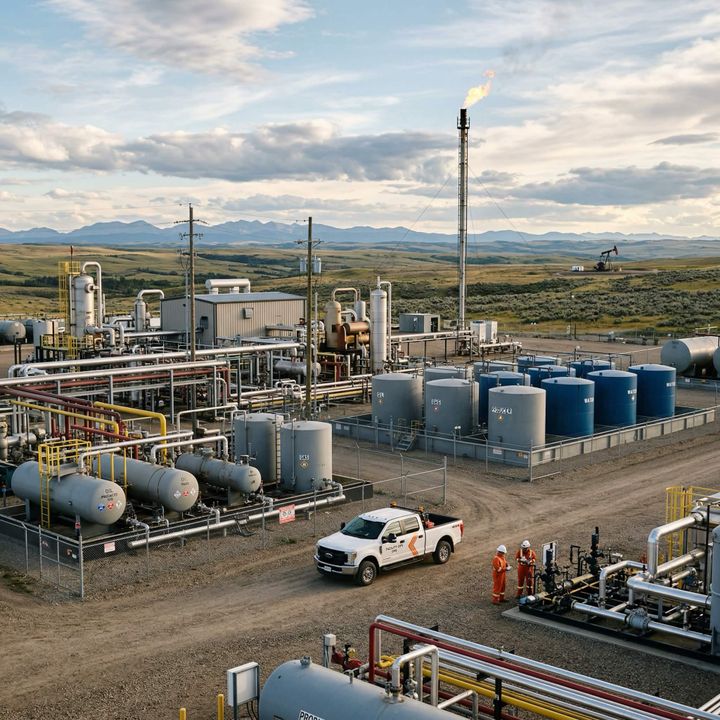
Eagle Ford rig count is sitting around 55 active rigs as of early 2025, down from approximately 75 in 2023. That 27% decline has not, however, translated into a proportional production decline. Basin output is holding at approximately 1.1 million barrels of oil equivalent per day — essentially flat year-over-year. The same efficiency dynamic playing out in the Permian — longer laterals, better completion design — is keeping production resilient despite lower activity.
But "holding flat" is the relevant phrase. The Eagle Ford is not growing. It is generating cash and maintaining production for operators with low-cost basis acreage, and it is declining for operators who have stopped investing or who are working higher-breakeven positions.
The basin's economics vary dramatically by area. Karnes County — the heart of the volatile oil window — still delivers some of the best per-well economics in the play, with breakevens on premium acreage around $45-50/bbl. Move to the edges of the play, into the dryer gas window in the northeast or the thinner condensate window, and breakevens climb to $55-65/bbl. The Eagle Ford is not a uniform play. It never was.
Who's Staying, Who's Leaving
The capital reallocation story has been largely driven by the Permian's superior returns. When you can generate 40%+ IRRs at $70 WTI in the Permian versus 25-30% in the Eagle Ford, capital goes west. This is rational portfolio management, not a statement about the Eagle Ford's absolute quality.
Devon Energy has steadily reduced Eagle Ford exposure over the past two years as it prioritized its Delaware Basin and Anadarko positions. The company still operates in the basin but is not growing its Eagle Ford program.
Marathon Oil, before its ConocoPhillips acquisition closed, had similarly deprioritized Eagle Ford relative to its Permian and Bakken exposure. The COP integration means those assets are now being evaluated against COP's portfolio — and Eagle Ford will need to compete on returns, not legacy.
EOG Resources is the counter-narrative, and it's an important one. EOG discovered the Eagle Ford as an economic shale play and has never stopped treating it as a core asset. The company's South Texas acreage — particularly in the core Karnes Trough and extending into DeWitt and Gonzales counties — generates returns that still justify capital allocation at current oil prices. EOG's operational discipline and technical sophistication mean they extract more value per acre than most other operators in the basin. When EOG speaks bullishly about the Eagle Ford, it's worth listening.
Callon Petroleum, which was acquired by APA Corporation in April 2023 and by March 2025 was operating as an APA subsidiary rather than an independent, retains a meaningful Eagle Ford position. Their ability to continue operating there depends on APA's broader capital allocation priorities and maintaining breakeven discipline.
Lewis Energy Group, the large San Antonio-based private operator, is one of the more underappreciated players in South Texas. Their Maverick Basin operations have given them deep regional expertise, and they've been quietly building positions in areas that larger public operators are exiting. Private operators often move counter-cyclically — they buy when publics are selling, and they operate without the quarterly earnings pressure that drives public company capital allocation.
The Upside Case: What the Bears Miss
The Eagle Ford has remaining inventory that isn't being talked about enough.
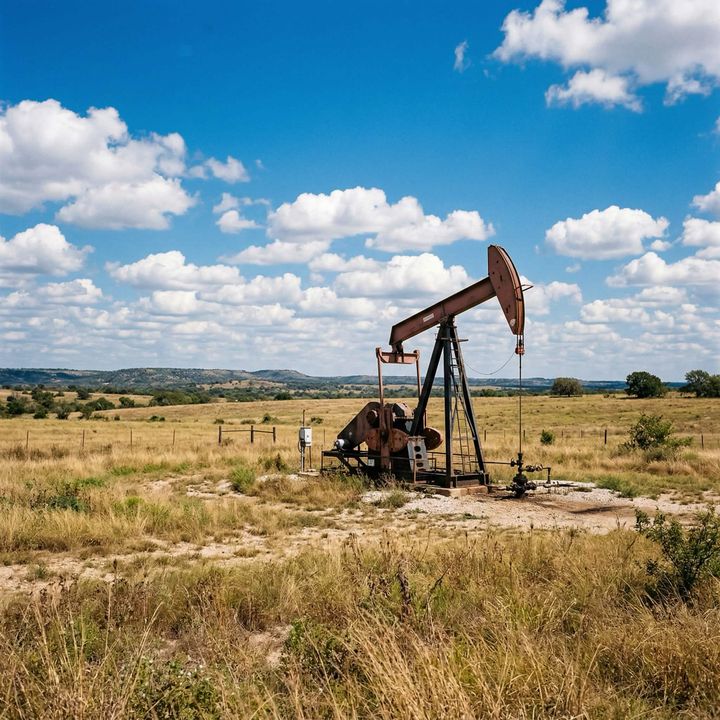
Austin Chalk: The Austin Chalk formation, which overlies the Eagle Ford across much of the trend, is the most interesting upside opportunity in the basin. The Austin Chalk was originally drilled vertically in the 1970s and 1980s, with modest results. Horizontal drilling and modern completion techniques have unlocked this formation in ways the original developers couldn't have anticipated. Several operators have been quietly testing Austin Chalk wells in the core counties, and early results in areas like Webb and Dimmit counties show competitive economics — sometimes rivaling the Eagle Ford targets below.
Stacked pays in Karnes Trough: The Karnes Trough concentration of the Eagle Ford — known for its elevated API gravity oil and exceptional GORs — has meaningful stacked pay potential between the upper and lower Eagle Ford benches. Operators who haven't fully developed both benches in their acreage inventory retain upside that doesn't require new acreage acquisition.
Infrastructure advantage: This one is underappreciated. The Eagle Ford has none of the takeaway problems that plague the Permian's associated gas. South Texas has mature pipeline infrastructure built out during the play's growth phase, adequate processing capacity, and access to multiple marketing outlets — including the Corpus Christi export terminals. There are no negative basis surprises waiting in the Eagle Ford. That's not trivial when you're building a development program.
The Economics at $72 WTI
At current prices, with breakevens in the $52-56/bbl range for core acreage, the Eagle Ford is generating solid free cash flow for operators with low-cost positions. The returns aren't Permian Tier 1 — but they're real, and they're reliable.
The key economic differentiator is well cost. Eagle Ford wells typically run $6-8 million per well at current service costs, lower than Permian wells that are increasingly exceeding $10 million as laterals extend and completion intensity increases. If you've got low-cost acreage and operational scale, the Eagle Ford pencils at a price deck most operators can plan around.
So What?
The Eagle Ford isn't dying. It's maturing — and mature basins behave differently from growth basins. The operators who understand this and position their programs accordingly will generate strong free cash flow for years. The ones who are waiting for the Eagle Ford to become a growth story again are going to be disappointed.
For landmen: deal flow in the Eagle Ford has shifted toward smaller, private-to-private transactions and acreage trades rather than headline M&A. The basin still has active deal flow, but it requires deeper networks to access.
For engineers: the Eagle Ford rewards technical precision over scale. Understanding the local geology — the variations in thermal maturity, the stress regime differences between Karnes County and further south — is the job. The wide-open days of drilling simple vertical wells are thirty years gone.
For operators evaluating portfolio decisions: the Eagle Ford may be the right answer even if it's not the exciting answer. Steady cash flow from mature basin assets funded EOG's early Permian expansion. History has a way of rhyming.
Crude Intelligence Report — crudeir.com | Upstream. Unfiltered.
Crude Intelligence Report is an independent upstream oil and gas intelligence publication. Content is for informational purposes only and does not constitute investment advice, financial advice, or a recommendation to buy or sell any security. Always conduct your own due diligence before making investment decisions. The author and publisher hold no positions in any companies mentioned in this article. © 2026 Crude Intelligence Report. All rights reserved.