CIR Morning Brief — Tuesday, April 7, 2026
April 7, 2026 — Houston
The most consequential demand story for U.S. natural gas producers in 2026 isn't storage draws, LNG export capacity, or even the Hormuz blockade. It may be the server farms going up across the Sun Belt.
Big Tech Goes All-In on Gas — and That Changes Everything for Upstream
Meta, Microsoft, and Google are quietly building some of the largest natural gas power plants in American history — dedicated generation facilities designed to run their next-generation AI data centers off-grid and without competing for utility capacity. According to reporting by TechCrunch, Wired, and Fortune, all three hyperscalers have committed to gas-fired generation as the backbone of their AI buildout, abandoning earlier commitments to 100% renewable power by 2030.
The scale is staggering. According to Wood Mackenzie analyst Patrick Huang, speaking to Fortune, "They are starting to acknowledge that, 'Yeah, we're maybe not on track'" — a reference to climate targets now colliding with the brute reality that AI inference workloads require firm, dispatchable power that wind and solar cannot reliably supply. Data center electricity demand is expected to more than double by 2030, according to grid modeling referenced by Grist, and the industry is now searching for ways to force hyperscalers to pay for their own capacity rather than straining ratepayers.
CIR Analysis: This is structural demand, not cyclical. Natural gas producers — especially those with Appalachian, Haynesville, and Texas Gulf Coast supply chains — are looking at a potential demand increase of 8-12 Bcf/d by 2030 from power generation alone. The Crusoe Energy model of co-locating gas-fired generation at remote wellheads or behind-the-fence power agreements with major E&Ps is gaining traction. Upstream operators with firm gas sales and proximity to grid interconnects hold a genuine strategic advantage in this environment.
The Digital Oilfield Hits Escape Velocity
Separately, the upstream technology transformation taking place in the field is accelerating. According to a Research and Markets report published in March, the global digital oilfield solutions market is on pace to reach $58.66 billion by 2030, driven by AI-powered analytics, IoT integration, digital twin deployment, and drilling automation. The connected oilfield market — SCADA integration, remote monitoring, intelligent completions — is projected to reach $36.06 billion over the same period.
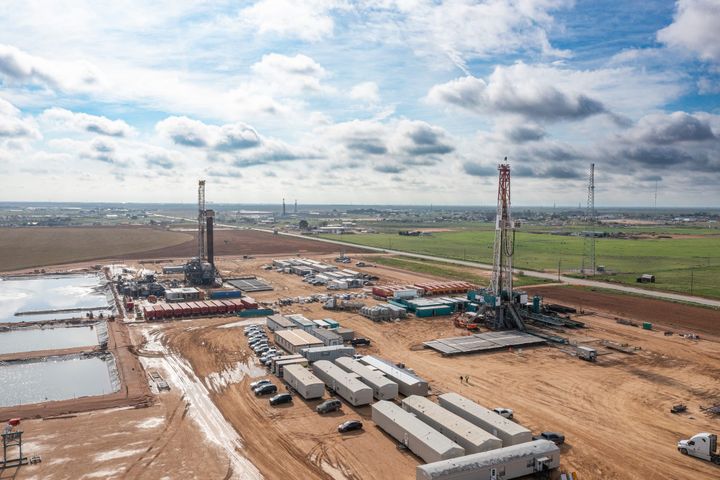
The Permian's leading operators are the proof of concept. Real-time geosteering platforms, autonomous mud weight adjustment, and AI-optimized simulfrac sequencing are compressing drill times to levels that would have been considered physically impossible five years ago. According to Hart Energy, average lateral lengths in the Delaware Basin now exceed 12,000 feet — and that footage is being drilled faster with fewer nonproductive hours than at any point in the basin's history.
Supporting Headlines
- Off-grid data center economics gaining regulatory traction. A coalition of industry groups is pushing Congress to codify the Accelerated Reliability for Critical Energy Systems (ARC-ES) framework, which would permit hyperscalers to build dedicated natural gas generation without interconnection delays. If passed, the policy could unlock tens of billions in upstream gas demand over the next decade. (Watts Up With That / The Empowerment Alliance, April 3)
- Grid stress is the political story, not the supply story. According to Grist, backlash is growing against data center operators who connect to shared utility grids while paying standard retail rates — a model that effectively forces residential customers to subsidize industrial power consumption. Expect state-level mandates for behind-the-meter generation. This is bullish for natural gas producers who can build captive power arrangements. (Grist, April 6)
- Newt Gingrich op-ed flags AI energy as national security issue. In a Fox News opinion piece published April 6, the former Speaker argued that rising AI electricity demand reinforces the case for maximum U.S. energy production — framing natural gas, not renewables, as the strategic answer. The piece reflects growing bipartisan consensus that domestic gas supply is a national security asset. (Fox News, April 6)
Market Pulse
According to EIA spot price data (latest available: March 30), WTI crude settled at $104.69/bbl — sustaining the risk premium driven by the ongoing Hormuz blockade, now in its sixth week. Brent has been tracking approximately $5-7 above WTI on continued Atlantic Basin supply concerns, placing it in the $109-112/bbl range intraday Monday. Henry Hub front-month is trading near $4.35-4.55/MMBtu, supported by power sector demand acceleration and below-average injection season expectations — a structurally different gas price environment from 12 months ago, when spring storage fills were driving hub prices toward $2.00.
📊 CIR Analysis: AI Power Demand Is Real — But Only Some Gas Basins Capture It — Haynesville, Appalachian, and Texas Gulf Coast operators face very different transportation and basis dynamics as Big Tech commits billions to dedicated gas-fired generation.
📊 CIR Analysis (published this afternoon): Drilling Automation and AI-Optimized Completions: Who Wins in the Digital Transition? — Which service companies are gaining wallet share as operators adopt AI-driven drilling and completion technologies.
CIR is independent O&G intelligence for informational purposes only. Not investment advice. No positions held. © 2026 CIR.