
AI Power Demand Is Real — But Only Some Gas Basins Capture It
Meta, Microsoft, and Google are committing billions to dedicated natural gas generation for AI data centers. CIR maps which upstream basins — Haynesville, Appalachian, Permian — are actually positioned to capture the demand wave.
April 7, 2026 — Houston
Big Tech's pivot to dedicated natural gas generation isn't just a story about hyperscaler climate credibility. It's a story about pipeline infrastructure, basis differentials, and which upstream producers are actually positioned to capture a structural demand wave — and which are not.
The Demand Signal Is Now Undeniable
In the past two weeks, three of the largest technology companies in the world have made moves that will shape natural gas markets for a decade. According to Fortune and reporting by Reuters, Microsoft and Chevron entered an exclusivity agreement on a proposed 2,500 MW natural gas power plant complex in West Texas — a $7 billion project that could eventually scale to 5,000 MW and would sit co-located with a massive AI data center campus. Separately, Wired reported that Google is funding a dedicated gas-fired generation facility to power a new data center, one that documents suggest will emit millions of tons of CO₂ annually. And Tom's Hardware UK reported that Meta has contracted with Entergy to construct seven new natural gas power plants in Louisiana, delivering up to 7 gigawatts of dedicated capacity for Meta's largest AI facility.
These aren't renewable pledges with asterisks. They are concrete infrastructure commitments, with engineering studies, site selection, permitting applications, and in some cases exclusive deal structures. The buildout represents potentially 15,000+ MW of new dedicated gas-fired generation in the U.S. over the next five to seven years — at roughly 7,000–8,000 BTU/kWh thermal efficiency for combined-cycle plants, that translates to 3–4 Bcf/d of incremental natural gas demand when fully operational.
For context: U.S. dry natural gas production was approximately 108.6 Bcf/day in January 2026, according to EIA data. A 3–4 Bcf/d increment is material — roughly 3% of current national supply, concentrated in specific pipeline corridors serving the Texas Gulf Coast, Louisiana, and Appalachian takeaway paths.
Basin Positioning: Not All Gas Is Equal
The upstream story here isn't "natural gas demand is rising, therefore buy gas producers." The question is which basins and which operators are structurally positioned to flow molecules to the load growth — and at what basis.
Haynesville/East Texas (Louisiana): The most direct beneficiary. Meta's 7-gigawatt Louisiana facility and Google's Texas data center both draw on Gulf Coast power markets fed heavily by Haynesville-sourced gas. The Haynesville's access to Henry Hub, Transco Zone 3, and the ANR/Texas Gas system means producers here face relatively narrow basis differentials versus NYMEX. Producers like Comstock Resources and Coterra Energy's Haynesville position carry a structural transport advantage. According to EIA gross withdrawal data, Louisiana produced approximately 335 Bcf in January 2026 — approximately 10.8 Bcf/day equivalent — making it one of the most gas-dense states in the continental U.S. The combination of proximity to load and pipeline access makes Haynesville the highest-conviction basin for AI demand capture.
Appalachian (Marcellus/Utica): The picture is more complex. Appalachian dry gas production is massive — Pennsylvania alone produced approximately 653 Bcf in December 2024, per EIA data, with West Virginia adding another 270 Bcf. But Appalachian gas famously struggles with takeaway constraints and chronic basis weakness. The Leidy Hub and Dominion South pricing points have historically traded at steep discounts to Henry Hub, sometimes $1.00–$2.50/MMBtu below, when winter demand fails to absorb production. The proposed Microsoft West Texas facility doesn't pull Appalachian molecules — it pulls Permian Basin associated gas and Haynesville supply from intrastate Texas pipelines. For Appalachian producers like EQT Corporation and Range Resources, the AI power demand wave offers an indirect benefit: if Gulf Coast demand tightens the Henry Hub market, it reduces the arbitrage pressure that drives Appalachian basis collapse. But direct AI demand exposure is limited without new takeaway capacity connecting Northeast production to Midwest and Southeast power markets.
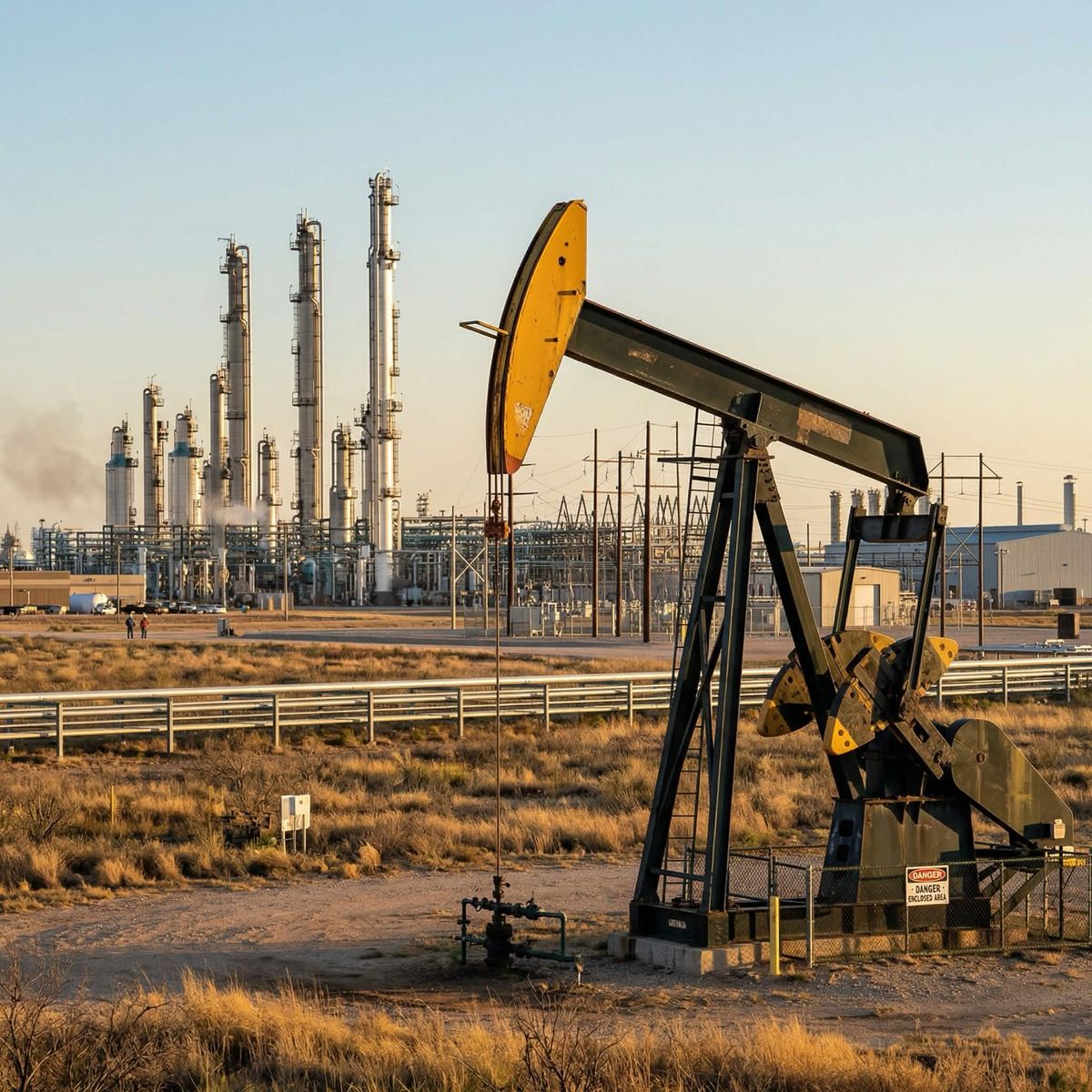
Texas Gulf Coast / Permian Associated Gas: The Chevron-Microsoft West Texas project is the most interesting upstream scenario. Located in the Permian Basin, a 2,500–5,000 MW on-site power facility would require approximately 250–500 MMcf/d of dedicated gas supply. Chevron's own Permian production — at roughly 800,000 BOE/day and growing — generates substantial associated gas volumes. The structure implies a potential behind-the-fence gas sales model where Permian producers sell directly to captive industrial generation, bypassing traditional pipeline markets entirely. This would be a significant development: it monetizes Permian gas at or near Henry Hub equivalent pricing without exposure to gathering and processing spreads or Waha Hub discounts. According to EIA data, Texas produced approximately 883 Bcf of dry gas in December 2024 — roughly 28.5 Bcf/day equivalent — and the state's proximity to new load centers gives large Permian operators a structural cost advantage.
CIR Analysis: Three Tiers of AI Demand Exposure
Tier 1 — Direct beneficiaries: Haynesville pure-play producers (Comstock Resources, Coterra's Haynesville volumes) and large Permian operators with Gulf Coast pipeline access or potential behind-the-fence agreements (Chevron, Pioneer/Exxon Permian, Diamondback). These operators sit in the path of announced AI generation projects with established pipeline connectivity.
Tier 2 — Indirect beneficiaries: Appalachian producers (EQT, Range Resources, Southwestern Energy) benefit from Henry Hub tightening as Gulf Coast demand absorbs more supply, but lack direct AI load access unless new takeaway infrastructure is built. The calculus changes if Congress passes the ARC-ES framework, which would accelerate permitting for dedicated industrial generation — opening potential for data center developers to site facilities in the Northeast, closer to cheap Appalachian molecules.
Tier 3 — Structurally neutral: Mid-continent and Rockies producers face the longest route to AI demand benefit. Their molecules must travel further to Gulf Coast load centers and face more basis risk in transit.
The investment implication: the AI power demand wave is real and structural, but the upstream capture story is geographically specific. Haynesville basis will tighten faster. Permian producers with captive industrial sales opportunities may unlock new value. Appalachian operators need infrastructure before they can fully capitalize — and that infrastructure takes years, not quarters.
Crude Intelligence Report is an independent upstream oil and gas intelligence publication. Content is for informational purposes only and does not constitute investment advice. The author and publisher hold no positions in any companies mentioned. © 2026 Crude Intelligence Report. All rights reserved.