EQT's Backyard Moment: Why AI Data Centers Are the Best Thing to Happen to Appalachian Gas
EQT | NYSE | Source data: Q1 2026 earnings release (8-K filed April 21, 2026), Q1 2026 10-Q (filed April 22, 2026), EIA U.S. dry natural gas production data, EIA electric power sector natural gas consumption data, FRED Henry Hub daily price series
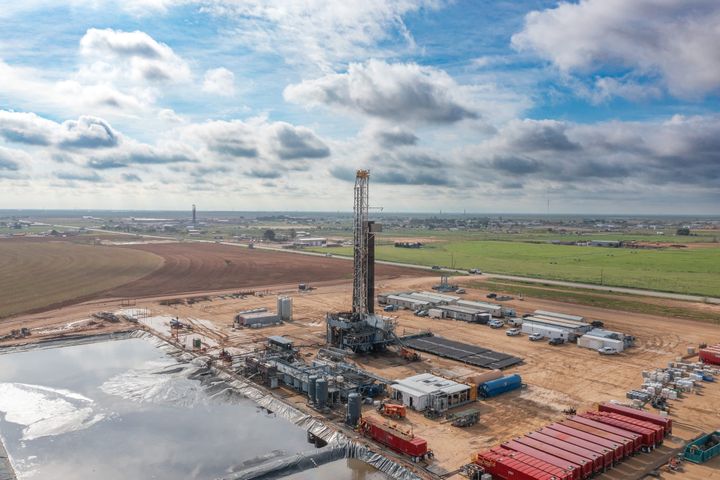
EQT's first-quarter earnings call on April 22 contained a sentence worth underlining: "Accelerating power demand growth in the United States, particularly in Appalachia, is creating incremental opportunities in our backyard." CEO Toby Rice wasn't speculating. He was describing the infrastructure reality of the largest hyperscaler buildout in history landing squarely in the gas basins with the best cost structure and most takeaway capacity.
The AI data center trade is no longer a thesis. It's load growth with a meter on it.
The Demand Signal Behind the Thesis
According to EIA data, the U.S. electric power sector consumed 35.3 Bcf/d of natural gas in January 2026. That number underrepresents the structural story. Summer 2025 saw peak power-sector gas consumption reach 45.5 Bcf/d in August and 48.2 Bcf/d in July, records driven not by an unusually hot summer alone but by the accelerating baseload demands of AI inference clusters running 24/7 regardless of temperature.
The distinction matters to upstream operators. Legacy power-sector gas demand was air-conditioning demand: cyclical, weather-driven, summer-weighted. Data center load is flat and relentless. A 100-megawatt hyperscaler campus needs power at 2:00am in February with the same urgency it needs it in July. That profile looks less like seasonal demand and more like industrial base load, and it benefits producers with firm transport and reliable deliverability.
Against that backdrop, U.S. dry natural gas production measured 108.6 Bcf/d in January 2026 and 111.7 Bcf/d in December 2025, per EIA monthly data. The market is long supply. But the supply overhang keeping Henry Hub at $2.81/MMBtu (per FRED data, April 20) is the same condition that makes gas-fired power the economic choice over coal or oil peaking units as demand expands. The arithmetic for producers is simple: more data centers means more gas burned, and the producers closest to the load centers win the basis differential.
EQT's Structural Position
EQT's Q1 2026 results demonstrate what the power-demand thesis means in practice. Sales volume hit 618 Bcfe, above the high end of guidance, driven by strong well performance and system pressure optimization. The company generated record quarterly free cash flow attributable to EQT of $1.832 billion on cash operating costs of $1.09/Mcfe. Per its Q1 2026 earnings release, total debt fell from $7.8 billion at year-end 2025 to $6.0 billion by March 31, and Fitch upgraded the company to BBB during the quarter.
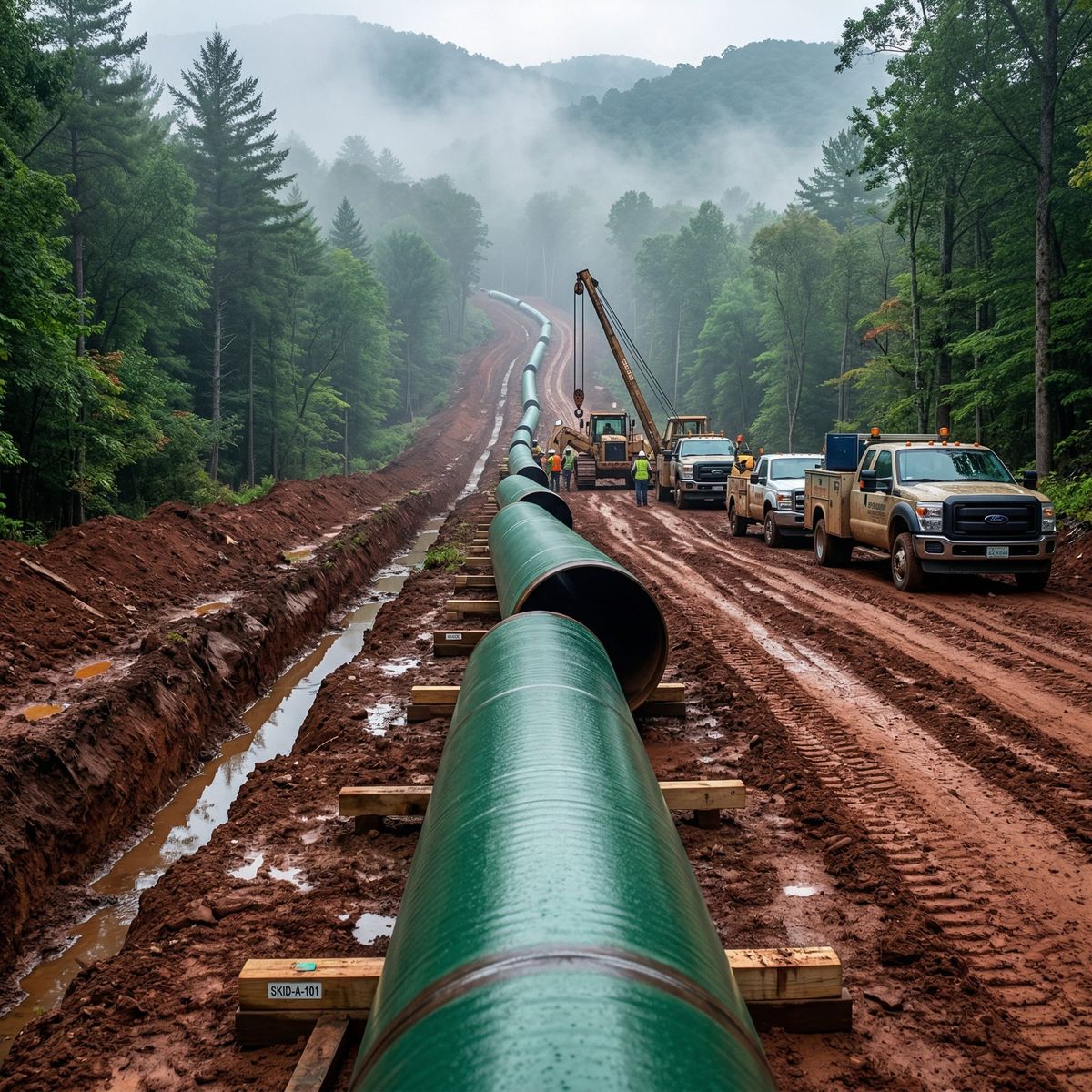
The Mountain Valley Pipeline is now fully operational, with EQT's Q1 filing reporting distributions from the MVP Joint Venture in line with guidance. For Appalachian producers, MVP Mainline addressed the single biggest structural constraint of the prior decade: the inability to move gas efficiently to Southeast markets where gas-fired power demand is concentrated. That connection is live. MVP Boost, the capacity expansion project, is under development. EQT's Q2 2026 guidance projects third-party midstream revenue of $130-160 million, a measure of how deeply the Appalachian infrastructure build is now monetizing.
CIR Analysis: EQT enters the data center demand era in the best financial position it has occupied since the Equitrans consolidation. Breakeven costs in the low $2/Mcf range mean the company generates material free cash flow at current Henry Hub prices near $2.80/MMBtu. When power-sector demand lifts the forward curve, EQT's leverage to that move is substantial and protected on the downside through Q4 2026 via collar structures ($3.50 floor, $4.94 ceiling on 1.4 MMDth/d). The setup is asymmetric in favor of shareholders.
Haynesville: The Southeast Beneficiary
Appalachia has the MVP narrative, but the Haynesville sits inside the delivery zone for MISO South and SERC power markets, which is precisely where Alphabet, Meta, Microsoft, and Amazon have announced the most aggressive data center capacity additions. Proximity to load is a genuine cost advantage when basis spreads are tight and Southeast power prices carry a premium.
Coterra Energy (CTRA), the largest Haynesville independent by production, enters this demand cycle with a complicated ownership picture. The Devon merger goes to shareholder vote May 4, and supplemental proxy disclosures filed April 24 show outstanding litigation demand letters from stockholders alleging disclosure deficiencies in the joint proxy. CIR Analysis: Devon's post-merger capital allocation priorities will determine whether Haynesville production receives the incremental investment the gas demand thesis calls for, or whether it gets managed as a cash-harvest asset against Devon's oil-weighted core positions in the Permian and Eagle Ford. That question is unresolved and it matters.
The Bridge Fuel Timeline
The core argument of the AI gas demand trade isn't that nuclear or renewables won't serve data center load eventually. It's that they can't fast enough. Nuclear construction timelines run 10-15 years. New large-scale solar with co-located battery storage faces land, permitting, and interconnection queues measured in years. Gas-fired combined-cycle plants can be sited and built in 18-36 months, and existing gas turbine capacity can be restarted or uprated more quickly still.
U.S. natural gas supply grew from roughly 100 Bcf/d in mid-2024 to 108-112 Bcf/d by late 2025, per EIA production data. That supply is available, cheap, and geographically proximate to where the data center load is being built. The bridge-fuel thesis isn't a concession — it's a physical timeline observation. Gas fills the gap while low-carbon alternatives scale, and that gap is measured in decades, not years.
What To Watch
- Devon-Coterra shareholder vote (May 4): Haynesville capital allocation under Devon's ownership will shape whether the basin's production growth keeps pace with demand pull or trails it
- EQT MVP Boost FID: The expansion project moves more Marcellus and Utica volumes into Southeast markets; watch for final investment decision commentary in Q2 earnings
- Power-sector summer 2026 demand: Compare against summer 2025's 45-48 Bcf/d peak to measure year-on-year load growth attribution from data centers relative to weather
- Henry Hub forward curve: The 12-month strip is the clearest market signal for whether buyers are pricing in the structural demand shift or treating it as cyclical noise
Disclosure: The author/publisher holds a position in EQT as of the publication date. This does not constitute investment advice.
Crude Intelligence Report is an independent upstream oil and gas intelligence publication. The content in this article is for informational purposes only and does not constitute investment advice, financial advice, or a recommendation to buy or sell any security. Always conduct your own due diligence before making investment decisions. CIR and its contributors may hold positions in companies mentioned; any such positions will be disclosed when known. © 2026 Crude Intelligence Report. All rights reserved.
This article contains forward-looking statements and analytical opinions. Actual results may differ materially.