When Hormuz Closes: The Atlantic Basin Scramble

For decades, energy market analysts have run the Hormuz closure scenario as a thought experiment. As of April 9, 2026, it is no longer theoretical. Iran's re-mining of the strait — confirmed by satellite imagery and Iranian state media publishing "danger zone" charts — has forced buyers, operators, and governments to answer a question that was always deferred: where does the oil actually come from when the Persian Gulf shuts down?
The answer is emerging in real time, and it points to a reshaping of global crude flows that will outlast the current crisis.
The Atlantic Basin's Moment
According to Bloomberg, Asian refiners have been paying record premiums for non-Middle Eastern crude since the conflict began in late February. The Atlantic Basin — broadly defined as crude production accessible to Atlantic and Pacific markets without transiting Hormuz — has become the most strategically valuable supply region on earth. That means Guyana, Brazil's pre-salt, North Sea Norway, and U.S. Gulf Coast exports are absorbing demand that would normally flow through the strait.
Physical crude markets tell the story with precision. Brent — the North Sea benchmark — briefly traded at a discount to WTI in early April, a reversal that traders cited as evidence of tight near-term supply in the U.S. specifically. As WTI recovered to approximately $97.59/bbl Thursday morning following ceasefire collapse, the premium reflects a market that believes Atlantic Basin barrels are the marginal supply unit right now. (OilPrice.com, April 5)
Guyana: Right Place, Right Time
Perhaps no country is better positioned for this moment than Guyana. According to OilPrice.com, citing production data from the ExxonMobil-led consortium, Guyana was lifting 926,550 barrels per day by February 28, 2026 — cementing it as South America's second-largest oil producer behind Brazil. Approximately one-third of those exports already flow to the United States, making Guyana a de facto strategic reserve for U.S. refiners.
The growth trajectory from the prolific 6.6-million-acre Stabroek Block — where ExxonMobil holds a 45% working interest alongside Hess (30%, now Chevron) and CNOOC (25%) — remains steep. The $12.7 billion Uaru facility, targeting 250,000 bpd, is nearing completion and is expected to come online later this year, pushing Guyana's total output above 1.1 million bpd. A sixth project, Whiptail, is on track for 2027, adding another 250,000 bpd. By 2030, analysts project Guyana reaching approximately 1.7 million barrels per day — a figure that would have seemed implausible at the time of first discovery in 2015.
Crucially, Guyana's oil is not trapped behind a chokepoint. Export routes flow directly to the Atlantic. At $97+/bbl WTI, the economics for accelerating development are compelling.
North Sea: Surprise Supply Increment
The North Sea provided a supply bright spot this week that went largely unnoticed in the Hormuz noise. According to DNO ASA's April 7 press release, Aker BP brought the Symra field offshore Norway online — nine months ahead of schedule. The project is part of nine Aker BP-operated developments approved by the Norwegian government in 2023. Aker BP operates with an 80% working interest; DNO holds the remaining 20%.
Symra's early startup is emblematic of a broader Norwegian acceleration. The Norwegian Continental Shelf has become one of the more reliable supply increments in the current environment precisely because it is politically stable, technically mature, and geographically insulated from Middle Eastern disruption. Norwegian crude exports have quietly absorbed a portion of the Atlantic premium. The question is whether additional Norwegian projects can be fast-tracked under the current price environment — a conversation that is almost certainly happening in Oslo this week.
U.S. Upstream: The Cash Flow Windfall
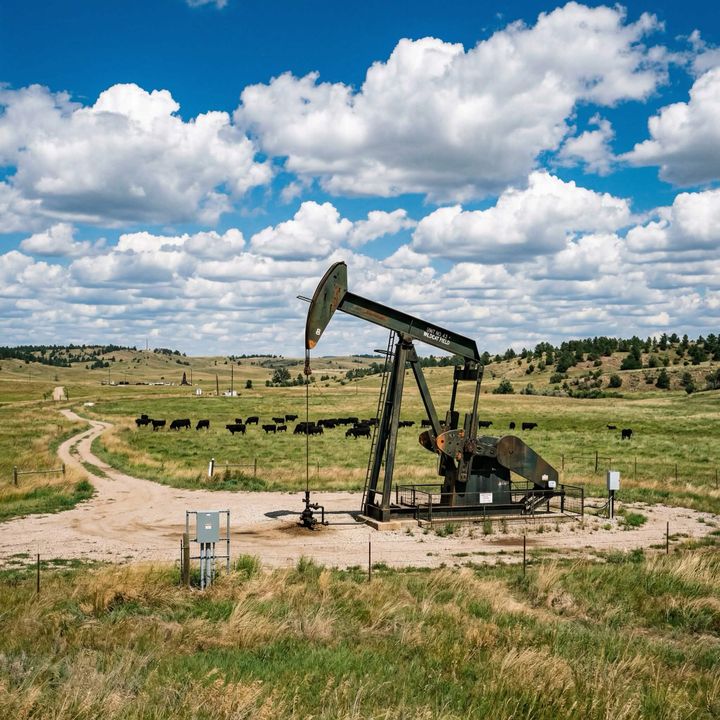
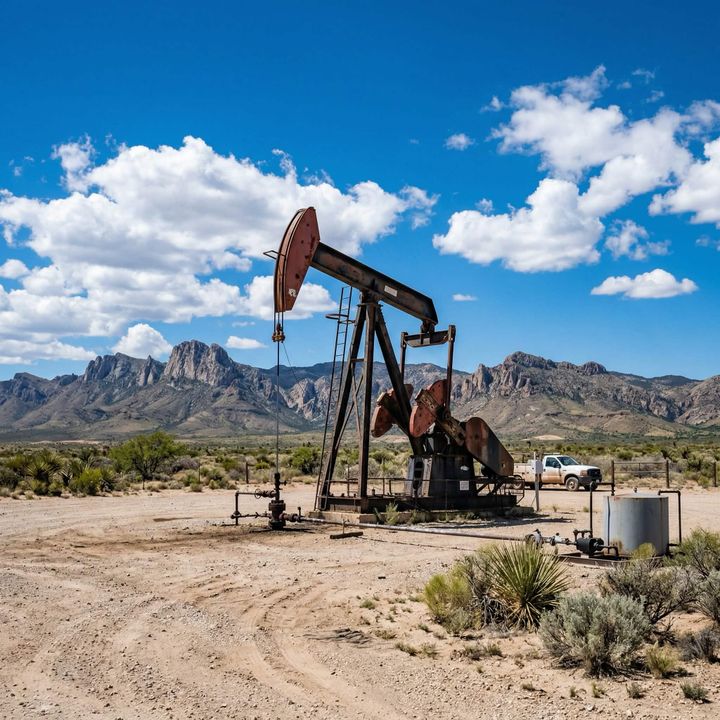
For U.S. E&P operators, the Hormuz crisis has delivered something their 2026 budgets were not built for: a sustained price floor well above breakeven. According to data from FactSet cited by OilPrice.com, pure oil and gas producers in the S&P 500 posted an average total return of 45.0% in Q1 2026. Of 40 upstream companies tracked, 38 finished in positive territory. Three posted triple-digit returns.
ExxonMobil's April 8 8-K disclosure — projecting $2.1–$2.9 billion in additional Q1 upstream earnings versus Q4 2025 — is the headline number, but the story extends across the sector. Shell separately disclosed that Q1 trading profits will be "significantly higher." These are not one-quarter windfalls; they reflect structural operating leverage at the major and independent level that compounds as long as WTI holds above $85/bbl. Most Permian operators budget conservatively at $55–65/bbl. At $97, free cash flow generation is extraordinary.
CIR Analysis: The $97 price floor creates an acute tension for U.S. operators. Discipline has been the industry mantra since 2020 — shareholder returns over volume growth, buybacks over aggressive drilling. That model is now being stress-tested. At $97+/bbl, the financial argument for accelerating completions is strong; the political and fiscal argument for restraint is weak. Watch Q1 earnings calls closely for language on DUC drawdowns and completion cadence. If the price holds through May, expect capex guidance revisions upward — quietly, in footnotes, at the end of calls.
What to Watch
Three variables will determine whether the Atlantic Basin supply story remains a market-moving theme or fades as a temporary crisis response:
First, Hormuz transit clarity. Two Chinese tankers — Cospearl Lake and He Rong Hai — are reportedly anchored at the strait entrance awaiting transit clearance. According to maritime intelligence firm Windward, Iranian armed forces continue requiring coordination approval for all vessel movements. Maersk is not clearing vessels. Until bulk transit resumes, the Atlantic premium stays elevated.
Second, IEA reserve drawdown pace. The coordinated 400-million-barrel emergency release keeps a ceiling on near-term price spikes. But according to analysis from Kpler cited by OilPrice.com, cumulative oil production losses from the conflict had already reached 133 million barrels by mid-March, running at approximately 10.7 million bpd. At that pace, the IEA reserve is consumed in roughly six weeks.
Third, Guyana ramp pace. The Uaru startup timeline is the single most important new-supply variable on the board. Any delay pushes the 1.1 million bpd target into 2027 and forces buyers to find replacement barrels elsewhere — most likely from U.S. operators being asked to accelerate production they had planned to hold back.
Crude Intelligence Report is an independent upstream oil and gas intelligence publication. Content is for informational purposes only and does not constitute investment advice. The author and publisher hold no positions in any companies mentioned. © 2026 Crude Intelligence Report. All rights reserved.