
The Refinery Landscape and Crude Quality Demand
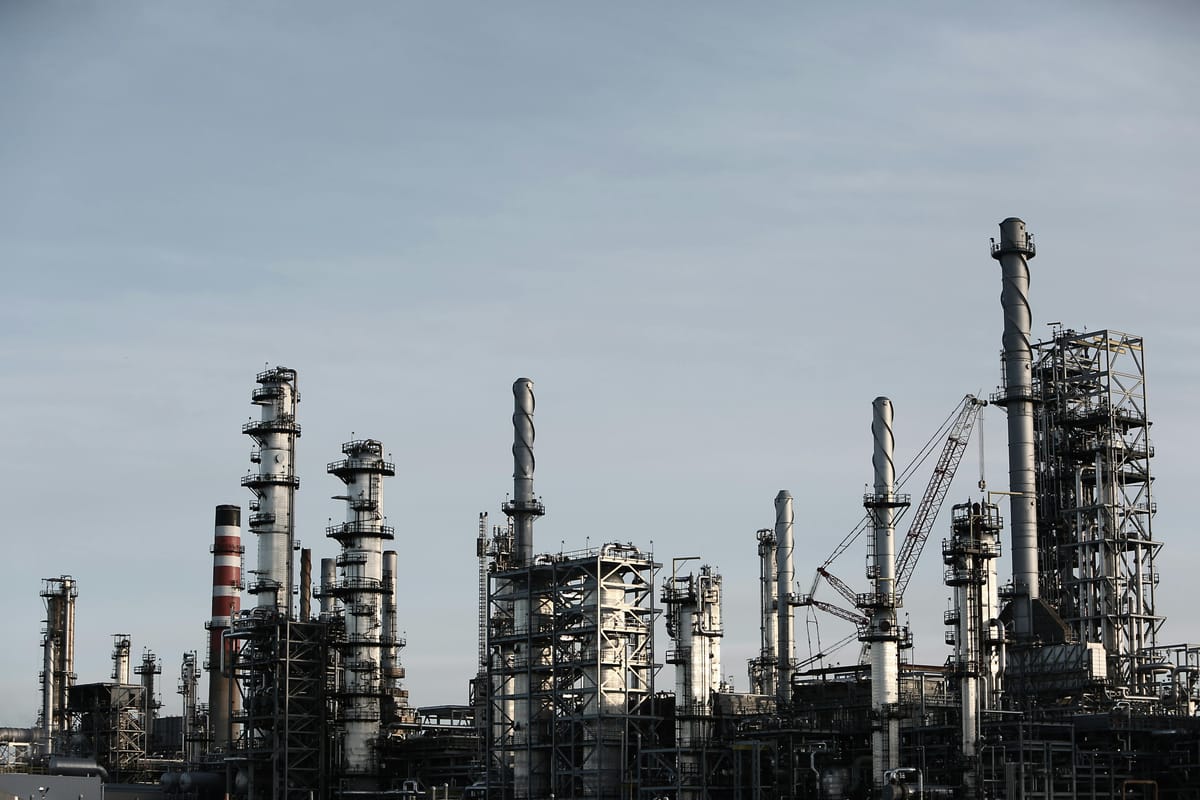
The U.S. shale revolution created an enormous surplus of light, sweet crude — the kind that flows easily from tight formations and commands a premium for its low sulfur content. But refineries are not interchangeable. A Gulf Coast coker complex designed around medium-sour Mexican or Venezuelan crude cannot simply substitute West Texas Intermediate light sweet without expensive configuration changes. The mismatch between what shale produces and what refinery infrastructure was designed to process has been one of the defining tensions of the modern oil market.
The U.S. Refinery Fleet
The United States operates approximately 130 operating refineries with a combined nameplate capacity of roughly 18–18.5 MMbbl/d. That capacity has declined over the past decade, driven by economic closures of smaller, less complex facilities that couldn't compete with scale players on the Gulf Coast. The Philadelphia Energy Solutions refinery, destroyed by an explosion and fire in 2019, removed approximately 335,000 bbl/d of East Coast refining capacity. LyondellBasell's Houston refinery, closed in 2023, removed another 268,000 bbl/d. COVID-era demand destruction accelerated more closures.
What remains is a fleet skewed toward complexity. Gulf Coast refineries — the PADD 3 region — account for more than half of U.S. capacity and are heavily invested in coking and hydrocracking units designed to process heavy, sulfur-rich crudes. The economics of these configurations favor heavy crude feedstocks: the processing margin spread between light sweet and heavy sour is a key driver of refinery profitability.
API Gravity and the Light-Heavy Spread
Crude quality is measured primarily by API gravity (a density inverse — higher API = lighter crude) and sulfur content. WTI crude from the Permian Basin runs roughly 40–42 API, 0.2–0.4% sulfur — very light, very sweet. Mars Blend from offshore Gulf of Mexico is approximately 29.5 API, 2.1% sulfur — medium, moderately sour. Saudi Arabian Heavy is 27.4 API, 2.8% sulfur. Venezuelan heavy crudes (Merey, BCF-17) run 16–22 API with 2.3–3.4% sulfur.
U.S. Gulf Coast refiners built their coking units to process the heavy Venezuelan and Mexican crudes that were reliably available for decades. When those crudes became scarcer — Venezuelan production collapsed from 3.2 MMbbl/d in 2015 to under 700,000 bbl/d during the worst of the political/economic crisis before partially recovering — refiners scrambled for alternatives. Canadian oil sands crudes (Western Canadian Select, Cold Lake Blend) became critical substitutes, though at a discount to WTI that fluctuates with pipeline capacity to the Gulf Coast.
What Shale Produces vs. What Refineries Want
The shale revolution created a supply surplus of 40–45 API crude that Gulf Coast cokers weren't optimally designed to process. Light sweet crude piled up at Cushing, Oklahoma in 2014–2015, sending WTI to multi-year lows relative to Brent. The export ban repeal in December 2015 was a structural fix: it allowed producers to sell WTI internationally, where refineries in Europe and Asia with simple distillation configurations could use it efficiently.
U.S. crude exports now run 4.5–5.5 MMbbl/d — a remarkable transformation from a country that exported essentially no crude a decade ago. The export stream is predominantly light sweet Permian crude, destined for European and Asian refineries. This arbitrage has kept WTI/Brent differentials relatively tight (typically $2–$4/bbl), compared to the much wider discounts seen when exports were banned.
The Canadian Heavy Crude Relationship
Canadian oil sands producers — Canadian Natural Resources (CNRL), Cenovus Energy, MEG Energy, Suncor — depend on U.S. Gulf Coast refineries for the bulk of their heavy crude sales. The Trans Mountain Pipeline expansion (TMX), completed in May 2024, added approximately 590,000 bbl/d of capacity to the Pacific Coast, giving Canadian producers access to Asian markets for the first time at scale.
Western Canadian Select (WCS) historically traded at $15–$30/bbl discounts to WTI, reflecting transportation costs and the quality differential. TMX export optionality has narrowed that discount somewhat — though WCS differentials remain variable based on pipeline apportionment and market conditions. For U.S. Gulf Coast refiners, Canadian heavy is a critical feedstock that allows cokers to operate at design capacity.
Refinery Margins in 2025
Refining margins — crack spreads — in 2025 have normalized after the extraordinary profitability of 2022, when refinery closures reduced capacity just as demand recovered. The 3-2-1 crack spread (3 barrels crude → 2 barrels gasoline + 1 barrel diesel) has averaged roughly $18–$22/bbl in 2025, compared to $40+ at the peak of 2022.
Diesel continues to command a premium over gasoline in current market conditions, reflecting commercial transportation and industrial demand that has remained relatively resilient. Jet fuel demand has fully recovered to pre-COVID levels, adding a third strong product demand signal for refiners.
Strategic Implications
For upstream producers, refinery configuration preferences create quality premiums and discounts that directly affect realized prices. Permian light sweet crude commands premium prices in export markets but may receive slight discounts at complex Gulf Coast refineries configured for heavy crude. Eagle Ford condensate blending with heavier Gulf Coast crudes has become a meaningful part of how that basin's production reaches market.
The refinery landscape won't change dramatically in the near term — new refinery construction is essentially non-existent in the U.S., and existing facility configurations are modified incrementally. But understanding which grades the U.S. refinery fleet optimally processes — and what it needs to import or export around that constraint — remains essential context for any crude market analysis.