
The Oilfield Services Squeeze
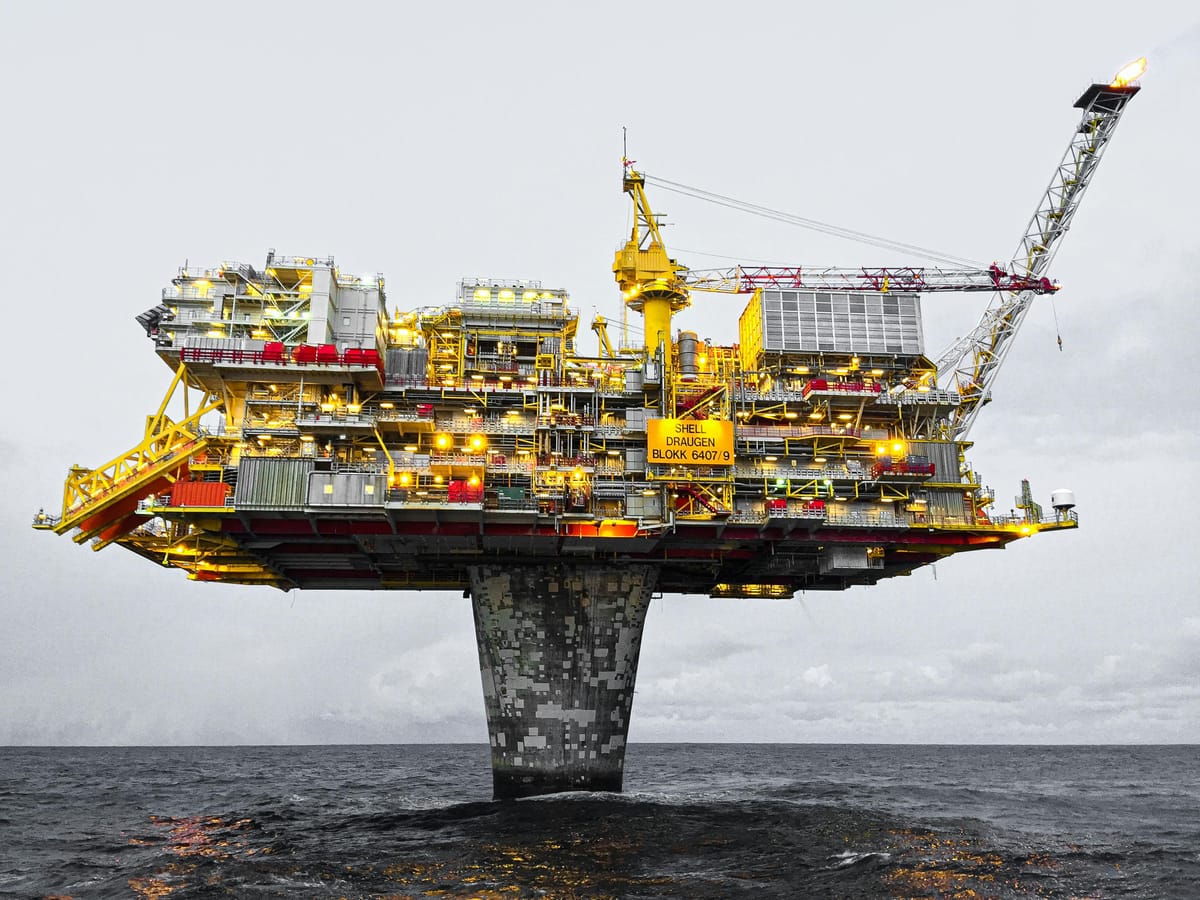
The oilfield services sector is getting squeezed from both ends. E&P companies are disciplined on capital — a structural shift post-2020 — while cost inflation in labor, materials, and logistics has stubbornly persisted. For the Big Three services companies — SLB (formerly Schlumberger), Halliburton, and Baker Hughes — the result is margin pressure even in a period of historically solid activity levels.
The Post-2020 Activity Paradox
When WTI touched negative territory in April 2020 and the U.S. rig count fell to 244 (lowest since records began), everyone expected the recovery to be services-led. And it was — initially. The U.S. rig count climbed from that nadir to 784 by December 2022, a 3x recovery that drove services revenue sharply higher.
But then the ceiling appeared. The rig count plateaued and began drifting down in 2023–2024, settling around 480–500 active oil rigs through early 2025. E&P companies — many of them flush from $90/bbl oil — chose buybacks and dividends over drill-bit growth. The new institutional mandate was free cash flow generation, not production maximization. For services companies, that translated to slower order flow.
The Cost Inflation Problem
At the same time services companies were managing slower activity, their cost structures remained stubbornly elevated. The inflation cycle of 2021–2023 left permanent marks:
Labor: Oilfield labor costs are up 25–35% from 2019 levels. Experienced directional drillers, completions engineers, and field supervisors are commanding salaries that reflect years of industry underinvestment in workforce. Halliburton's North American completion and production segment reported wage inflation of roughly 15% year-over-year in 2023 earnings calls.
Proppant: Sand prices surged 30–50% during the 2022 activity boom, driven by logistics bottlenecks and mine capacity constraints. While sand costs have partially moderated, they remain above pre-2020 levels. U.S. Silica and Hi-Crush (now PropX) have both indicated pricing stabilization rather than meaningful deflation.
Pressure pumping equipment: The frac fleet has aged. Much of the legacy horsepower deployed pre-COVID is approaching end-of-life, and replacement with Tier 4 dual-fuel or electric frac equipment costs 2–3x the legacy kit. Halliburton's Zeus e-frac fleets and ProPetro's electric conversions represent significant capex commitments with uncertain payback periods given activity uncertainty.
What the Numbers Show
SLB reported Q4 2024 revenue of $9.28 billion — essentially flat year-over-year. Its North America revenue declined 7% YoY, while international grew modestly. Operating margins in North America compressed to around 16%, versus 18–19% at the peak. The company's response has been to lean into digital (Delfi platform) and international markets, particularly Middle East and offshore.
Halliburton's Q4 2024 North America revenue came in at $2.6 billion, down from $3.0 billion a year prior. CEO Jeff Miller flagged "pricing headwinds" in pressure pumping — a direct acknowledgment that E&P customers are pushing back on rates. The completion and production segment margin fell to 18%, from 20%+ in 2023.
Baker Hughes is somewhat insulated by its industrial exposure — turbines, LNG equipment, industrial compressors — which provides revenue streams less correlated to the frac cycle. But its oilfield services segment faces identical pressures. The company's Oilfield Services & Equipment (OFSE) segment reported margins of around 15% in late 2024, still well below long-cycle targets.
The E&P Hammer: "Do More With Less"
E&P companies have internalized the new pricing power dynamic. During the 2022 boom, services companies raised rates aggressively — sometimes 20–30% in a single contract cycle. E&Ps are now pushing back, leveraging efficiency gains to demand more completions work per dollar.
The efficiency gains are real. Longer laterals (10,000–15,000+ feet), simul-frac operations (fracking multiple wells simultaneously), and data-driven proppant placement have all reduced cost per foot while increasing well productivity. Diamondback Energy reported drilling a 15,000-foot lateral in the Permian in under 15 days in 2024 — a feat that would have taken 25+ days a decade ago. That efficiency transfers to services companies as less revenue per well even when activity holds flat.
International: The Bright Spot with Asterisks
The structural offset to North America weakness is international. Middle East NOCs — Saudi Aramco, ADNOC, QatarEnergy — have aggressive multi-year expansion programs. Aramco's MBC field development, ADNOC's offshore expansion, and Iraq's continued brownfield activity are keeping international backlogs elevated.
SLB's international revenue grew roughly 10% in 2024, and the company has been explicit about prioritizing international contract wins. Baker Hughes has similarly leaned into Middle East long-cycle contracts. But international projects have longer cycle times, higher capital requirements, and often lower margins than the transactional North America frac business at its peak.
The Path Forward
The services industry needs one of three things to break the margin squeeze: a meaningful uptick in the U.S. rig count (requires sustained $75+ WTI), international activity accelerating faster than expected, or successful price discipline among the Big Three.
Price discipline has historically been the hardest to maintain. The pressure pumping market is fragmented — beyond the Big Three, there are dozens of mid-size pumping companies that will discount aggressively to maintain utilization. Until excess capacity is retired or activity re-accelerates, the squeeze continues.
The services companies are the canary in the upstream coal mine. Watch their quarterly guidance — it's the best real-time signal on where E&P activity is actually heading.