The Drilling Contractor Dilemma: Rig Count Stalls While WTI Holds $92
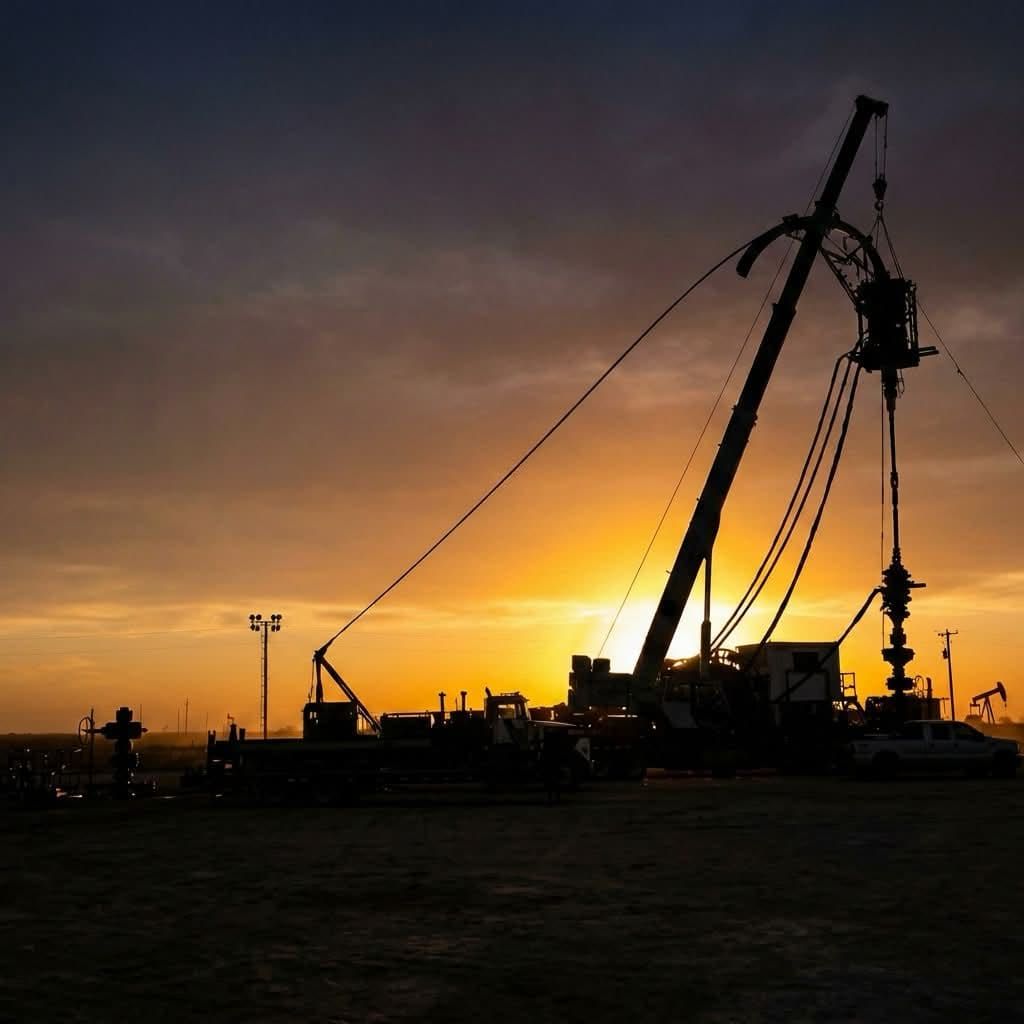
The U.S. land drilling contractor sector heads into Q1 2026 earnings season on uncertain footing: domestic rig count momentum has stalled for four consecutive weeks while elevated oil prices above $90 WTI create an environment that should, in theory, support renewed drilling activity. Instead, operators are banking windfall cash flows and returning capital — not adding rigs.
That gap between price signal and drilling response is the defining tension entering what may be the most consequential earnings season for drillers since 2022.
The Rig Count Paradox
According to Baker Hughes weekly rig count data, the U.S. active rig count has contracted by 3 rigs in four of the last four reported weeks, falling to approximately 545 total rigs as of the most recent release. The shale-specific count has been particularly soft, with the Permian Basin — the industry's primary engine — showing flat-to-down trends even as WTI benchmarks have held above $90 since mid-March.
The disconnect reflects a structural shift in how major E&Ps approach capital allocation. Following years of investor pressure for returns over growth, Permian operators including Diamondback Energy, Devon Energy, and Coterra Energy have filed 8-Ks this quarter signaling robust Q1 operational performance — but none have announced material rig additions. According to Hart Energy, the pattern of running tighter drilling programs at higher prices is now industry consensus, not deviation.
For Helmerich & Payne (HP), Patterson-UTI Energy (PTEN), and Nabors Industries (NBR) — the three largest publicly traded U.S. land drillers — this creates a difficult earnings narrative: strong margins on contracted rigs, but limited visibility on re-contracting at higher day rates when existing terms expire.
Day Rate Dynamics: The Re-Pricing Window Is Narrowing
CIR Analysis: The contract drilling complex entered 2026 on a wave of multi-year term contracts signed during the 2022–2023 pricing cycle, when operators scrambled to lock in rig availability. Many of those contracts carry day rates in the $28,000–$35,000 per day range for top-spec AC rigs. Current spot market rates for equivalent H&P FlexRigs and Patterson-UTI APEX platforms have drifted back to the low-to-mid $30,000s — offering modest upside for re-contracting, but not the step-change uplift drillers had hoped for heading into 2026.
The Saudi supply disruption — which has kept Brent near $96/bbl following confirmed pipeline damage at the East-West Abqaiq-to-Yanbu corridor — has introduced a geopolitical premium that could theoretically pull U.S. operators toward accelerated drilling. According to multiple industry sources, that call has not yet translated into rig authorization, as operators prioritize balance sheet positioning ahead of formal Q1 results disclosure.
Watch H&P's FlexRig utilization rate disclosure when the company reports. As of Q4 2025, H&P operated approximately 162 contracted rigs domestically — a number that has been declining gradually from peak 2022 levels. Any sequential uptick would signal that the $90+ WTI environment is beginning to clear the authorization backlog at E&P planning committees.
International Exposure: The Cushion That Changes the Story
Not all drilling contractor revenue sits on U.S. soil. Nabors Industries carries meaningful contract exposure in Saudi Arabia, Kuwait, and Latin America — markets where national oil companies operate under different capital discipline frameworks than U.S. independents.
Halliburton's recently announced multi-billion dollar bundled completions contract with Argentina's YPF for Vaca Muerta operations — reported by Hart Energy — is a reminder that international unconventional drilling is accelerating even as U.S. domestic momentum stalls. Nabors has a drilling presence in the Vaca Muerta play and could benefit from additional contract awards as YPF scales its program under the HAL completions umbrella. Patterson-UTI's international operations, while smaller, provide incremental revenue diversification.
CIR Analysis: Investors will scrutinize Nabors' Middle East contract backlog disclosures closely. Saudi Aramco has been running elevated rig counts as it works toward its 12 MMbbl/d maximum sustainable capacity target, a program that has kept Nabors' Saudi joint venture utilization high even as U.S. spot activity softens. That international buffer may be the difference between a neutral and a positive Q1 narrative for NBR shares.
The Deal Structure Wildcard
One underappreciated tailwind for drillers: "continuation vehicles," an emerging A&D deal structure in which private equity sponsors roll E&P assets into new fund vehicles rather than execute outright sales. According to Hart Energy, these structures are gaining market share as bid-ask spreads widen in the current environment — and for drilling contractors, they could prove beneficial. Assets that stay in play under continuation fund ownership rather than being absorbed by acquisition-mode majors tend to maintain existing drilling programs longer, preserving rig contracts that might otherwise be rationalized post-close.
The same Ovintiv Anadarko asset sale — closed at $3.0 billion with $700 million in simultaneous debt paydown — demonstrates the opposite dynamic: a buyer rationalization of non-core rig activity. Net of these crosscurrents, CIR expects flat-to-slightly-negative domestic rig count trends through Q2 2026 absent a significant demand signal from either LNG-linked gas drilling or a new operator budget authorization cycle.
What to Watch in Q1 Reports
Three metrics will define the Q1 2026 drilling contractor earnings cycle:
- H&P FlexRig utilization rate — any move above 80% contracted would be constructive for sector sentiment
- PTEN average day rate on new contract signings — the key indicator of pricing power at the margin
- Nabors international contract backlog duration — longer weighted average remaining life signals revenue visibility in the face of domestic uncertainty
Q1 earnings for H&P are expected in late April; Patterson-UTI and Nabors follow in early May. With WTI holding above $92 at Wednesday's open and the Saudi supply disruption providing a floor under crude benchmarks, the macro backdrop is supportive — but the structural disconnect between price and rig count will be the central question drillers must answer for investors this cycle.
Crude Intelligence Report is an independent upstream oil and gas intelligence publication. Content is for informational purposes only and does not constitute investment advice. The author and publisher hold no positions in any companies mentioned. © 2026 Crude Intelligence Report. All rights reserved.