
The Bakken at 20: Mature Basin Lessons for the Industry
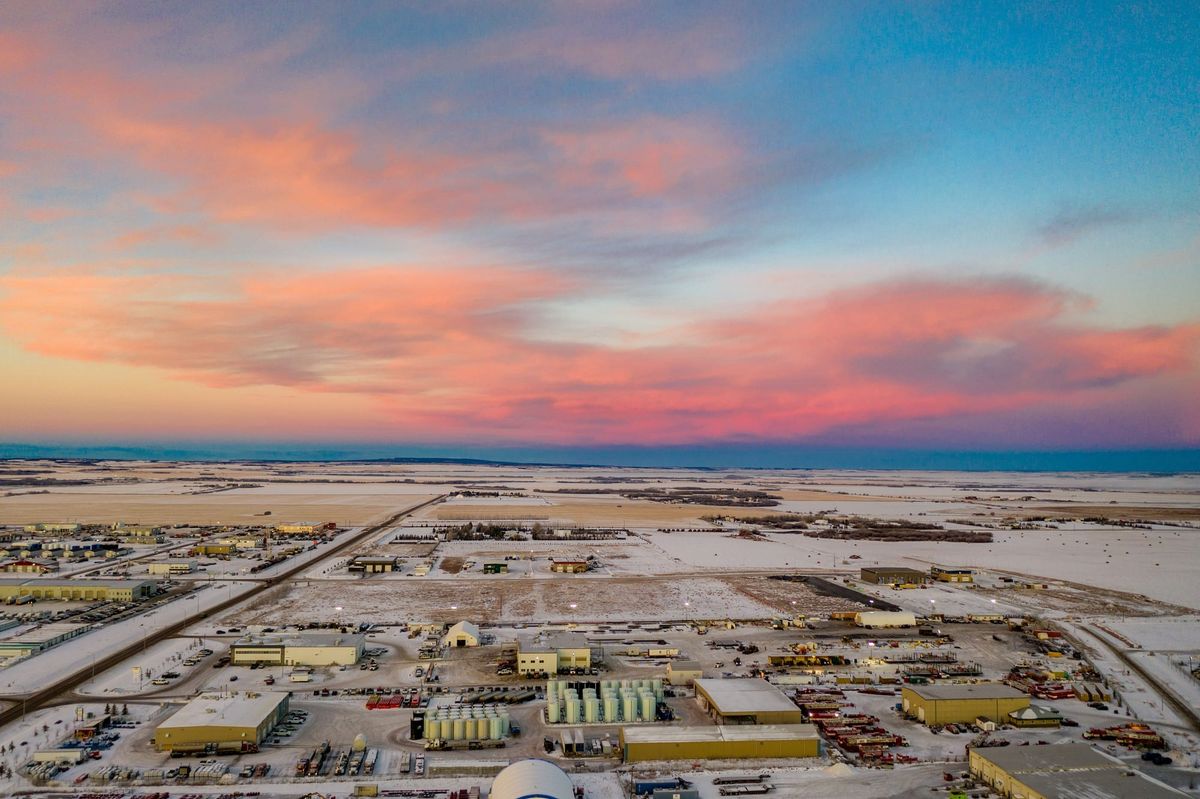
The Bakken Shale's commercial development began in earnest around 2006–2008, when Continental Resources — under Harold Hamm's leadership — proved that horizontal drilling with hydraulic fracturing could unlock economic production from the tight Williston Basin formation. By 2026, the basin is roughly 18–20 years into large-scale development. What it has become is as instructive as what it was.
How the Bakken Changed the World
Before the Bakken, the prevailing assumption in global energy markets was that U.S. oil production was in permanent structural decline. The Lower 48 had peaked in 1970, and apart from Alaska and deepwater Gulf of Mexico, there was no plausible pathway back to meaningful production growth.
The Bakken proved that assumption wrong. According to EIA historical production data, North Dakota crude output grew from under 100,000 barrels per day in 2006 to over 1.5 million barrels per day at its peak in 2019. That single basin added more oil supply than most OPEC member countries, reshaping the global supply curve and ultimately contributing to the 2014–2016 price crash that restructured the entire upstream industry.
The technical lessons learned in the Bakken — optimized horizontal landing zones, multi-well pad drilling, slickwater frac designs — were directly applied to the Eagle Ford and Permian Basin developments that followed. The Bakken is not just a basin; it's the laboratory where modern shale development methodology was refined.
Production Trajectory: Post-Peak Reality
According to EIA Drilling Productivity Report data, Bakken production has settled into a range of approximately 1.1–1.2 million barrels per day — materially below its 2019 peak of 1.5–1.6 million barrels per day. The decline from peak is real, but the plateau is striking. A basin that many predicted would be in terminal decline by the mid-2020s is holding production at nearly triple its pre-shale levels.
The mechanisms sustaining this plateau are worth understanding. Existing producing wells decline at high initial rates — a characteristic of tight rock — but the enormous inventory of already-drilled wells maintains a baseline. New drilling is focused on the highest-quality remaining inventory, with longer laterals and optimized completions partially offsetting the geological reality that the best rock was drilled first.
Operator Evolution
Continental Resources, the Bakken's founding operator, went private in a 2022 transaction by the Hamm family — effectively returning the company that built the basin to the private sphere as the basin matured. The public Bakken story is now told primarily by Chord Energy (the combination of Oasis and Whiting), Hess Corporation (recently acquired by Chevron, with Guyana complicating the story), and XTO Energy (ExxonMobil's subsidiary).
Chord Energy operates the largest public-company Bakken footprint following the Oasis-Whiting combination, and its operational results reflect the basin's maturation: improving capital efficiency, focus on existing well optimization over new drilling, and strong free cash flow generation at current WTI prices. According to Chord's investor materials, the company is generating returns that would have seemed impossible to predict when many wrote the Bakken's eulogy in 2020.
Mature Basin Dynamics
The Bakken's maturation has produced several structural characteristics that will eventually apply to the Permian:
DUC inventory drawdown: During the 2020 activity collapse, operators drew down the Drilled-but-Uncompleted well inventory significantly. According to EIA DUC estimates, the Bakken's DUC buffer is thinner than at any point in the prior decade, meaning future production maintenance requires consistent new drilling rather than completion of backlog.
Parent-child well interference: Infill drilling in the Bakken's core producing areas has documented productivity impacts on parent wells. Operators have adapted spacing and landing zone selection, but the phenomenon is real and imposes a geological tax on infill programs.
Infrastructure rationalization: With production stable rather than growing, the economics of midstream investment in the Bakken have shifted. Existing infrastructure is being optimized rather than expanded; gathering and processing capacity that was built for a higher-production scenario now provides excess capacity that benefits operators through lower costs.
Lessons for the Permian's Future
The Bakken circa 2026 is arguably what the Permian Basin will look like circa 2035–2040. Production will peak, plateau, and gradually rationalize. The operators who survive and generate value in that environment will be those who built low-cost positions, optimized existing well performance, and ran lean organizations aligned with capital efficiency rather than volume growth.
CIR Analysis
CIR Analysis: Mature basin economics are better than people expect and worse than peak-cycle extrapolations suggested. The Bakken is generating strong free cash flow per barrel at current WTI prices — Chord Energy and other Bakken operators are returning capital to shareholders from a basin that many declared dead six years ago. The key insight is that shale basins don't die; they mature. Production peaks, then plateaus, then gradually declines — but the cash flow story changes character rather than disappearing. The Permian will face this transition eventually. When it does, the operators who've studied the Bakken playbook will be better prepared than those who assumed the Permian's growth trajectory was permanent. The Bakken at 20 is proof of concept for mature shale basin economics. It's not a growth story anymore. It's an income story. And income stories are underrated in an industry that spent decades chasing barrels.
Crude Intelligence Report is an independent upstream oil and gas intelligence publication. The content in this article is for informational purposes only and does not constitute investment advice, financial advice, or a recommendation to buy or sell any security. Always conduct your own due diligence before making investment decisions. CIR and its contributors may hold positions in companies mentioned; any such positions will be disclosed when known. © 2026 Crude Intelligence Report. All rights reserved.