
Reservoir Engineering 101: A Primer for Investors
Most oil and gas investors can read an income statement and calculate a free cash flow yield. Fewer can evaluate whether an operator's stated EUR (estimated ultimate recovery) is reasonable, or whether a type curve is conservative or optimistic. That knowledge gap matters — because the entire economic foundation of an E&P company rests on reservoir engineering assumptions that management controls and investors often accept uncritically.
This primer covers the core concepts that sophisticated upstream investors need to understand: how hydrocarbons are found, measured, and recovered, and how those technical realities translate into financial outcomes.
What Is a Reservoir?
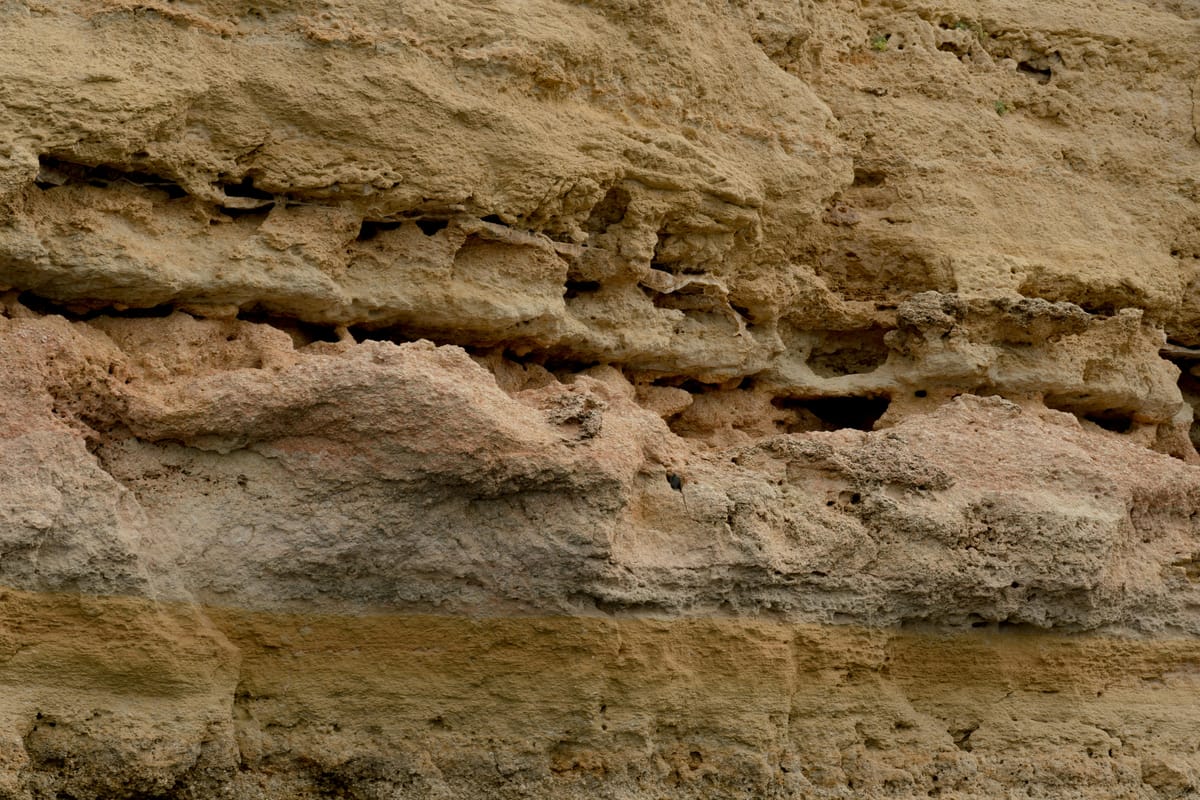
A petroleum reservoir is a subsurface rock formation that contains oil and/or gas in economically extractable quantities. Three conditions must coexist: (1) a source rock that generated hydrocarbons through organic matter maturation, (2) a reservoir rock with sufficient porosity and permeability to store and transmit fluids, and (3) a trap — a structural or stratigraphic feature that prevented hydrocarbons from migrating to the surface.
In conventional plays, these elements are spatially separated: oil and gas migrated from source to reservoir and accumulated in discrete traps. In unconventional plays (shale, tight sand, coal bed methane), the source rock is the reservoir — hydrocarbons never migrated far from where they formed. This is why hydraulic fracturing is necessary: the permeability of shale is so low (measured in nanodarcies, versus millidarcies for conventional rock) that fluids won't flow without artificial stimulation.
Key Reservoir Properties
Porosity is the percentage of a rock's volume that consists of void space (pores) where fluids can reside. Sandstone reservoirs typically have 15–35% porosity. Shale has 2–10% porosity. Higher porosity generally means more hydrocarbons in place per unit volume, but the relationship isn't linear — pore size, connectivity, and fluid type all matter.
Permeability measures how easily fluid flows through rock, expressed in darcies (or millidarcies/nanodarcies for tight rock). Gravel has permeability of ~100,000 millidarcies. Conventional sandstone: 10–1,000 millidarcies. Tight sand: 0.001–1 millidarcy. Shale: 0.0001–0.001 millidarcy (100–1,000 nanodarcies). The permeability of shale is why a horizontal well requires 20–40 hydraulic fracture stages to create enough flow pathways for economic production.
Water saturation is the fraction of pore space occupied by water (the remainder by oil or gas). Reservoirs with high water saturation leave less room for hydrocarbons and produce more water alongside oil and gas, increasing lifting costs.
Pressure is the driving force that moves hydrocarbons toward the wellbore. Reservoirs under natural pressure (overpressured formations) produce more vigorously early in life. Pressure depletion over time reduces production rates — this is why shale wells have steep initial decline curves.
Decline Curves and EUR
Shale wells exhibit hyperbolic decline — they peak quickly (often within 30–90 days), then decline steeply (50–70% in the first year), then flatten to a terminal decline rate that can persist for decades. This production profile is fundamentally different from conventional wells, which often plateau before declining.
The Estimated Ultimate Recovery (EUR) is the total cumulative production expected from a well over its economic life, typically 30–40+ years. For Permian Basin horizontal wells, EURs typically range from 600 to 1,500 Mboe (thousand barrels of oil equivalent) per well, with top-tier core acreage wells exceeding 2,000 Mboe.
EUR is calculated by fitting a decline curve model to early production data — typically using a modified hyperbolic equation developed by petroleum engineer J.J. Arps in the 1940s. The challenge: early production data (first 3–12 months) is used to project 30-year recoveries. Small changes in decline curve assumptions create large differences in EUR. An operator that uses a b-factor of 1.8 in their decline model will project a much higher EUR than one using 1.3 — and both are defensible from a mathematical standpoint for the same well.
The Type Curve: What Management Is Selling You
A type curve is the average production profile that an operator publishes for their drilling program — essentially a composite of expected well performance for a given area. When a company says "our Delaware Basin type curve is 1,100 Mboe EUR," they're showing investors what they expect from an average new well in that area.
Type curves can be optimistic. The selection of which wells to include, the time period analyzed, and the decline model used all create opportunities for management to present the best possible picture. Investors should scrutinize: (1) How old is the production data underlying the type curve? (2) Are recently drilled wells performing at, above, or below the type curve? (3) Has the type curve changed over time — and if it was revised down, why?
Spacing and Interference: The Downspacing Dilemma
Drilling more wells per square mile increases total recovery from an acreage position — up to a point. When wells are drilled too close together, they interfere with each other's drainage areas, reducing per-well EUR. This "parent-child" well interference is one of the most debated issues in unconventional reservoir engineering.
Operators that drill too aggressively on spacing to maximize near-term production often sacrifice long-term recovery. The Permian's core Delaware Basin is the most intensely debated arena for this question. Some operators have pushed to 6–8 wells per section (mile²); others argue 4–5 wells optimize long-term value. The right answer depends on reservoir connectivity, pressure depletion, and fracture geometry — none of which can be fully predicted before drilling.
Proved Reserves: The Regulatory Filter
The SEC requires public E&P companies to report proved reserves annually — a subset of total potential resources that meets specific criteria for commercial recoverability. Proved developed producing (PDP) reserves are the most certain category: producing wells with established decline curves. Proved undeveloped (PUD) reserves can only be booked for locations that will be drilled within five years under the current development plan.
Reserve reports are prepared by independent reservoir engineering firms (DeGolyer & MacNaughton, Ryder Scott, Netherland Sewell & Associates are the major players). The quality of a company's proved reserves — and the consistency of its reserve replacement — is a fundamental measure of asset quality that sophisticated investors track closely.
Why This Matters for Investors
Every valuation model for an E&P company ultimately depends on EUR assumptions, type curves, and reserve estimates. A company with 10 years of high-quality drilling inventory at 1,200 Mboe EUR per well is worth dramatically more than one with 5 years at 800 Mboe. Understanding how those numbers are derived — and where the uncertainty lies — is the difference between informed investment and accepting management's narrative at face value.
The best investors in this sector develop an independent view on reservoir quality, pushing back on overly optimistic type curves and giving credit to operators that consistently deliver above-curve results. That analytical edge starts with understanding the fundamentals covered here.