
Permian Water Takeaway: Infrastructure Race
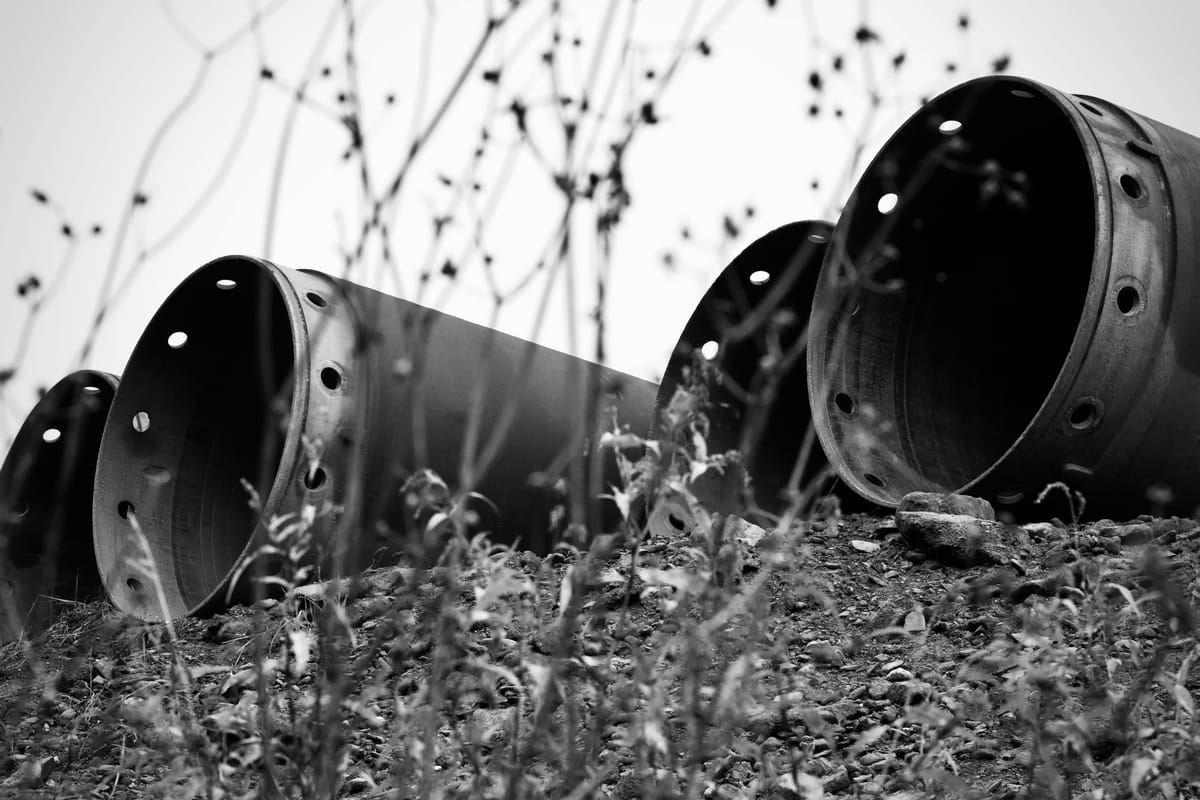
The Hidden Constraint on Permian Growth
Everyone talks about oil takeaway and gas flaring as the Permian Basin's growth limiters. Water is the quieter crisis. For every barrel of oil produced in the Delaware Basin, operators bring 6–10 barrels of produced water to surface. In some mature areas of the Midland Basin, that ratio climbs above 15:1. With the Permian producing roughly 6.3 million bbl/d of oil, the water management challenge runs into the tens of millions of barrels per day — a logistics problem of staggering scale.
The traditional solution — dispose of produced water into deep injection wells — is hitting its limits. Seismic activity linked to disposal operations has prompted Texas Railroad Commission restrictions in portions of West Texas. Meanwhile, per-barrel disposal costs have risen as competition for permitted disposal zones intensifies. Operators that once paid $0.30–0.50/bbl for water disposal are increasingly seeing $0.75–1.25/bbl in constrained areas.
The New Infrastructure Build
The response has been an infrastructure buildout that parallels the crude pipeline boom of 2014–2018. Midstream companies including WaterBridge, Solaris Water Midstream, Breakwater Energy Partners, and a growing list of private players have committed billions to centralized water infrastructure systems.
WaterBridge alone operates over 8,000 miles of produced water gathering pipelines across the Permian and has been aggressively acquiring smaller systems. The company's integrated approach — gathering, treatment, and disposal or beneficial reuse — is positioning it as the dominant third-party water midstream provider in the basin.
Solaris Water Midstream, backed by Solaris Oilfield Infrastructure's parent, has built out systems in the Delaware Basin focused on produced water recycling — treating water for reuse in hydraulic fracturing rather than disposing of it. At typical frac water volumes of 30,000–60,000 barrels per well per stage, the ability to substitute recycled produced water for purchased freshwater represents meaningful cost savings.
Recycling: Economics and Scale
Water recycling has moved from a regulatory preference to an economic imperative in parts of the Permian. Freshwater costs in the Delaware Basin — where surface water is scarce and groundwater is regulated — can run $0.50–1.50/bbl depending on source and transport distance. Recycled produced water, even accounting for treatment costs, often pencils out cheaper.
Pioneer Natural Resources (pre-merger) reported recycling over 50% of its produced water in the Midland Basin by late 2023. ExxonMobil, post-acquisition, has continued expanding that program. Diamondback Energy has committed to 80% water recycling targets basin-wide as part of its operational efficiency roadmap.
The technology has scaled. Centralized water treatment facilities that handle 100,000+ bbl/d of produced water are now operational. The challenge is connecting well pads to those facilities economically — which is where the pipeline infrastructure race comes in.
Disposal Constraints and Regulatory Risk
The Texas Railroad Commission's actions in 2023–2024 restricting disposal in certain Permian zones — particularly around the Gardendale seismic area near Midland — sent a clear signal that disposal capacity is not unlimited. More restrictions are plausible as seismicity data accumulates.
Operators have responded by diversifying disposal targets (deeper zones, different formations) and accelerating recycling. But the regulatory trajectory points toward tighter disposal constraints over time, not looser ones. Operators heavily reliant on disposal-only strategies face escalating optionality risk.
The Infrastructure Investment Opportunity
Water midstream is attracting capital for the same reasons oil and gas midstream did a decade ago: stable, fee-based cash flows tied to long-term volume commitments from creditworthy operators. The difference is that water infrastructure is earlier in its build cycle, creating opportunities for both financial returns and competitive moats.
The winners in this infrastructure race will be operators that locked in long-term water midstream agreements at favorable rates — and midstream companies that built systems with sufficient capacity headroom to absorb volume growth without incremental capex. In the Permian, water management is no longer a back-office operational consideration. It's a first-order strategic one.