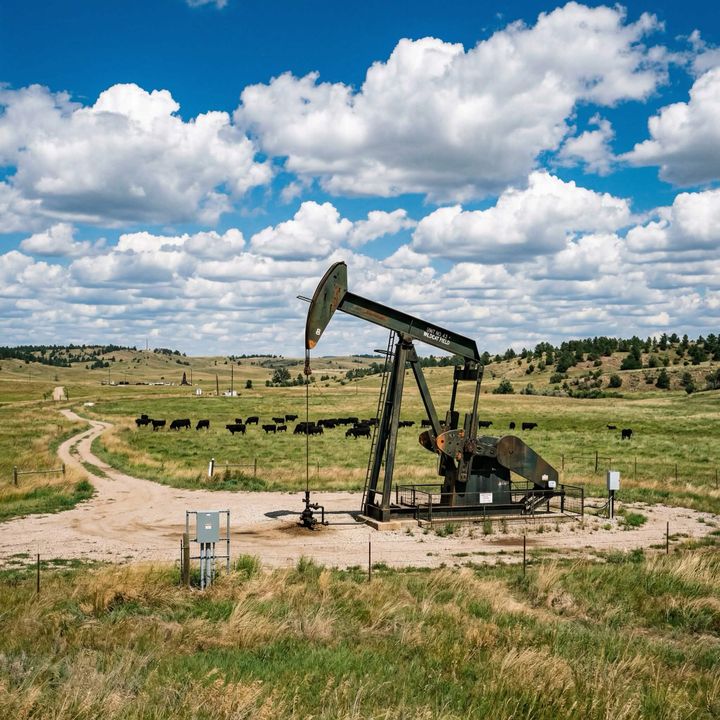
Permian Basin Operators Are Repricing 2026: Hedge Books, Breakevens, and the $90–$100 World
WTI's wild week forced Permian operators to rethink their 2026 budgets in real time. CIR breaks down hedge coverage at Diamondback, EOG, Devon, and OXY — and what it means for Q1 earnings season.
April 10, 2026 — Houston
After one of the most volatile weeks in crude markets since the COVID demand shock, Permian Basin operators are staring at a fundamentally repriced world. WTI traded above $115 last Monday, collapsed to $94.61 on the Iran ceasefire announcement Tuesday, then clawed back toward $97–$98 by Thursday as the truce unraveled. For operators who entered 2026 budgeting on a $75–$85 WTI baseline, the last 10 days have been both a windfall and a warning.
The New Planning Baseline: $90–$100 WTI
The consensus on the Street has shifted. Goldman Sachs cut its Q2 2026 Brent forecast to $90 on Wednesday, only to watch crude rip back $6 in 24 hours as Iranian drones struck Saudi Arabia's East-West Pipeline and Hormuz re-mining confirmed the ceasefire was paper. According to S&P Global Commodity Insights, the Permian Basin's all-in breakeven for new Midland Basin wells currently sits at approximately $48–$52/bbl WTI, with Delaware Basin wells averaging $54–$58/bbl.
At $97 WTI, every producing Permian well is printing cash — but the question operators are wrestling with is: how long does this premium last, and how much of it do you lock in?
CIR Analysis: The geopolitical premium that lifted WTI above $110 was always fragile. The ceasefire crash proved that in real time. Operators who hedge at current prices capture the premium but sacrifice upside if Hormuz disruption re-escalates. Those who don't hedge are exposed to another $15–$20 unwind if a durable diplomatic resolution materializes.
Hedge Book Positioning: Who's Covered and Who's Exposed
Based on most recent investor presentations and Q4 2025 earnings guidance:
Diamondback Energy (FANG) — entered 2026 with roughly 25–30% of projected oil volumes hedged via costless collars, floors in the $72–$78 range. At current WTI, those hedges are well out of the money on the upside — Diamondback is capturing the full spot premium. With its Endeavor acquisition integration complete and guidance pointing to ~470,000 BOE/d, Diamondback has the scale to benefit disproportionately from sustained $95+ pricing. Management has historically been conservative on hedging, which works in its favor this week.
EOG Resources (EOG) — one of the lowest-cost operators in the Permian with stated all-in breakevens below $45/bbl on premium inventory. EOG typically enters a year with light hedge coverage, preferring to ride spot markets. According to recent EOG guidance, the company targets $60 WTI to fully fund its dividend and maintenance capex — at current prices, every dollar above that accrues to buybacks or bolt-on acquisition capacity.
Devon Energy (DVN) — runs a more active hedge program, with Q1 2026 filings showing approximately 40% of oil volumes in fixed-price swaps averaging $74.50/bbl. The hedge drag is meaningful at current prices but provides balance sheet insurance if the ceasefire holds. Devon's variable dividend framework means the hedging decision directly impacts shareholder cash distributions this quarter.
Occidental Petroleum (OXY) — with a heavier debt load from the CrownRock acquisition, OXY has maintained more robust hedge coverage (~50% of Permian volumes through mid-2026 at floors near $70). The lower realized price relative to spot is a headwind to earnings optics, but it de-risks the debt reduction narrative that management has prioritized for 2026.
The Capex Acceleration Math
The critical question for Q1 earnings season — now three weeks out — is whether operators pull forward activity. According to Baker Hughes rig count data, the Permian currently runs approximately 310 active land rigs. To meaningfully accelerate, the basin would need sustained pricing confidence above $85 for operators to commit to incremental rig additions with 60–90 day lead times on contracts.
At $95–$100 WTI, the economics for an incremental Midland Basin well pencil at 60–70% IRR at current service costs — compelling by any standard. The constraint isn't the price signal; it's operator discipline and the memory of 2022-era cost inflation that made high oil prices partially self-defeating.
CIR Analysis: Watch for capex guidance updates at Q1 earnings. A sustained $95+ WTI environment through April will put enormous pressure on operators to raise full-year budgets. But the smart money — particularly the large-cap Permian consolidators — will likely hold guidance and redirect the cash surplus to buybacks rather than risking another inflationary cycle. The discipline theme that defined 2023–2025 doesn't evaporate in one volatile week.
Breakeven Sensitivity: Where Operators Actually Are
A useful framework for thinking about Permian positioning at current prices:
- $45–$55 WTI: Full capital program funded, dividends covered, minimal free cash. (Tier 1 operators at maintenance capex only)
- $65–$75 WTI: Pre-Hormuz crisis budget baseline for most operators. Moderate free cash generation, balanced shareholder returns and modest growth.
- $90–$100 WTI: Current environment. Exceptional FCF generation. The debate: return capital or accelerate growth?
- $110+ WTI: Sustained super-cycle territory. Service cost inflation becomes the primary constraint, not capital availability.
According to EIA weekly spot data, WTI averaged $105.67/bbl the week of April 3 — the highest weekly average since 2022. The whiplash to $94 and back to $98 within 72 hours tells you the market has no consensus on where fair value is.
The Bottom Line
CIR Analysis: The Permian Basin enters Q2 2026 earnings season cash-flush and strategically uncertain. The operators best positioned for this environment are those with low all-in breakevens (EOG, Diamondback), clean balance sheets, and the operational flexibility to defer or accelerate capital on short notice. The volatility this week is a gift to the basin's efficient operators and a stress test for those who took on acquisition debt at the peak of the consolidation cycle. Watch hedge books, watch buyback announcements, and watch whether any operator breaks the capital discipline consensus at Q1 earnings — that will be the real story of April.
Crude Intelligence Report is an independent upstream oil and gas intelligence publication. Content is for informational purposes only and does not constitute investment advice. The author and publisher hold no positions in any companies mentioned. © 2026 Crude Intelligence Report. All rights reserved.