
Oilfield Services Q3 Recap and Outlook
SLB, Halliburton, and Baker Hughes all reported Q3 2025 results that told the same story: North America is soft, international is the growth engine, and margin compression is real.
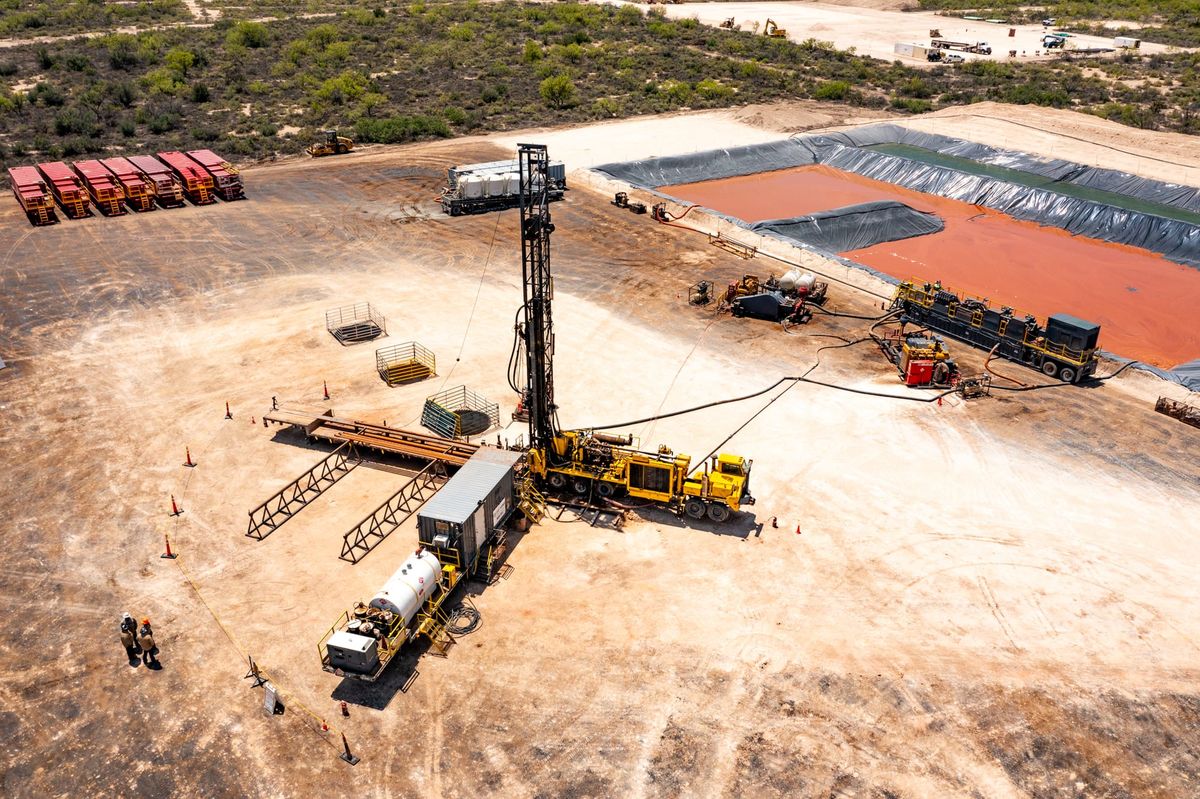
Oilfield services earnings season always provides a useful temperature check on upstream activity that goes beyond what E&P earnings show. Where E&Ps manage capital allocation and hedging, OFS companies feel the raw demand signal: how many wells are being drilled, how much completion work is happening, what operators are spending per lateral foot. The Q3 2025 results from the Big Three—SLB, Halliburton, and Baker Hughes—told a consistent and somewhat cautionary story.
North America: Grinding Through a Down Cycle
The U.S. land market in 2025 has been a story of managed decline. The Baker Hughes rig count averaged roughly 580-590 active rigs in Q3 2025—down from approximately 740 at the start of 2023, and well below the 1,000+ levels of the 2018 pre-pandemic cycle peak. The completion side has been marginally more resilient; operators have prioritized completing drilled-but-uncompleted wells to maintain production without adding new drilling, but that DUC inventory has now largely been worked through.
Halliburton, the most North America-exposed of the three major OFS companies (roughly 50% of revenue from North America), felt the squeeze most acutely. Q3 2025 North America revenue declined approximately 4-6% sequentially, with completion tools and cementing seeing the most activity softness. Management was direct about pricing: day rates for pressure pumping equipment have declined from the 2022-2023 peak, and the current market doesn't support meaningful re-acceleration without a sustained improvement in E&P activity levels.
Halliburton CEO Jeff Miller has consistently framed the North America market as disciplined consolidation—operators are efficient but not inactive. That's accurate but cold comfort for a company watching its most profitable segment generate lower margins than 18 months ago.
SLB's North America exposure is smaller—roughly 25% of revenue—and the company has been most aggressive in repositioning toward higher-margin digital and integrated services. Its North America segment still felt the activity decline but the margin impact was partially offset by technology mix and higher-value completion contracts in the Permian and Eagle Ford.
International: The Growth Story
Where North America disappointed, international delivered. SLB's international revenue grew approximately 8-10% year-over-year in Q3 2025, driven by Middle East and Africa strength. Saudi Aramco's rig count has moderated from its peak expansion phase, but NOC activity across Iraq, UAE, Kuwait, and Kuwait International continues to support robust demand for directional drilling, production chemicals, and well completion services. SLB's positioning in the Middle East—built through decades of technical relationships and infrastructure investment—gives it the dominant market share in the region's growth activity.
Baker Hughes has focused its international growth on gas-linked services: LNG equipment, turbomachinery for compression, and subsea production systems. With Saipem and TechnipFMC also competing aggressively, Baker Hughes has had to sharpen its offering, but the backlog for LNG equipment specifically remains strong. New LNG projects in Qatar (North Field expansion), the U.S. Gulf Coast, and East Africa all require Baker Hughes-type equipment and services.
The international market's relative strength creates a structural question for North America-heavy players like Halliburton: can domestic margins recover without an activity recovery, or does the company need to invest more aggressively in international expansion to sustain earnings growth?
Technology Differentiation
All three companies spent significant Q3 earnings call time discussing digital, AI-driven, and data analytics offerings. SLB's Delfi digital platform, Halliburton's iEnergy cloud, Baker Hughes' Leucipa production optimization suite—these represent the industry's bet that software and data monetization can offset the cyclicality of hardware and services.
The adoption data is encouraging at the margin. Operators are paying for reservoir modeling software, drilling optimization tools, and production surveillance platforms that deliver measurable improvements in well performance. Pioneer (pre-acquisition) was an early adopter of real-time drilling optimization that reduced flat time significantly. EQT has been a reference customer for digital gas production optimization.
But the economics are still hardware-dependent. Software margins are high, but the absolute dollar value of the digital business remains a fraction of the core drilling and completion services revenue. Investors buying OFS stocks for the digital transformation story are early; the hardware businesses still dominate cash flows.
Pricing and the Consolidation Question
The OFS sector has its own consolidation dynamic that mirrors the E&P space. SLB's acquisition of ChampionX closed in 2024, adding production chemicals and artificial lift to its portfolio. Cameron (subsea trees and flow control) was already in-house. The logic is vertical integration: owning more of the service stack means higher margins and stickier customer relationships.
Smaller OFS companies—ProPetro Holding, NexTier Oilfield Solutions (now part of Patterson-UTI), Solaris Oilfield Infrastructure—have faced margin compression without the international diversification or digital offset that the majors enjoy. Several names in the pressure pumping space have either been acquired or are trading at stressed multiples that reflect ongoing market softness.
Outlook for Q4 and 2026
Seasonal factors typically add 3-5% to Q4 completions activity as operators rush to meet year-end production targets. That seasonal bump may be modest in 2025 given the constrained capital environment. Q4 2025 guidance from both SLB and Halliburton was cautious: flat to slightly up from Q3, with international carrying the load.
For 2026, the OFS outlook depends almost entirely on whether WTI sustains above $70 and whether the natural gas price recovery holds. At $70+ WTI and $3.00+ Henry Hub, the rig count has historically stabilized and gradually recovered. If those price levels hold through Q1 2026 budget season, activity signals should improve by mid-year.
Until then, the theme is: international grows, North America grinds, and the majors collect their digital service premiums while waiting for the cycle to turn.
Crude Intelligence Report is an independent upstream oil and gas intelligence publication. Content is for informational purposes only and does not constitute investment advice, financial advice, or a recommendation to buy or sell any security. Always conduct your own due diligence before making investment decisions. The author and publisher hold no positions in any companies mentioned in this article. © 2026 Crude Intelligence Report. All rights reserved.