
Midland vs. Delaware: Inside the Permian's Two Basins
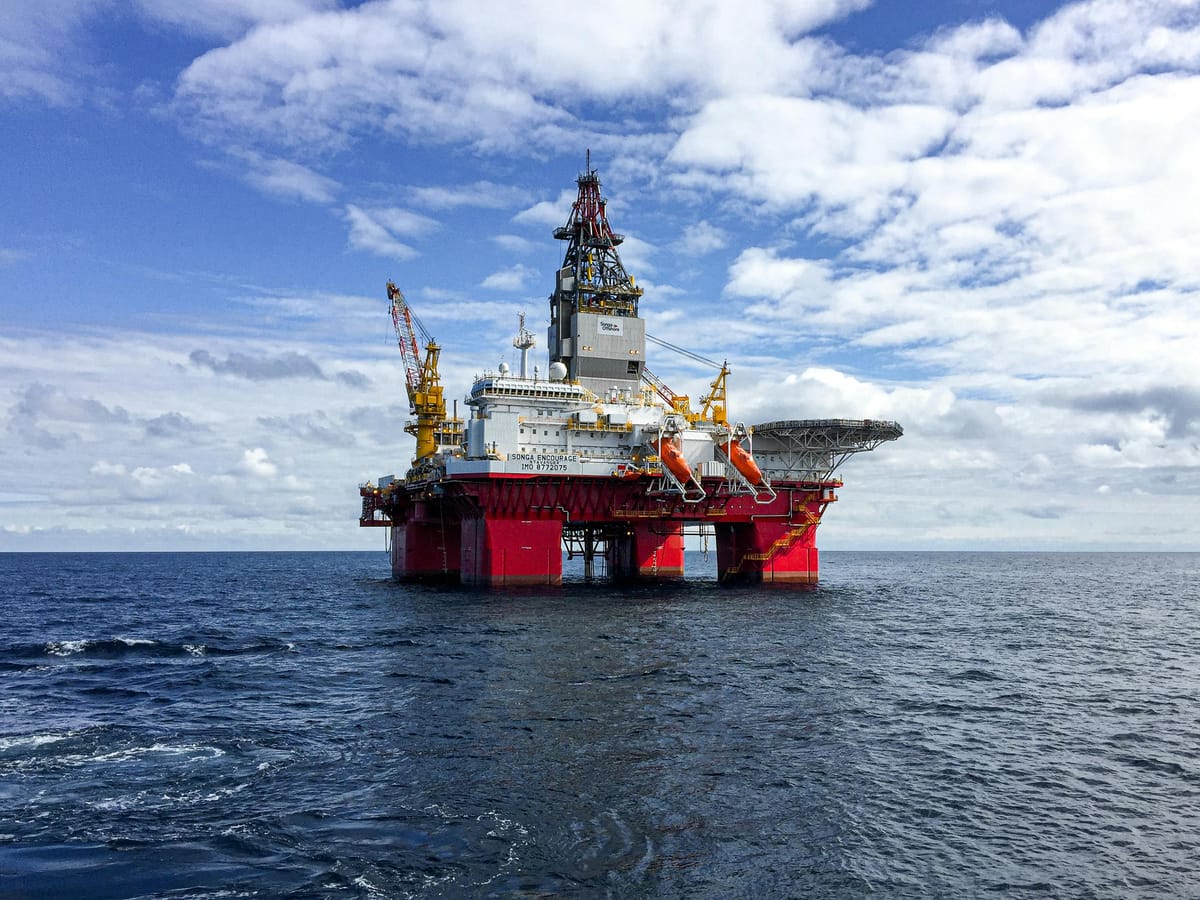
The Permian Basin is the most productive oil field in U.S. history. But saying "I operate in the Permian" tells you almost nothing useful. The basin is bifurcated into two geologically distinct sub-basins — the Midland and the Delaware — that differ in rock quality, completion design, infrastructure density, and operator profiles. Understanding which side of the Central Basin Platform you're on matters enormously for well economics.
Geography and Geology: The Basics
The Midland Basin occupies the eastern portion of the Permian, centered in Midland and Ector counties in Texas. It's characterized by stacked Spraberry and Dean/Wolfcamp formations, with relatively uniform rock properties and lower pressures. The Delaware Basin sprawls across west Texas and southeast New Mexico — Loving, Ward, Reeves, and Lea counties — and contains the Bone Spring and Wolfcamp formations at much higher pressures and with more complex heterogeneity.
Both basins produce primarily from Wolfcamp shale, but the similarity largely ends there. Delaware wells are generally longer (10,000–12,000+ foot laterals are common), deeper (8,000–11,000 feet TVD vs. 7,000–9,000 in Midland), and operate at higher reservoir pressures — which drives better initial production rates but also steeper decline curves.
Well Economics: Delaware Leads on IPs, Midland Wins on Cost Control
The Delaware's higher pressures translate to better initial production rates. A top Delaware Wolfcamp A well might come on at 1,800–2,500 boe/d IP30, versus 1,200–1,800 boe/d for a comparable Midland Wolfcamp A well. But IP rates can be misleading. What matters is 24-month cumulative production and all-in well cost.
On cost, the Midland has a structural advantage. The basin's longer operating history means more midstream infrastructure, established proppant supply chains, and lower trucking/water disposal costs. Midland operators have driven well costs down to $6.5–$7.5 million for a standard 10,000-foot lateral. Delaware costs typically run $7.5–$9.5 million for similar lateral lengths, reflecting higher drilling difficulty and logistics complexity.
Pioneer Natural Resources (now folded into ExxonMobil after the $60 billion acquisition closed in May 2024) built its entire thesis around Midland Basin Spraberry/Wolfcamp stacking. Their reported half-cycle breakeven was below $40/bbl WTI — a figure that looks more comfortable today than Delaware counterparts at $42–$50/bbl in some areas.
Operator Profiles: Who Owns What
The Midland is more consolidated. Post-Pioneer acquisition, ExxonMobil controls the single largest acreage position — roughly 1.4 million net acres — and is targeting 1.3 million boe/d from Permian operations by 2030. ConocoPhillips, following its $22.5 billion Marathon Oil acquisition, added significant Midland exposure. Diamondback Energy's $26 billion Endeavor merger created another dominant Midland player with ~500,000 net acres.
The Delaware is more fragmented but home to some aggressive operators. Coterra Energy (formerly Cimarex + Cabot) runs a major Delaware position in the Wolfcamp and Bone Spring. Occidental Petroleum's 3.0 million Permian net acres are split across both basins, with their highest-pressure Delaware acreage in Reeves County commanding premium well performance. Devon Energy also maintains ~400,000 Delaware net acres after the WPX merger.
Water: The Delaware's Achilles' Heel
Water management is where the Delaware's cost picture gets complicated. High-pressure Delaware wells produce disproportionate volumes of produced water — sometimes 10–15 barrels of water per barrel of oil in mature areas. Reeves County in particular has faced elevated seismic activity correlated with high-volume disposal wells, prompting Texas Railroad Commission restrictions on certain disposal zones.
Companies like WaterBridge and Solaris Water Midstream have built large-scale produced water infrastructure, but the per-barrel disposal cost in some Delaware areas has crept up to $0.50–$1.00/bbl, versus $0.20–$0.40/bbl in the more established Midland. Over a well's 30-year life, that differential is material.
NGL Yields and Basin Differentials
One area where the Delaware commands a premium: NGL yield. Delaware Wolfcamp wells often produce richer gas with higher NGL content — ethane, propane, butane — that enhances overall economics when gas plant prices are favorable. With Mont Belvieu ethane prices recovering in 2024–2025 and LNG export demand pushing up NGL demand, Delaware operators capture more value per Mcf of associated gas.
Midland crude also carries a discount to WTI Cushing — historically $1–$3/bbl — largely due to pipeline capacity constraints at Midland/Odessa hub. The Permian Highway Pipeline, EPIC, and Gray Oak expansions have tightened that spread, but it periodically widens during high-production periods.
The Stacking Game
Both basins have multiple productive benches — the Midland has Spraberry, Upper/Middle/Lower Wolfcamp, Dean, and Clearfork; the Delaware has Bone Spring 1st/2nd/3rd Sands, Wolfcamp A/B, and deeper targets. The real prize for large-position holders is stacked pay: drilling multiple overlapping zones from a single pad to amortize surface costs and infrastructure.
ExxonMobil has publicly discussed 15+ drilling locations per section on some Midland acreage. Diamondback's Endeavor acquisition was partly justified by its undrilled stacked pay inventory — reportedly 5,000+ locations at sub-$40 breakeven.
The Delaware's heterogeneity makes stacking more complex but also means upside surprises are more common. Operators like Coterra have identified new Delaware targets — like the Avalon Shale — that weren't in development programs even five years ago.
Bottom line: Midland is the machine — repeatable, cost-efficient, scalable. Delaware is the racecar — higher peaks, higher variance, more complexity. The best operators own both and allocate capital accordingly.