
Midcontinent: The Forgotten Basin
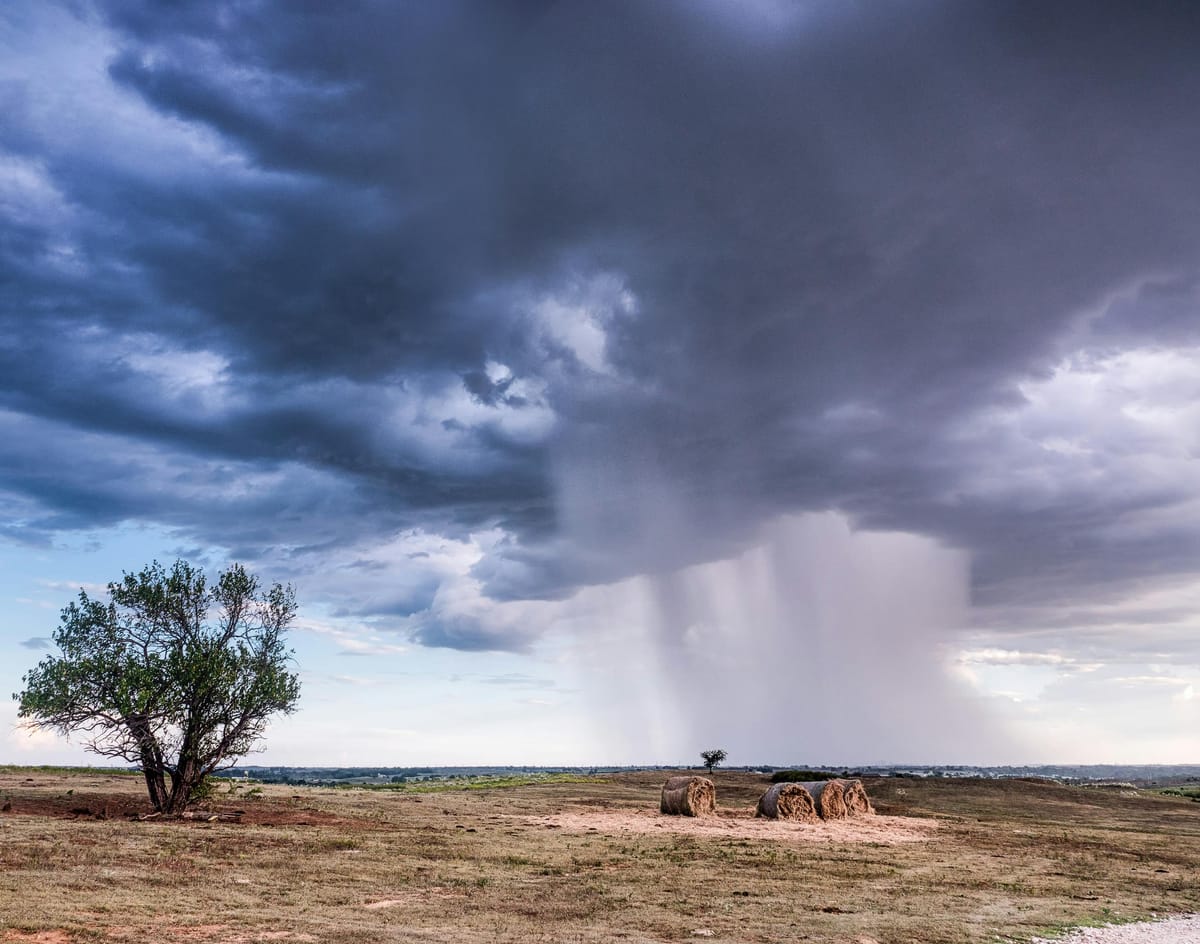
The Anadarko Basin, STACK, SCOOP, and Arkoma rarely generate the same clicks as the Permian. There's no multibillion-dollar merger announcement every quarter, no record production headlines, no carnival of Wall Street attention. What there is: a mature, productive, geologically complex set of plays spread across Oklahoma and the Texas Panhandle that still produces meaningful oil and gas volumes — and is doing so largely under the radar.
What "Midcontinent" Means
The term "Midcontinent" is loosely defined, but in upstream parlance it typically encompasses:
- Anadarko Basin: Western Oklahoma and the Texas Panhandle — the oldest continuously producing basin in the U.S., dating to the 1920s. The STACK (Sooner Trend, Anadarko, Canadian, and Kingfisher counties) and SCOOP (South Central Oklahoma Oil Province) are the modern horizontal plays within it.
- Arkoma Basin: Eastern Oklahoma and western Arkansas — primarily natural gas, including the Fayetteville Shale (now largely abandoned by majors) and coalbed methane.
- Woodford Shale: Crosses multiple plays and is a key source rock in both STACK/SCOOP and Arkoma.
Total Anadarko Basin production runs approximately 400,000–450,000 boe/d of crude oil equivalent across the region, with natural gas being the dominant commodity in many play windows.
The STACK and SCOOP: What Went Wrong
The STACK play generated enormous excitement in 2015–2017, when operators like Devon Energy, Marathon Oil, and Newpark Resources were drilling high-profile wells with IP rates rivaling the Permian. Devon's corporate strategy centered heavily on the STACK — it was marketed as a multi-zone, stacked pay, liquids-rich alternative to the Delaware Basin.
Reality intervened. STACK well productivity proved highly variable. Inter-well interference emerged as a significant problem in the Meramec formation — the key target — as aggressive downspacing led to parent-child well communication and EUR degradation. Devon ultimately sold its STACK position to Validus Energy in 2023 for approximately $1.5 billion, far below the implied value from peak optimism.
Marathon Oil similarly exited STACK/SCOOP acreage as part of its asset optimization prior to the ConocoPhillips acquisition, prioritizing its Eagle Ford and Bakken positions. The SCOOP (Springer and Woodford targets) has been more resilient, but it too has seen operator rationalization.
Who's Still There
Despite the exodus of majors, the Midcontinent has a set of committed operators who've stayed the course:
Ovintiv (formerly Encana): Ovintiv maintains a meaningful Anadarko STACK position as part of its multi-basin portfolio. The company's STACK production runs approximately 40,000–50,000 boe/d. Ovintiv's operational philosophy — running lean, focusing on operational efficiency, and managing production declines with selective infill — is suited to a mature play.
Continental Resources (Harold Hamm's private company, taken private in 2022): Continental is one of the largest operators in the Anadarko Basin and the defining company of the Oklahoma oil patch. Hamm pioneered horizontal drilling in the Bakken and has deep roots in the Midcontinent. As a private company, Continental doesn't publish production volumes publicly, but industry estimates put its Anadarko production at 150,000+ boe/d.
Unit Corporation: A smaller Oklahoma-focused operator with both E&P and midstream assets. Unit's Granite Wash play in the Texas Panhandle/western Oklahoma remains a niche producer of liquids-rich gas.
Gulfport Energy: After emerging from bankruptcy in 2021, Gulfport refocused on its core Scoop/Stack and Utica positions. The company has been a disciplined capital allocator, running 2–3 rigs and prioritizing free cash flow over growth.
The Basin's Structural Advantages
The Midcontinent doesn't compete on growth. It competes on cost structure and infrastructure density. Oklahoma's oil and gas industry has operated for over a century — pipeline networks, processing plants, saltwater disposal infrastructure, and a skilled labor pool are all well-established. Lifting costs for legacy production in the Anadarko can be among the lowest in the country for wells that are already drilled and flowing.
The Hugoton gas field — spanning Kansas, Oklahoma, and Colorado — is one of the largest natural gas fields ever discovered in the U.S. It's in terminal decline, producing around 300 MMcf/d from thousands of shallow wells, but it continues to generate cash flow for operators who've held it through decades. That's the Midcontinent story in miniature: assets that aren't growing but are still generating value.
Natural Gas: The Arkoma and Fayetteville Legacies
The Arkoma Basin, once home to aggressive horizontal drilling by Devon, BHP Billiton (which took a ~$15 billion impairment on its Fayetteville Shale acquisition), and XTO (now ExxonMobil), is now in managed decline mode. BHP sold its Fayetteville Shale to Merit Energy for $300 million in 2018 — a fraction of the $4.75 billion it paid to acquire it. That transaction stands as one of the most painful capital destruction events in U.S. shale history.
The lesson: not all shale plays are equal, and the Fayetteville's high water cut, complex completion requirements, and distance from premium markets made it uneconomic at scale once Haynesville and Marcellus competition intensified.
Is the Midcontinent Done Growing?
Probably yes, at the macro level. The Permian will always command better capital allocation for new drilling given its superior well economics and infrastructure. But "not growing" doesn't mean "irrelevant." The Midcontinent's existing production — roughly 400,000+ boe/d — contributes to U.S. supply, employs tens of thousands of Oklahomans, and represents decades of sunk capital that continues to generate returns.
The next chapter may be in enhanced oil recovery (EOR) — particularly CO2 flooding in the conventional Anadarko formations — as carbon capture economics improve and the basin's mature reservoirs become candidates for tertiary production. It's a long-shot, slow-cycle proposition, but it's the kind of thing that gets discussed when growth is off the table.
The Midcontinent isn't exciting. It's also not going away. For operators who've learned to extract value from mature, complex assets, it remains a viable business — just not one that moves the needle for Wall Street.